
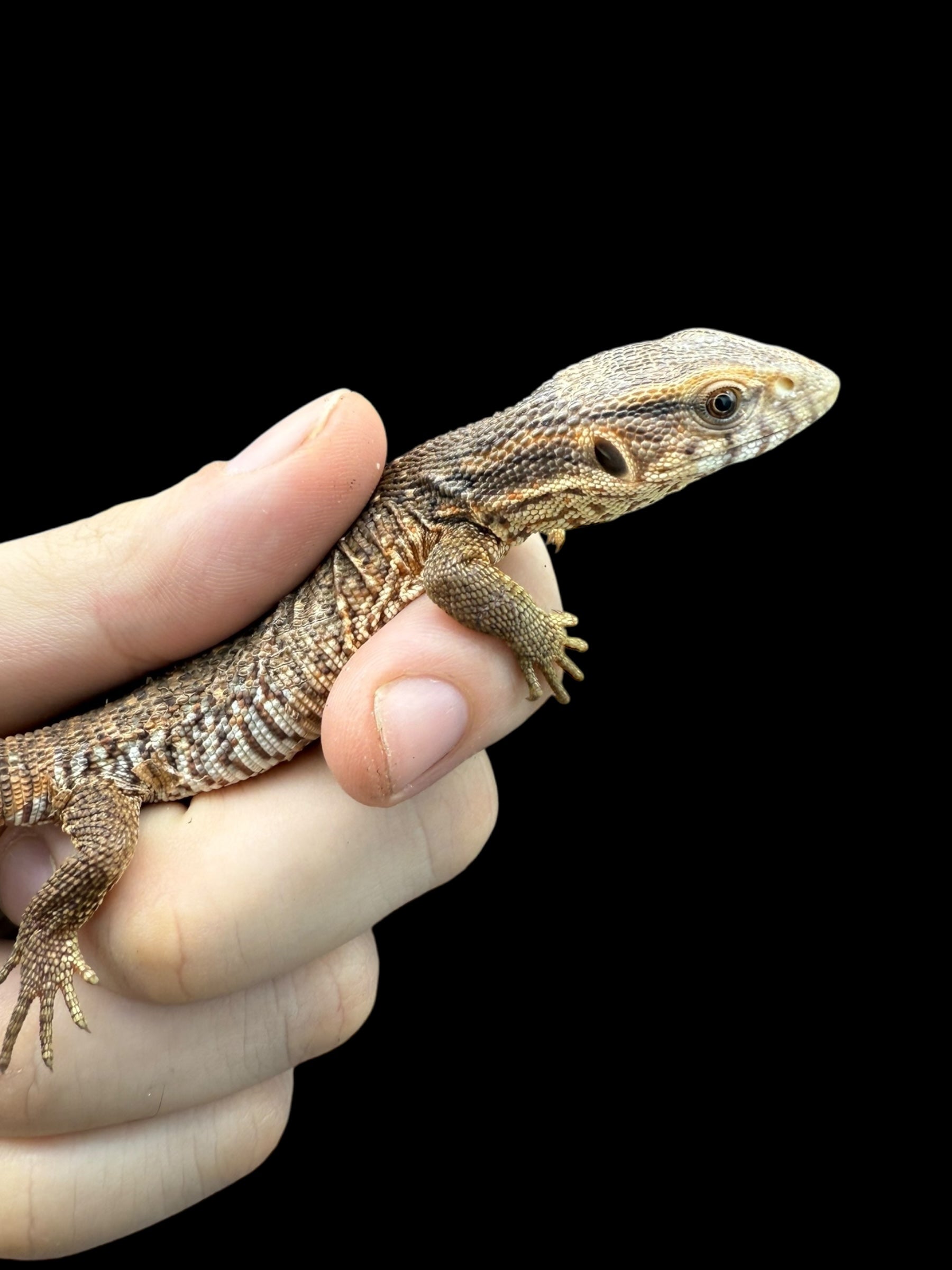
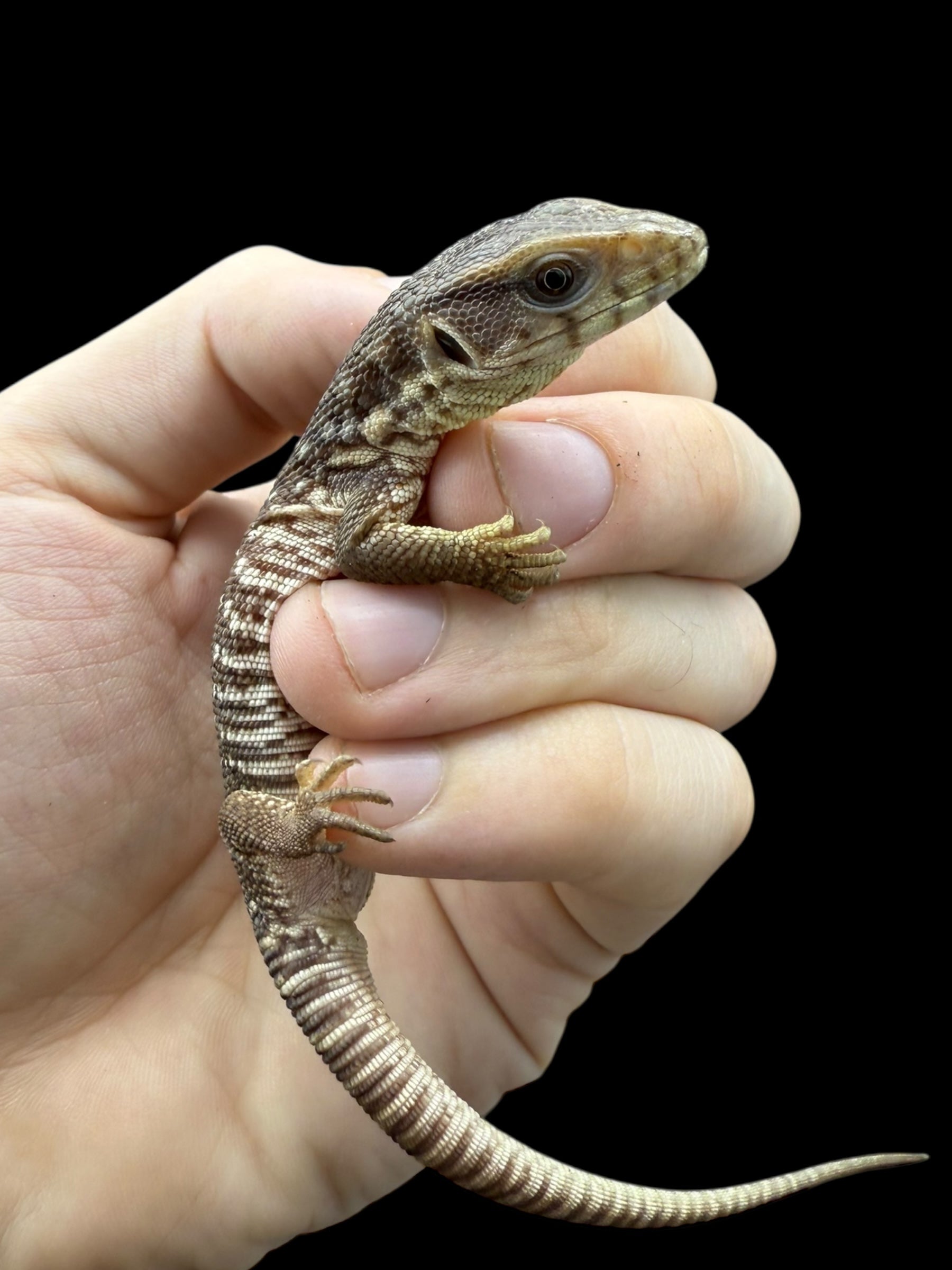
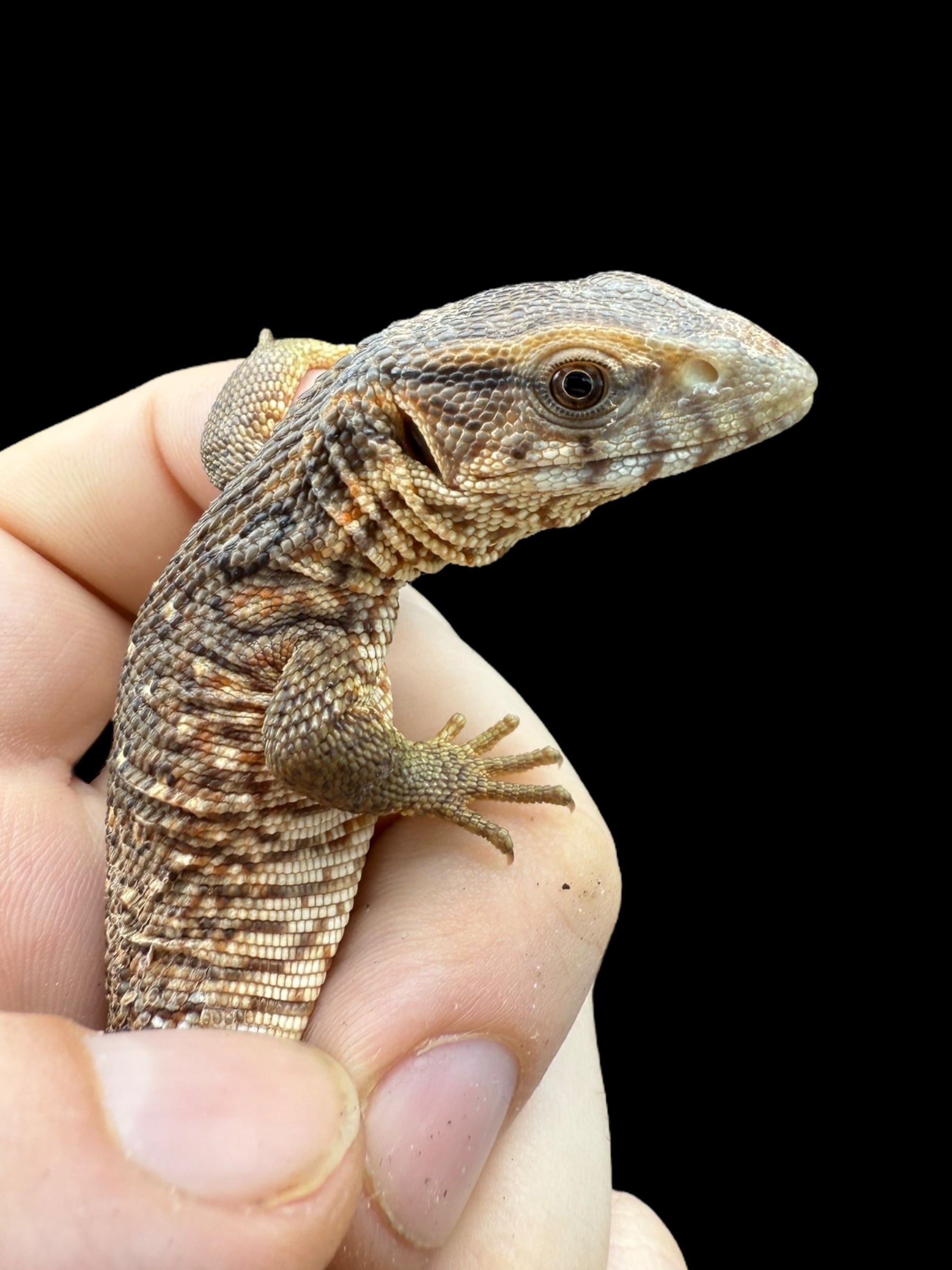


Photo Disclaimer
Description
Savannah Monitor
Scientific Name: Varanus exanthematicus
Common Name: Savannah Monitor
Species Overview
Size: Adults typically reach 3 to 4 feet (91 to 122 cm) in total length, with males often more robust and broad-headed.
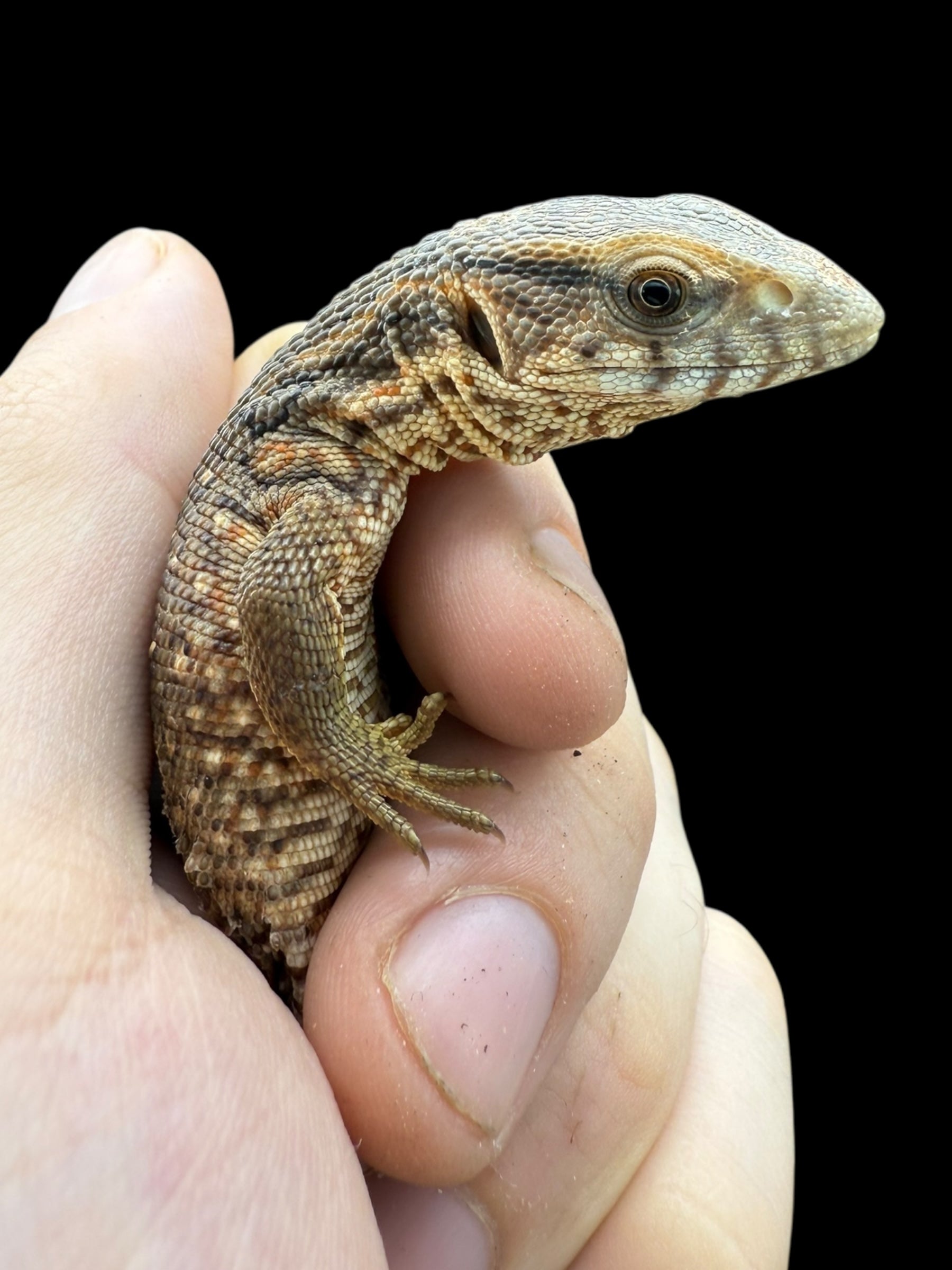
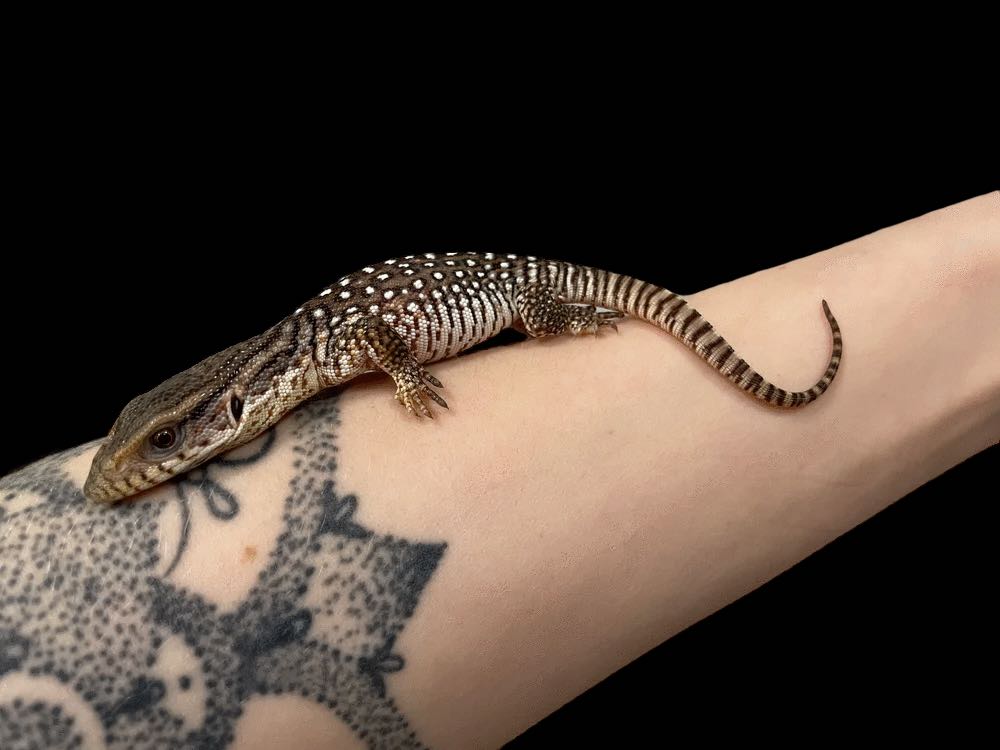
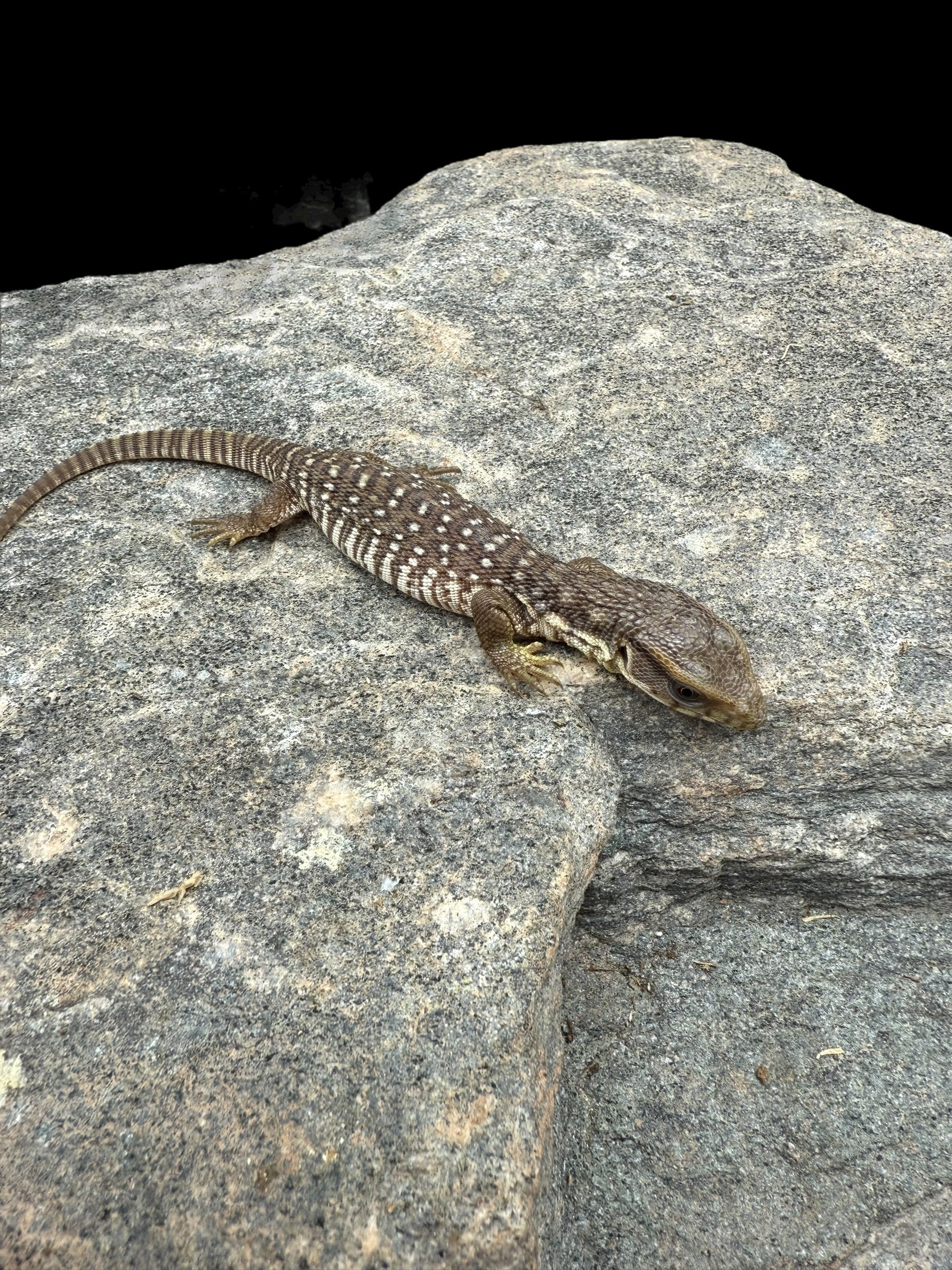
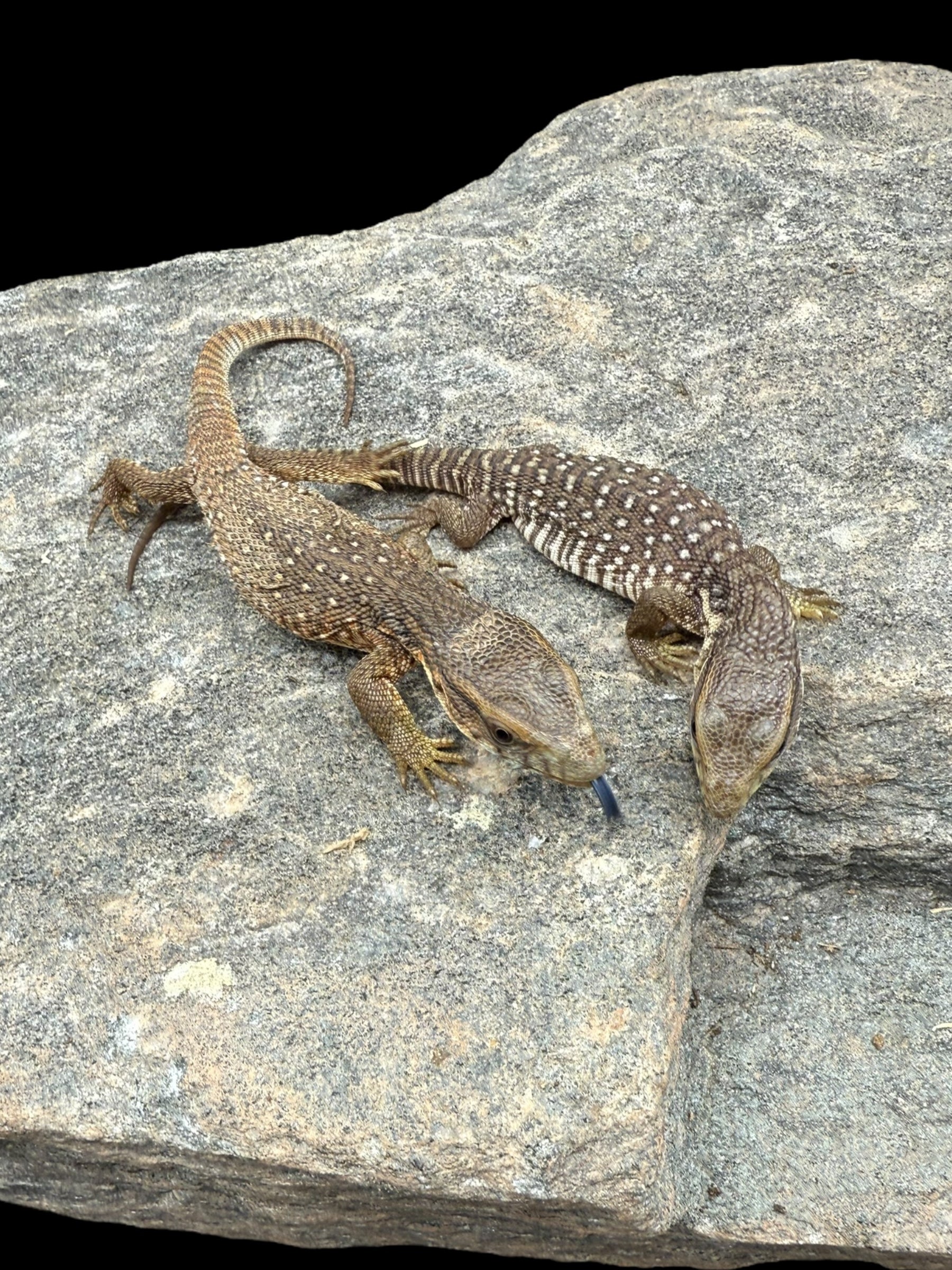
Appearance: The Savannah Monitor is a sturdy, thick-bodied lizard with a powerful build, strong limbs, and a blunt, muscular tail. Colouration ranges from grey to brown or tan, usually with pale yellow or cream ocelli (spots) across the back and sides. The head is wide with strong jaws, and the scales are keeled and rugged. Captive individuals often lighten or darken depending on diet, lighting, and environmental conditions.
Distribution: Widely distributed across sub-Saharan Africa, including Ghana, Togo, Nigeria, Cameroon, Sudan, and surrounding regions.
Habitat: This species inhabits savannas, dry grasslands, open forests, and scrubby plains. They spend considerable time in burrows and termite mounds and are adapted to seasonal climates with alternating wet and dry periods.
Behaviour: Savannah Monitors are diurnal, ground-dwelling, and intelligent. In the wild, they forage extensively for insects, snails, and other invertebrates. They are strong diggers and rely heavily on burrows for thermoregulation. In captivity, they can become calm with proper care but require significant space, deep substrate, and a naturalistic diet.
Captive Care
Enclosure: Provide a single adult with an enclosure at least 6 × 3 × 4 feet (180 × 90 × 120 cm), though larger custom enclosures are strongly recommended due to their high activity level and need for deep substrate. Furnish the habitat with heavy logs, rock platforms, burrow chambers, and extremely deep soil-based substrate for digging. A large water basin for soaking should be included. This species requires durable décor that cannot collapse when burrowed under.
Temperature and Humidity:
Basking area: 130 to 140°F (54 to 60°C)
Warm side: 100 to 115°F (38 to 46°C)
Cool side: 80 to 90°F (27 to 32°C)
Night temperatures: 70 to 75°F (21 to 24°C)
Humidity: 40 to 60%, with deeper substrate layers retaining additional moisture to support proper shedding and respiratory health.
Lighting: Provide bright full-spectrum lighting with strong UVB (10 to 12%). Savannah Monitors require intense heat and UVB exposure to support their metabolism, digestion, and overall health. Supplemental daylight LEDs help enhance visibility and activity.
Diet: Offer a primarily invertebrate-based diet—this is critical. Suitable foods include roaches, crickets, locusts, snails, hornworms, silkworms, and black soldier fly larvae. Occasional eggs or very small amounts of lean meat may be used sparingly. Avoid rodent-heavy diets, which contribute to obesity and organ issues. Calcium should be supplemented frequently and multivitamins weekly.
Behaviour in Captivity: When properly cared for, Savannah Monitors can become inquisitive, active, and confident. They require significant enrichment, deep substrate for burrowing, and high basking temperatures. Without correct husbandry (especially diet and heat), they are prone to obesity and metabolic disease. They generally tolerate minimal handling but are best treated as display animals requiring structured care.
Special Considerations:
• Deep substrate is essential—at least 12 inches (30 cm), often more.
• Avoid high-protein, rodent-based diets.
• Provide very strong basking heat and a wide gradient.
• Ensure all décor is stable against digging and weight.
• Cohabitation is not recommended due to territoriality and resource guarding.
• Obesity is common—diet and exercise must be closely managed.
Taxonomy Note
The Savannah Monitor belongs to the Varanus exanthematicus species complex. Related species (V. albigularis and others) are often confused with true Savannah Monitors, but V. exanthematicus remains the smallest and most widespread member of the group, adapted to highly seasonal savanna ecosystems.
Genetics Note
There are no recognised morphs for Varanus exanthematicus. Variation in coloration—lighter sandy tones, greyer bodies, or darker spotting—is natural and often reflects geographic origin or environmental conditions rather than selective breeding.