


Photo Disclaimer
Description
Southern Leaf-Tailed Gecko (Uroplatus sameiti)
Scientific Name: Uroplatus sameiti
Common Name: Southern Leaf-Tailed Gecko
Species Overview
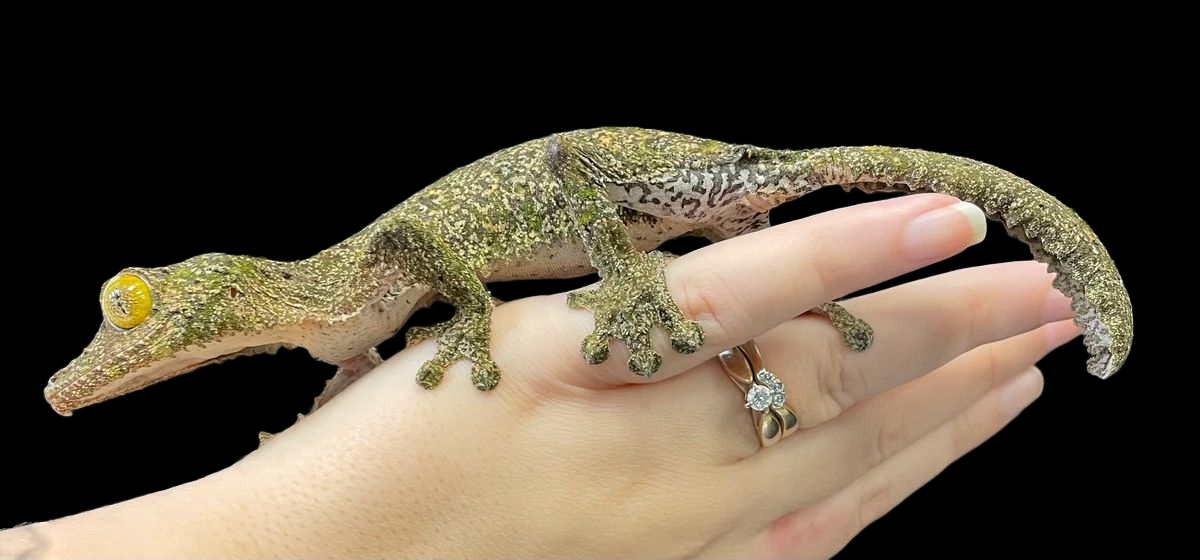
Size: Adults typically reach 8 to 10 inches (20 to 25 cm) in total length. They are one of the larger Uroplatus species, with long limbs and a broad, leaf-shaped tail.
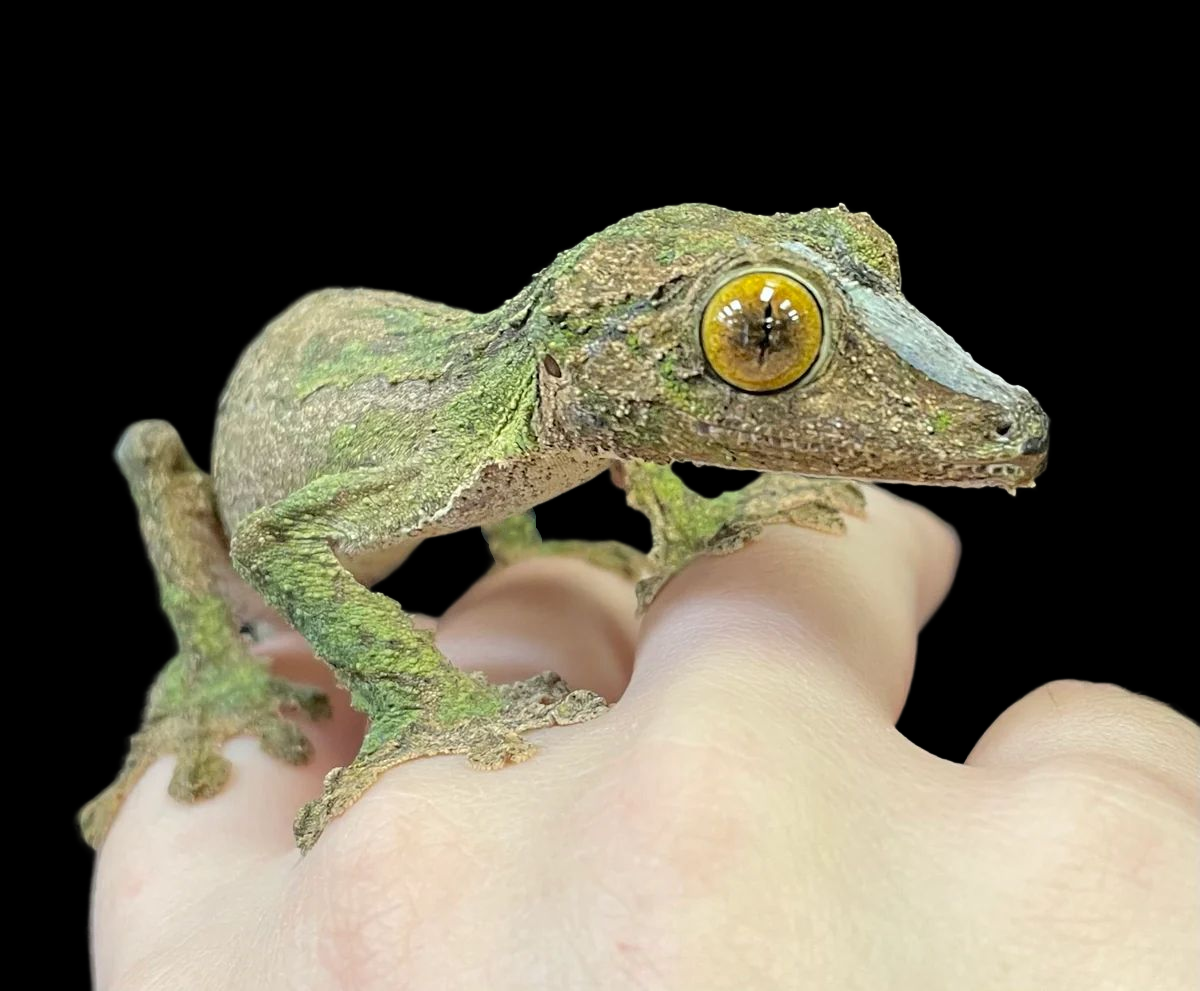
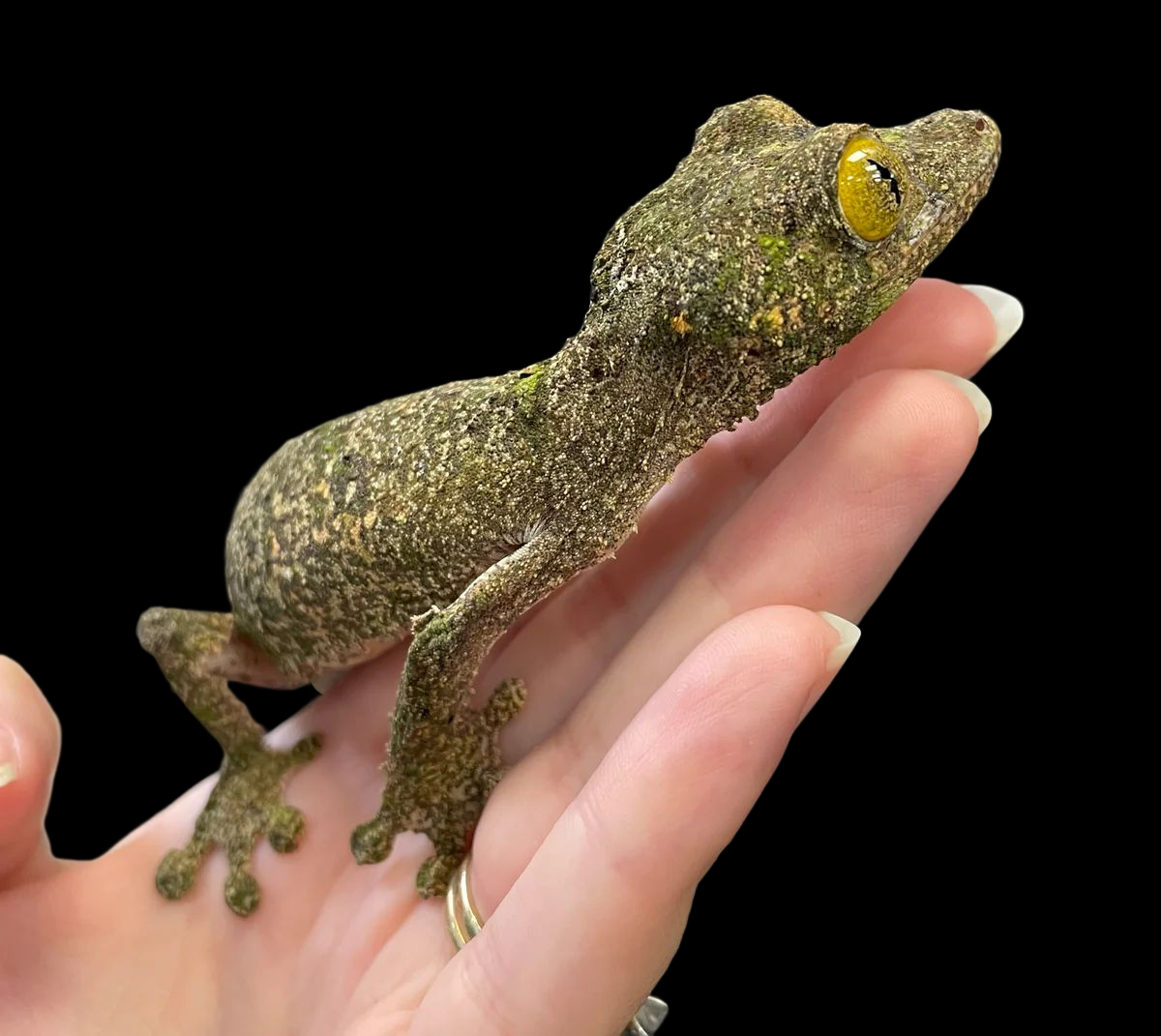
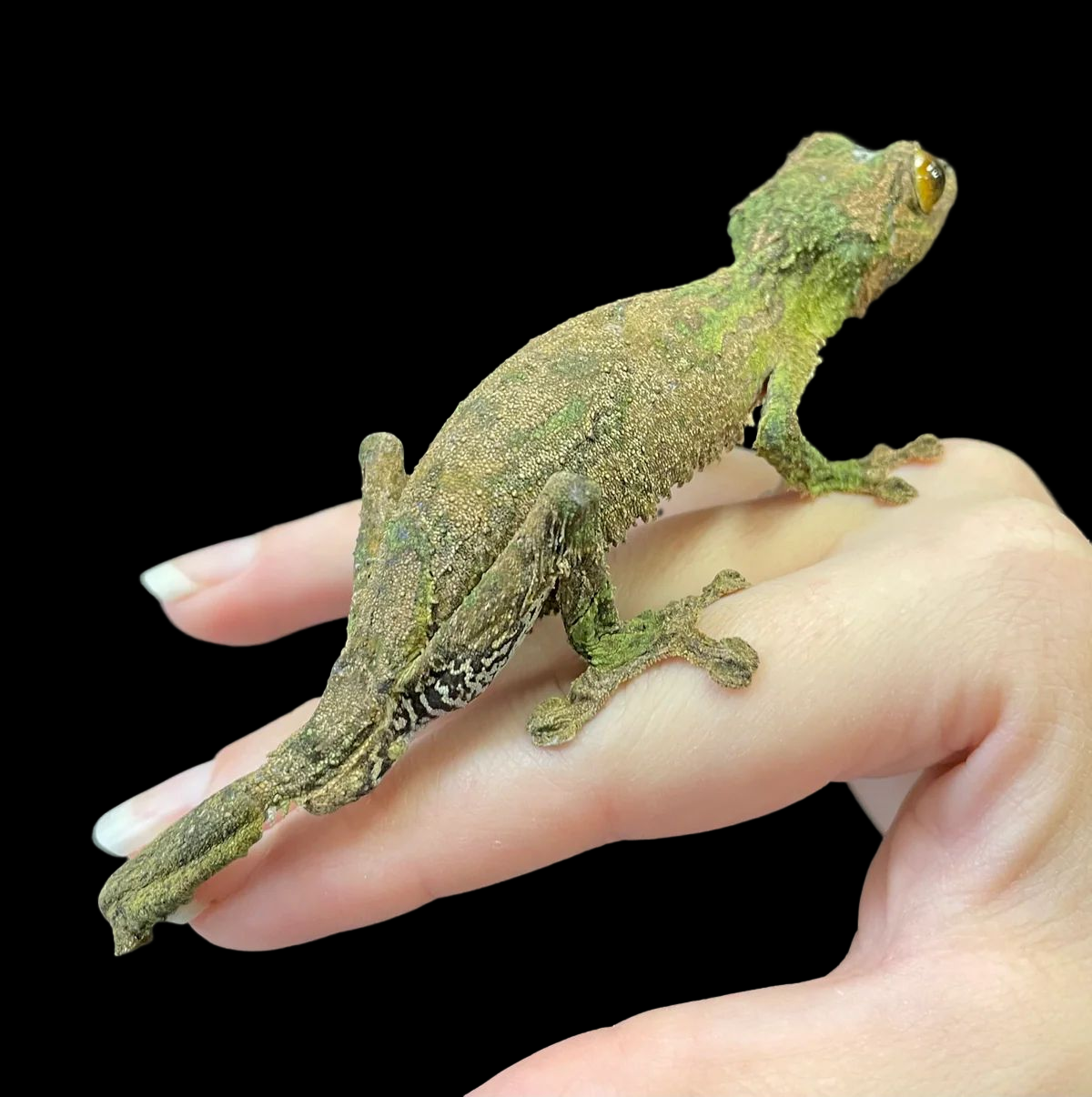
Appearance: The Southern Leaf-Tailed Gecko is highly adapted for camouflage. Its flattened body, angular head, and fringed skin edges help break up its outline, allowing it to disappear seamlessly against tree bark. Colouration ranges from mottled greys and browns to bark-like patterns with subtle speckling or veining. The tail is wide and leaf-shaped, often displaying intricate patterning and soft edging. Eyes are large, silver to copper in tone, and vertically slit, giving exceptional night vision.
Distribution: Native to southeastern Madagascar, particularly humid forest regions.
Habitat: This species inhabits rainforest environments, where it clings vertically to tree trunks and large branches. By day, it rests motionless against bark, relying entirely on camouflage. In captivity, they thrive in tall enclosures with dense vertical structure, shaded retreats, and consistently high humidity.
Behaviour: Southern Leaf-Tailed Geckos are strictly nocturnal and remain motionless during the day. At night, they become active and stealthy hunters. Their behaviour is calm but secretive, and they are extremely sensitive to stress. They are best suited as display animals and should not be handled.
Captive Care
Enclosure: A vertically oriented enclosure measuring at least 24 inches × 18 inches × 24 inches (60 × 45 × 60 cm) is suitable for an adult. Provide cork rounds, tree branches, textured bark panels, and dense foliage. A soil or bioactive substrate helps maintain humidity and supports plant growth.
Temperature & Humidity: Maintain daytime temperatures of 72 to 78°F (22 to 26°C) with a slight nighttime drop to 68 to 72°F (20 to 22°C). Avoid high heat. Humidity should remain high at 70 to 90%, with multiple mistings per day or an automated system to maintain moisture and provide natural drinking surfaces.
Lighting: Provide low to moderate UVB (2 to 5%) for 12 hours daily. While nocturnal, Uroplatus species benefit from low UV exposure for overall health. Lighting should be gentle and shaded to avoid dehydration and stress.
Diet: Offer a variety of insects including crickets, roaches, silkworms, hornworms, and occasional moths. Juveniles should be fed daily, while adults can be fed every 2 to 3 days. All insects must be gut-loaded and dusted with calcium and multivitamins. Provide water through heavy misting; they typically drink droplets from surfaces rather than from a dish.
Behaviour in Captivity: When provided with appropriate humidity, cover, and minimal disturbance, these geckos thrive as highly effective ambush predators. They utilise vertical space extensively and prefer enclosures that mimic dense forest structure.
Special Considerations: This species is sensitive to dehydration and heat stress. Handling should be avoided entirely. Ensure excellent air circulation to prevent respiratory issues in high-humidity environments.
Taxonomy Note
The Southern Leaf-Tailed Gecko belongs to the genus Uroplatus, a group of arboreal Madagascan geckos renowned for extreme camouflage and specialised nocturnal behaviour. Uroplatus sameiti is closely related to the mossy and satanic leaf-tailed geckos but is distinguished by its larger size and specific range in southeastern Madagascar.
Genetics Note
There are no recognised morphs or selectively bred variants of the Southern Leaf-Tailed Gecko. Captive individuals display natural variation in pattern and tone reflective of their locality, but no formal morphs exist in the trade.