


Photo Disclaimer
Description
Steudner’s Dwarf Gecko (Tropiocolotes steudneri)
Scientific Name: Tropiocolotes steudneri
Common Name: Steudner’s Dwarf Gecko
Species Overview
Size: Adults typically reach 1.5 to 2.25 inches (4 to 5.5 cm) in total length, making them one of the smallest gecko species in the world.
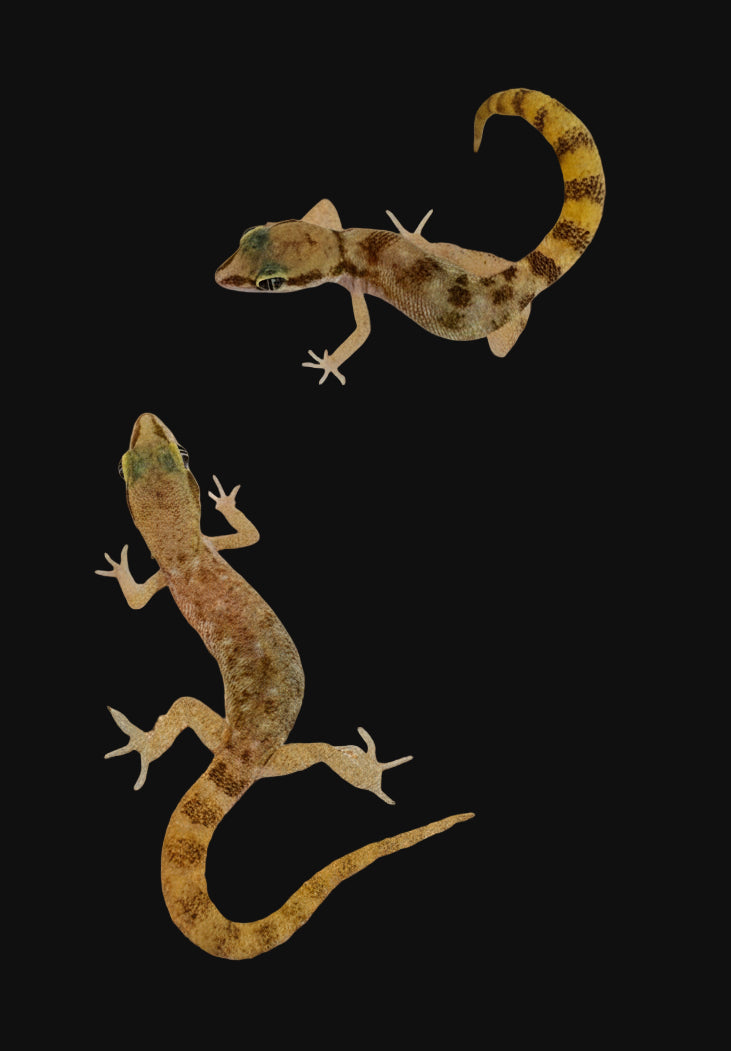
Appearance: Steudner’s Dwarf Gecko has a delicate, refined build with a narrow head, fine limbs, and a thin tail. Colouration is usually sandy beige, tan, or pale grey with subtle speckling or faint banding that blends seamlessly into desert substrates. Their eyes are large relative to their tiny body size, providing exceptional low-light vision. The skin texture is smooth to finely granular, giving them a soft, understated appearance.
Distribution: Native to North Africa and the Middle East, including Egypt, Sudan, Israel, and surrounding arid regions.
Habitat: This species inhabits sandy and rocky deserts, gravel plains, and dry wadis. They hide beneath stones or burrow lightly into sand during the day to avoid extreme heat. In captivity, they thrive in compact, arid setups with loose sand and warm microclimates.
Behaviour: Steudner’s Dwarf Geckos are nocturnal, extremely quick, and highly alert. They are best suited as display animals due to their very small size and delicate structure. Their behaviour is active and curious but easily startled.
Captive Care
Enclosure: A small, horizontally oriented enclosure measuring at least 18 inches × 12 inches × 12 inches (45 × 30 × 30 cm) is appropriate for a group. Provide 2 to 3 inches of fine sand or a sand–soil blend for burrowing, along with flat stones, half-buried hides, and scattered debris for security.
Temperature & Humidity: Maintain a warm side of 90 to 95°F (32 to 35°C) with a cooler area around 75 to 80°F (24 to 27°C). Night temperatures can drop to 68 to 72°F (20 to 22°C). Humidity should remain extremely low at 20 to 30%, consistent with desert conditions.
Lighting: Provide a bright light cycle with low UVB (2 to 5%) for 10 to 12 hours daily. Despite being nocturnal, they benefit from defined day-night cycles and mild UVB exposure.
Diet: Offer very small feeders such as fruit flies, pinhead crickets, bean beetles, micro mealworms, and small roaches. Juveniles require daily feeding, while adults can be fed every 1 to 2 days. All prey should be gut-loaded and dusted lightly with calcium and multivitamins. A shallow water dish or occasional light misting may be used for hydration.
Behaviour in Captivity: Once settled, these geckos display active nighttime hunting behaviour and make use of their burrowing substrate and rock shelters. They appreciate stable, dry conditions and minimal disturbance.
Special Considerations: Their tiny size makes them extremely delicate, and handling should be avoided entirely. Enclosures must be very secure with fine-screened ventilation to eliminate escape routes.
Taxonomy Note
Steudner’s Dwarf Gecko belongs to the genus Tropiocolotes, a group of miniature desert geckos adapted to hot, arid environments. Members of this genus share a diminutive size, sandy camouflage, and specialised nocturnal behaviour.
Genetics Note
There are no recognised morphs or selectively bred variants of Steudner’s Dwarf Gecko. Natural variation exists in tone and speckling, but no formal morphs are present in the pet trade.