


Photo Disclaimer
Description
Gidgee Skink (Egernia stokesii)
Scientific Name: Egernia stokesii
Common Name: Gidgee Skink, Stokes’s Skink, Mother-in-Law Lizard
Species Overview
Size: Adults typically reach 10–14 inches (25–35 cm) in total length, with a thick, heavily armoured body and short, strong limbs.
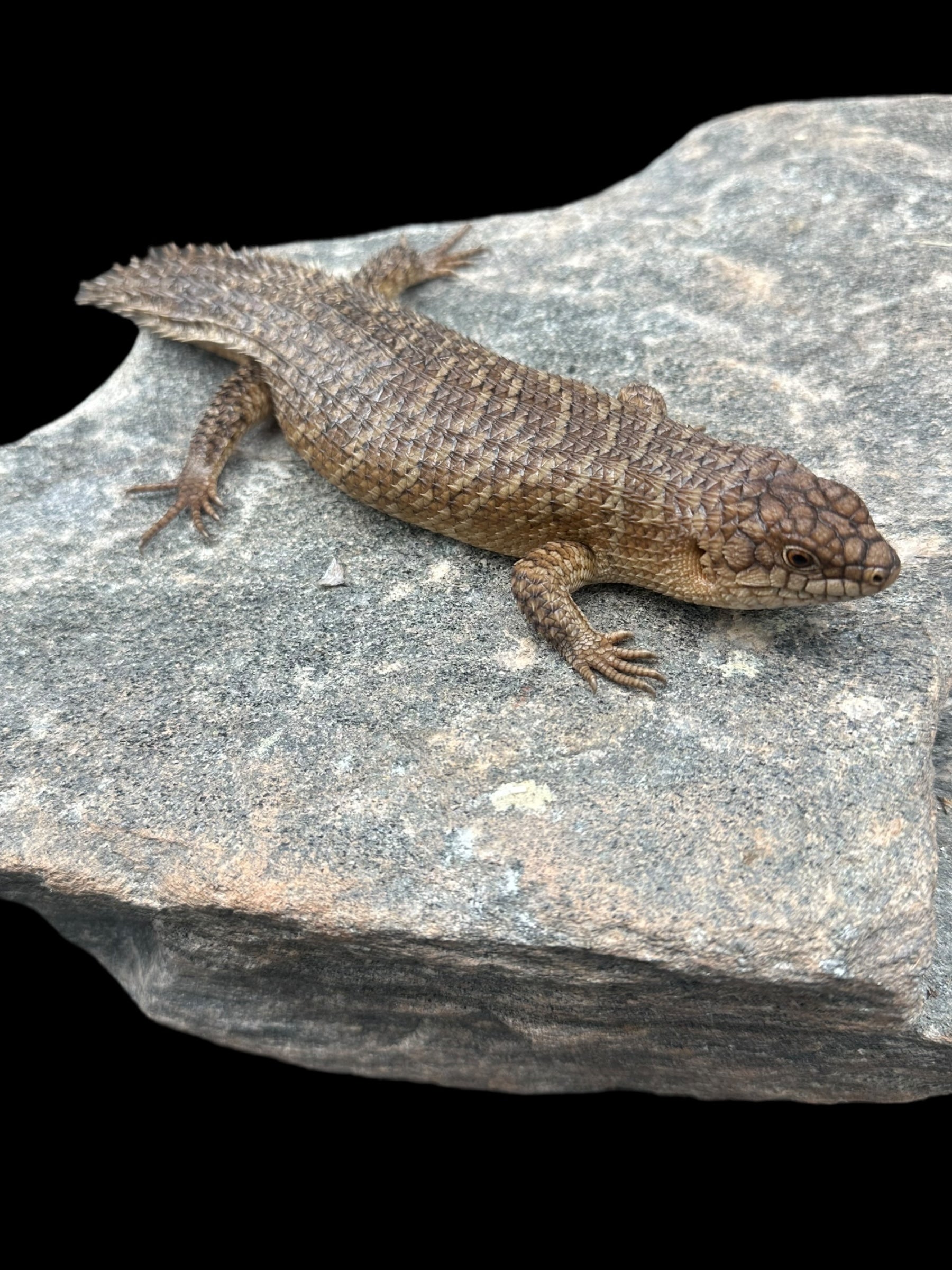
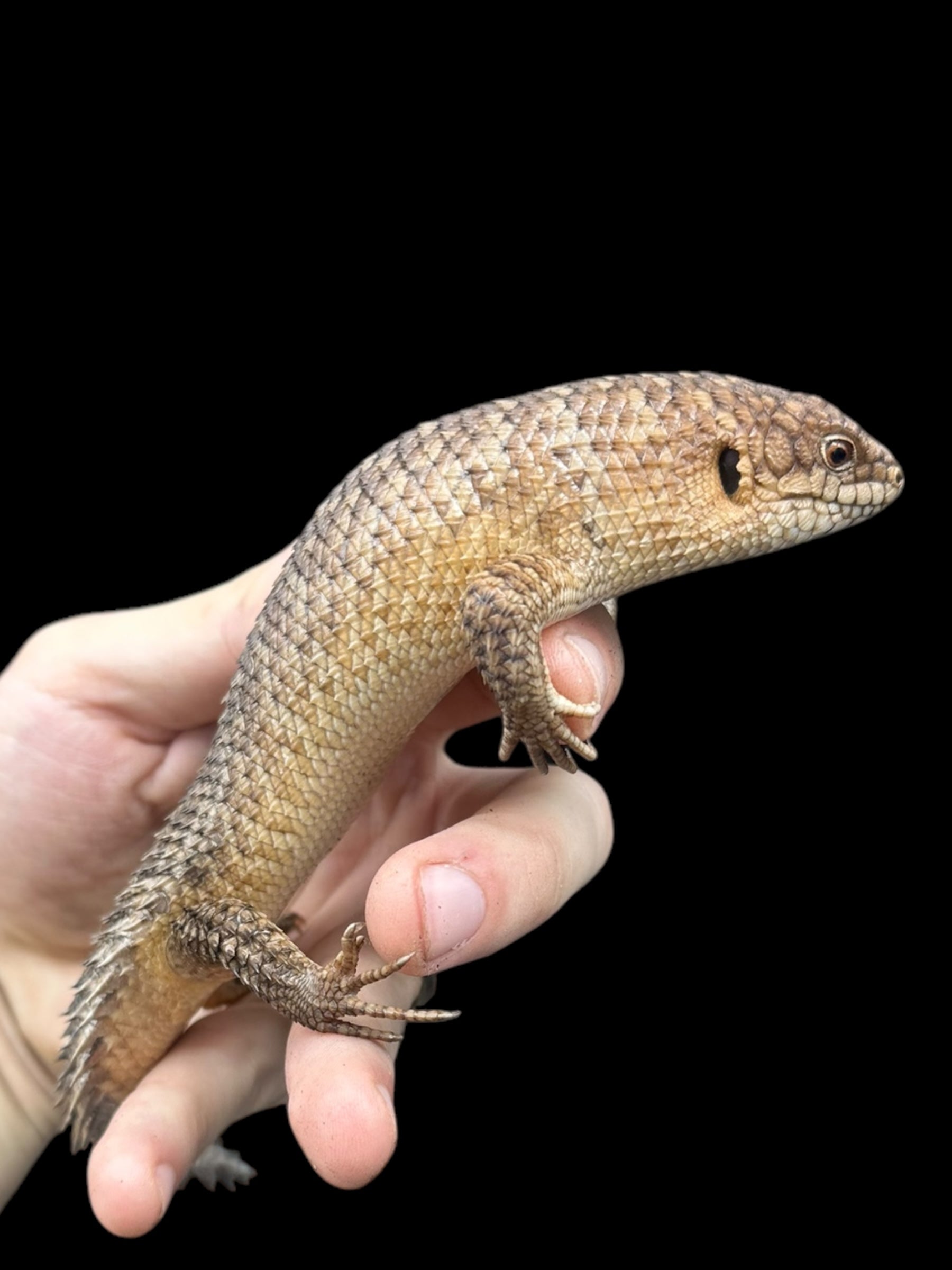
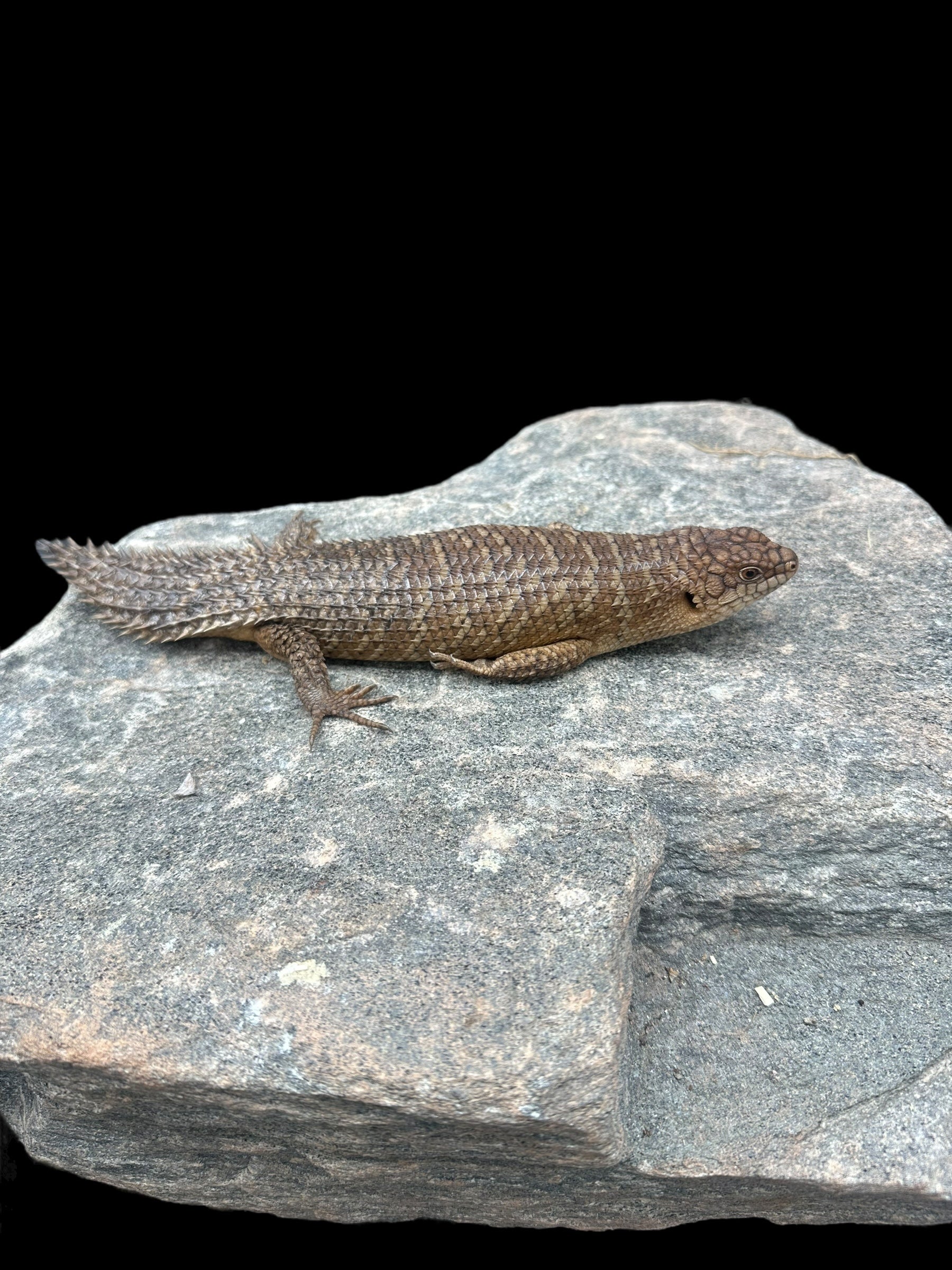
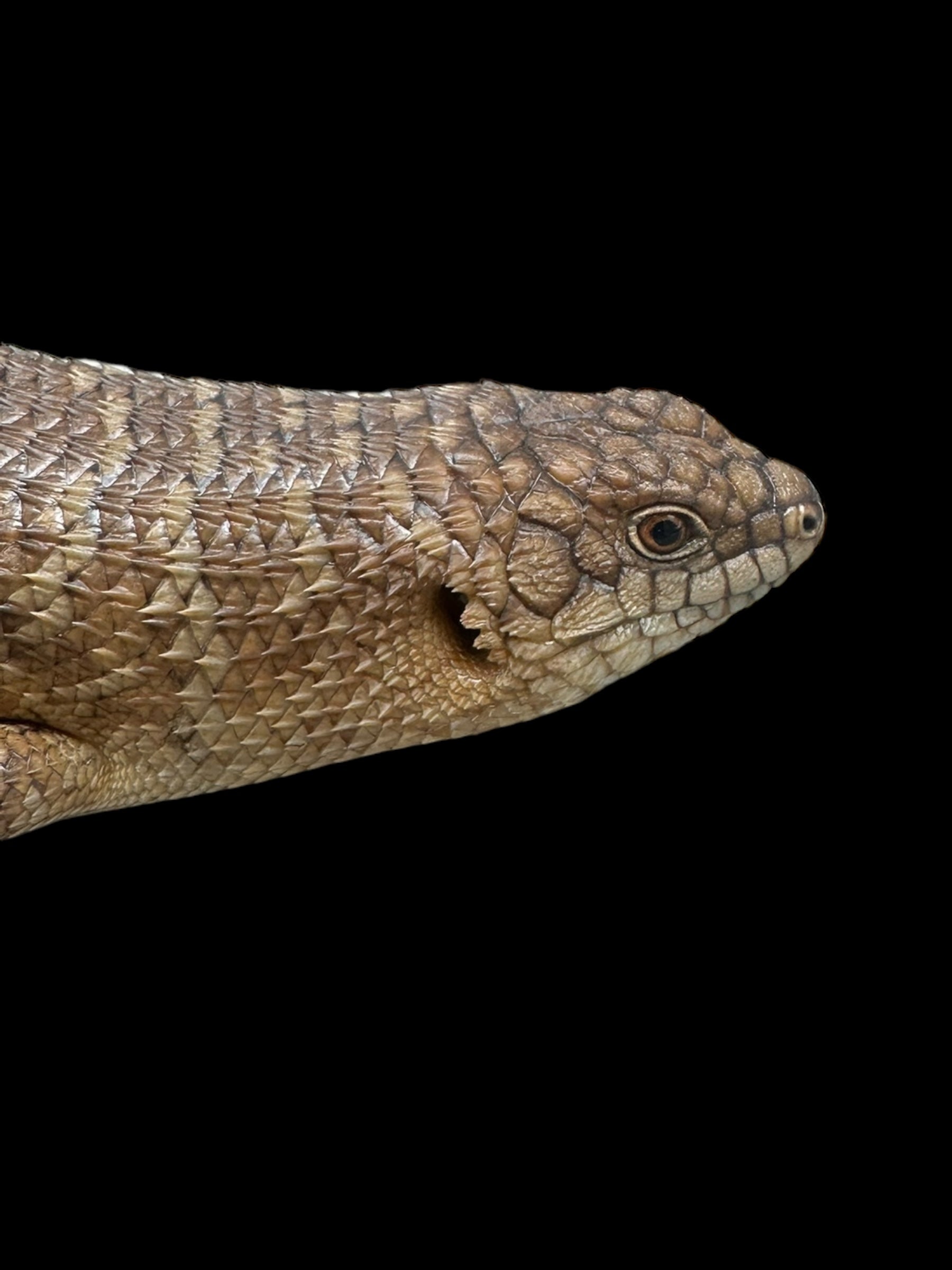
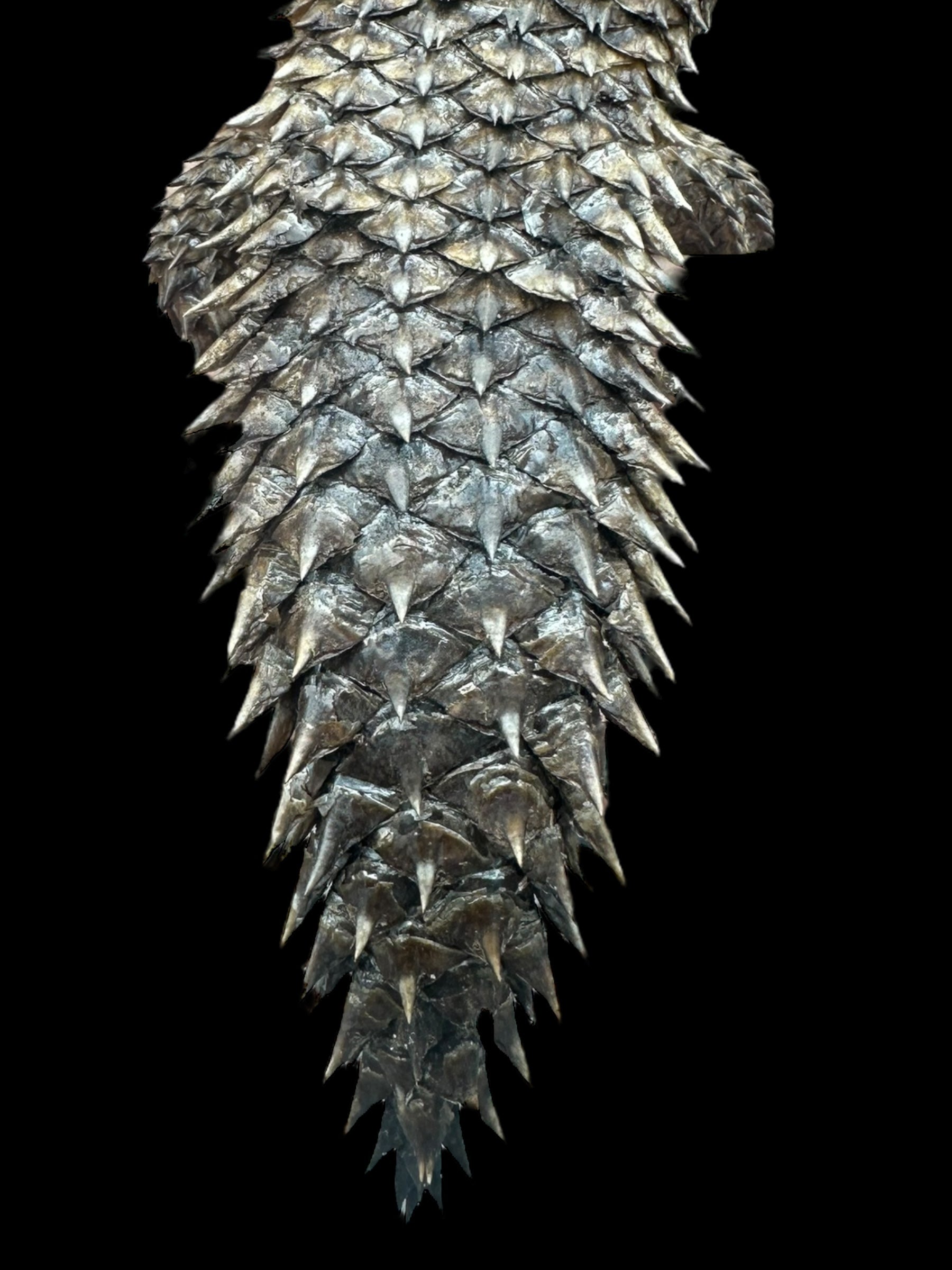
Appearance: Gidgee Skinks are distinctive, heavily scaled lizards with rough, spiny, keeled scales covering the body, head, and tail. Colouration ranges from dark brown to grey or olive, often with paler speckling or faint banding. Their blocky head, stout torso, and short, spiny tail give them a robust and fortified look. Juveniles tend to display brighter contrast and more obvious patterning that dulls with age.
Distribution: Native to Australia, particularly in arid and semi-arid regions of Western Australia, South Australia, and the Northern Territory.
Habitat: This species inhabits rocky outcrops, dry woodlands, gidgee scrub, spinifex regions, and arid grasslands. They shelter within tight rock crevices or hollow logs, often forming long-term family groups.
Behaviour: Gidgee Skinks are diurnal, highly social, and one of the few reptiles to maintain long-term familial bonds. They live in cooperative colonies, share basking sites, and participate in group defence. Their diet consists primarily of vegetation, flowers, fruits, and occasional insects. When threatened, they wedge themselves into crevices and inflate their bodies, using their spiny scales as protection.
Captive Care
Enclosure: Provide a terrestrial enclosure at least 36 inches × 18 inches × 18 inches (90 × 45 × 45 cm) for a pair or small group, as they do best when housed socially. Include stacked rocks, heavy stable hides, cork tubes, and branches. A sandy–soil substrate mix works well, remaining dry on top but retaining mild moisture deeper down. Ensure all décor is secure and cannot collapse.
Temperature and Humidity:
Basking area: 110–120°F (43–49°C)
Ambient temperature: 85–95°F (29–35°C)
Night temperatures: 70–75°F (21–24°C)
Humidity should be low (20–40%), with excellent ventilation.
Lighting: Provide strong full-spectrum lighting with high UVB (10–12%). These lizards are intense baskers and require bright, hot spots for proper metabolism.
Diet: Offer a primarily herbivorous diet including dark leafy greens, chopped vegetables, hibiscus leaves and flowers, squash, carrot, and occasional fruit. Insects (such as roaches or mealworms) can be offered sparingly, especially for juveniles. Supplement with calcium routinely and multivitamins weekly.
Behaviour in Captivity: Gidgee Skinks thrive in groups and display fascinating social behaviours such as shared basking, cooperative hiding, and vocal or body-language communication. They are generally calm once acclimated but may be defensive when handled. With secure rockwork and consistent lighting, they become confident and active display animals.
Special Considerations:
• Housing in small social groups is beneficial and natural for this species.
• Ensure rock structures are completely stable to prevent collapse.
• Keep humidity low to avoid respiratory or skin issues.
• Provide multiple basking sites to prevent resource competition.
Taxonomy Note
The Gidgee Skink belongs to the family Scincidae and the genus Egernia, a group known for unusually complex social structures among reptiles. Egernia stokesii is one of the most iconic species within the group due to its spiny armour and cooperative group behaviour.
Genetics Note
There are no recognized morphs for the Gidgee Skink. Natural variation includes differences in dorsal speckling, overall colour intensity, and degree of tail spination. These traits vary naturally among individuals and across local populations rather than through selective breeding.