
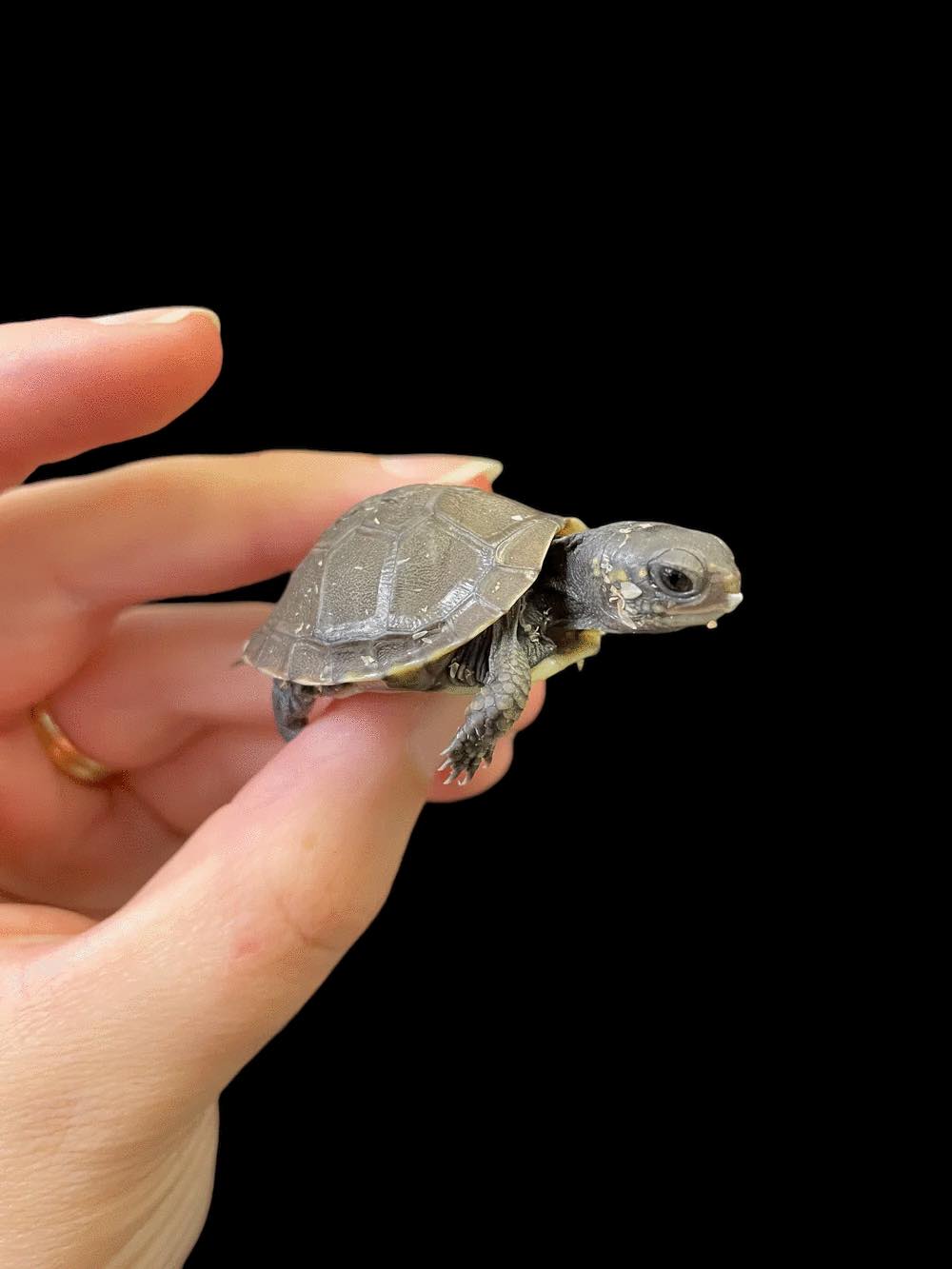
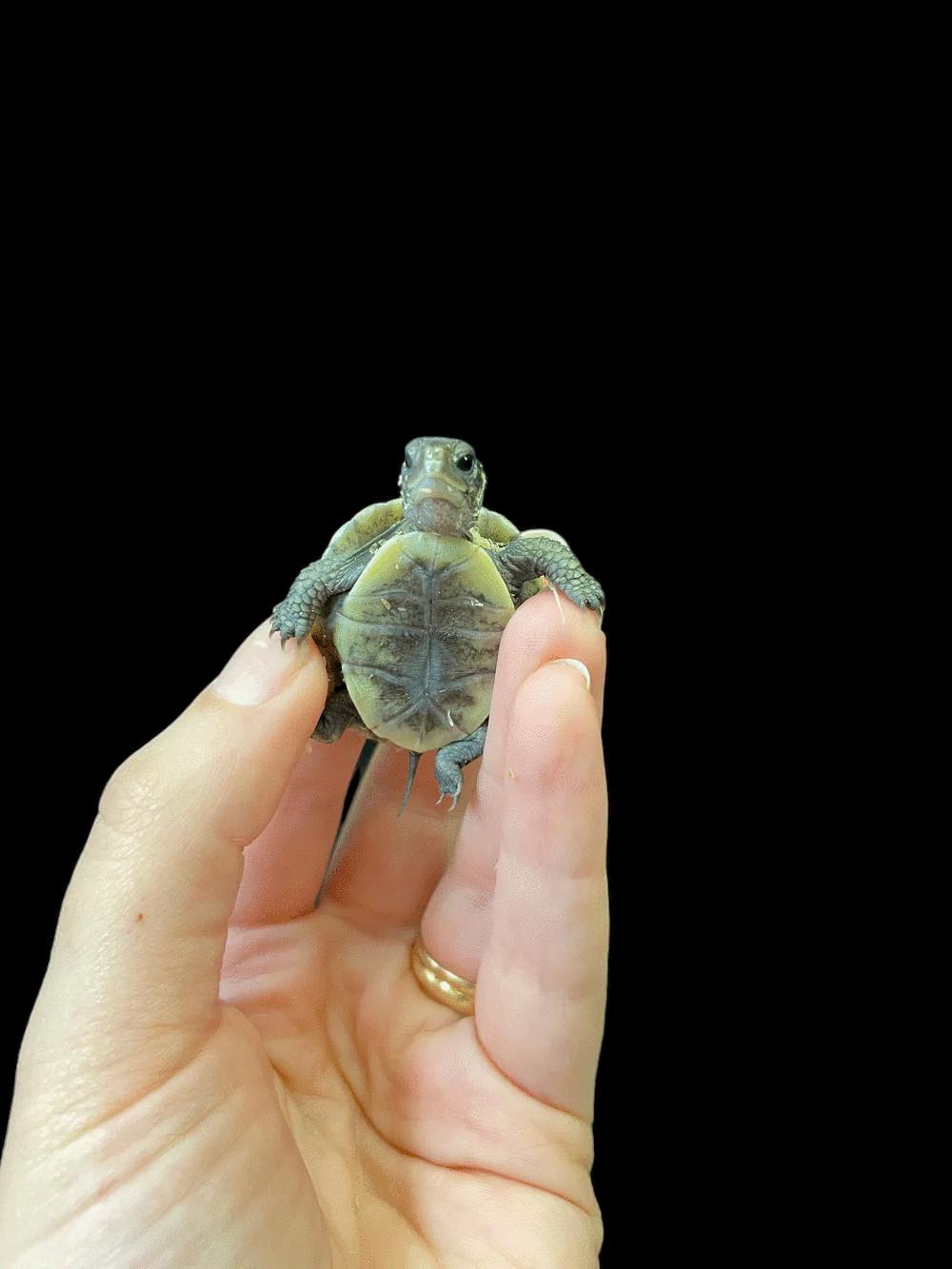


Photo Disclaimer
Description
Three-toed Box Turtle
Scientific Name: Terrapene carolina triunguis
Common Name: Three-toed Box Turtle
Species Overview
Size: Males typically reach 4.5 to 6 inches (11 to 15 cm), while females grow slightly larger at 5 to 7 inches (13 to 18 cm).
Appearance: The Three-toed Box Turtle has a smooth, moderately domed carapace ranging from olive and brown to tan, often with subtle lighter patterning. The plastron is hinged, allowing the turtle to close its shell securely. Skin tones vary from grey and brown to soft orange or yellow on the legs, and many individuals have orange or reddish markings on the head. As the name suggests, most individuals have three toes on each hind foot. Females develop rounder, broader bodies, while males have longer tails and sometimes brighter facial colours.
Distribution: Native to the central and southern United States, including Missouri, Arkansas, Oklahoma, Alabama, and surrounding regions.
Habitat: In the wild, this species inhabits humid forests, wooded edges, meadows, and areas with deep leaf litter. It favours environments with steady moisture, access to shade, and shallow pools or puddles. In captivity, they require a warm, humid terrestrial enclosure with deep substrate and easy access to soaking areas.
Behaviour: Three-toed Box Turtles are diurnal, shy but observant, and heavily reliant on humidity. They forage actively through leaf litter, rest in shaded microhabitats, and use their hinge to close tightly when threatened. They are long-lived and adapt well when kept in stable, naturalistic environments.
Captive Care
Enclosure: Provide a minimum footprint of 4 × 2 feet (120 × 60 cm) for an adult. Use a deep soil-based substrate mixed with leaf litter, moss, and bark. Provide multiple humid hides, logs, plants, and shaded retreats. A shallow water dish large enough for full-body soaking must be offered at all times. Outdoor housing during warm, humid months is highly beneficial.
Temperature and Humidity:
Ambient daytime: 75 to 82°F (24 to 28°C)
Basking area: 88 to 92°F (31 to 33°C)
Night temperature: 68 to 72°F (20 to 22°C)
Humidity: 60 to 90%, with moist pockets throughout the enclosure and regular misting.
Lighting: Provide full-spectrum lighting with 10–12% UVB to support proper shell development and overall metabolic health. Ensure a stable, dry basking platform alongside shaded, humid areas.
Diet: Offer a varied omnivorous diet including leafy greens, vegetables, mushrooms, earthworms, insects, snails, berries, and occasional fruit. Juveniles require higher protein intake, while adults thrive on a balanced mix of plant and animal matter.
Behaviour in Captivity: These turtles thrive in humid, naturalistic setups and become more confident when provided dense cover. They dig, burrow, forage, and soak regularly. They tend to be shy initially but respond well to consistent, gentle routines.
Special Considerations
• Very humidity-reliant—avoid dry setups.
• Provide multiple microhabitats, including shaded, humid hides.
• A soaking area is essential for hydration and thermoregulation.
• Juveniles need higher protein proportions in their diet.
Taxonomy Note
Terrapene carolina triunguis is a subspecies of the Eastern Box Turtle complex. While most individuals have three toes on each hind foot, variations occur. It is considered one of the more humidity-adapted members of the group.
Genetics Note
There are no recognised morphs for the Three-toed Box Turtle. Differences in shell tone, facial colouration, and leg markings represent natural individual variation rather than selective breeding.