

Photo Disclaimer
Description
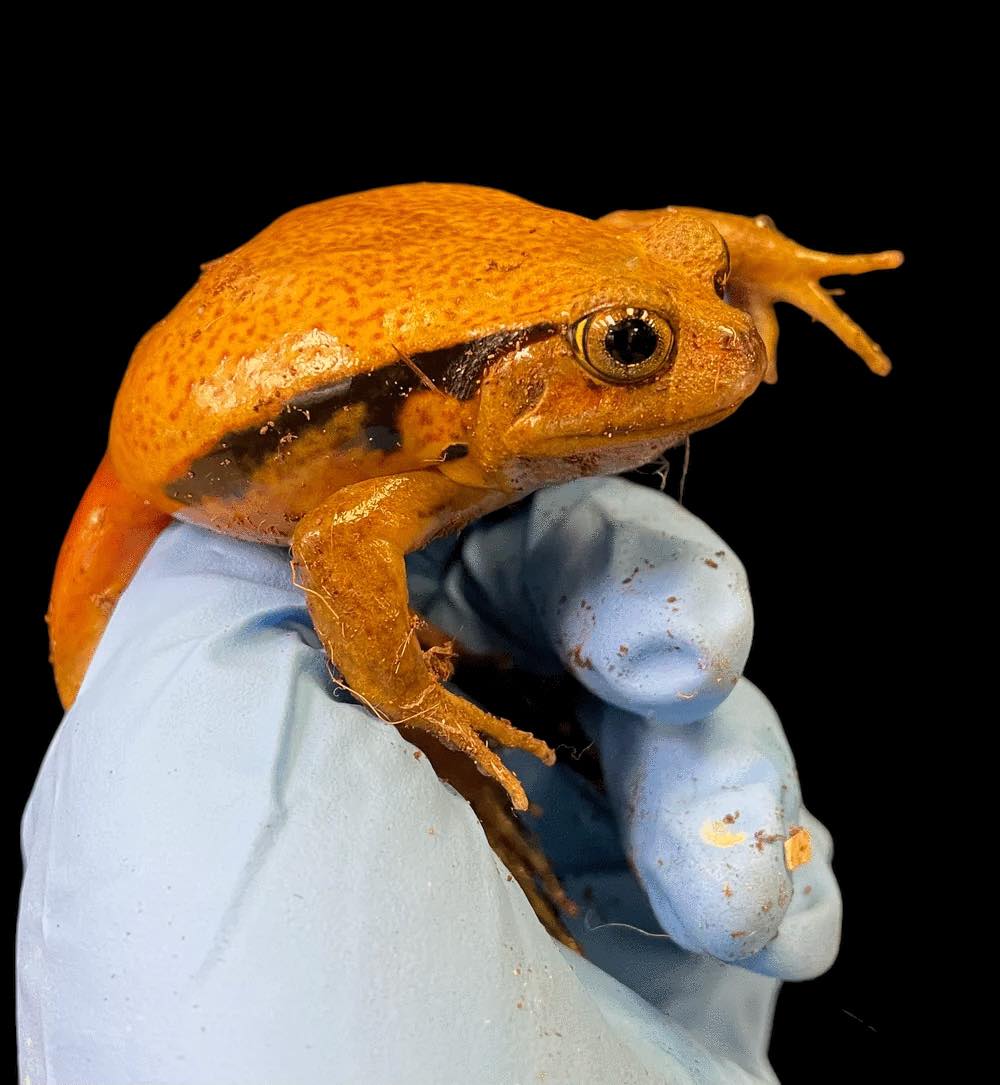
Sambava Tomato Frog
Scientific Name: Dyscophus guineti
Common Name: Sambava Tomato Frog
Species Overview
Size: Adults typically reach 2.5–3.5 inches (6–9 cm), with females slightly larger than males.
Appearance: Sambava Tomato Frogs are stout and rounded with smooth, slightly granular skin. Dorsal coloration is bright reddish-orange to deep red, often with faint darker markings. Ventral surfaces are pale or cream, and the eyes are prominent. Skin secretes mild toxins as a defense, which can irritate mucous membranes.
Distribution: Endemic to northeastern Madagascar, particularly near Sambava. They inhabit lowland forests, marshes, and wetlands.
Habitat: Terrestrial and fossorial, spending much of their time partially buried in soft soil or leaf litter. Active primarily during the rainy season for feeding and breeding.
Behaviour: Ambush predator feeding on insects and other small invertebrates. Can inflate the body and secrete toxins when threatened.
Captive Care
Enclosure: A single adult should be housed in a 12 × 12 × 12 inches (30 × 30 × 30 cm) enclosure with a deep substrate (3–4 inches / 8–10 cm) of soil or coco fibre for burrowing. Larger adults may benefit from an 18 × 18 × 12 inches (45 × 45 × 30 cm) enclosure for additional floor space. Include leaf litter, moss, and low hides for security.
Temperature and Humidity:
Warm area: 75–82°F (24–28°C)
Cool area: 70–75°F (21–24°C)
Humidity: 70–85%, maintained with frequent misting and a damp substrate.
Lighting: Low-intensity lighting with a 12-hour light cycle. Low-level UVB may be beneficial but is not essential.
Diet: Feed a variety of appropriately sized insects such as crickets, roaches, and earthworms. Prey should be gut-loaded and dusted with calcium; multivitamins provided periodically.
Behaviour in Captivity: Mostly sedentary and partially buried. Emerges primarily for feeding. Handling should be minimal to prevent stress and skin irritation from toxins.
Special Considerations:
• Maintain high humidity and a damp substrate
• Provide burrowing and hiding areas
• Avoid excessive handling and contact with skin or eyes
Taxonomy Note
Sambava Tomato Frogs belong to the genus Dyscophus, part of the family Microhylidae, a group of small to medium-sized terrestrial frogs native to Madagascar. Members of this family are characterized by robust bodies, burrowing adaptations, and cryptic or vibrant coloration. Dyscophus guineti is valued for its bright red coloration, burrowing behavior, and defensive toxin secretion.
Genetics Note
Naturally occurring species with no recognized captive-bred morphs.