


Photo Disclaimer
Description
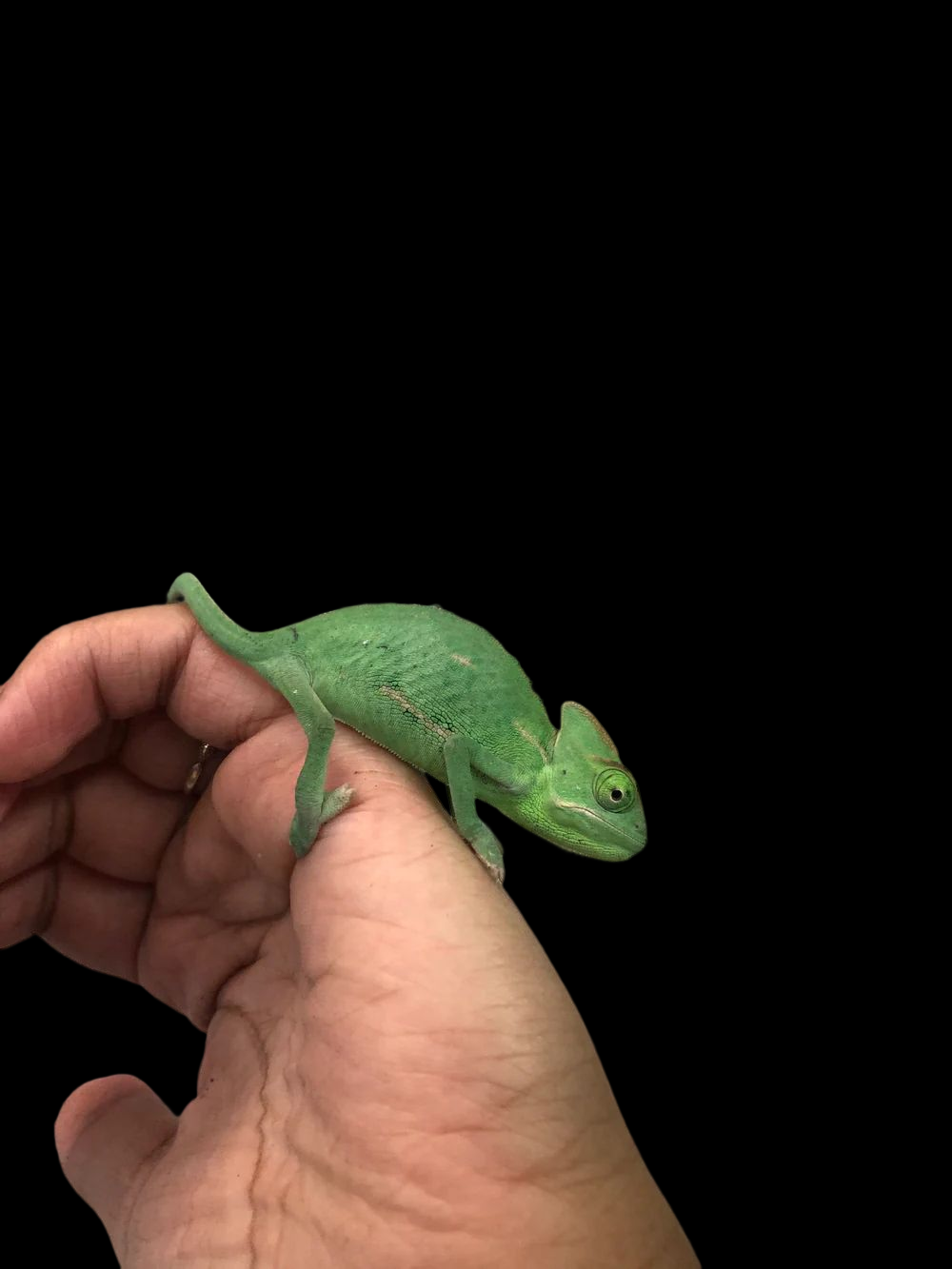
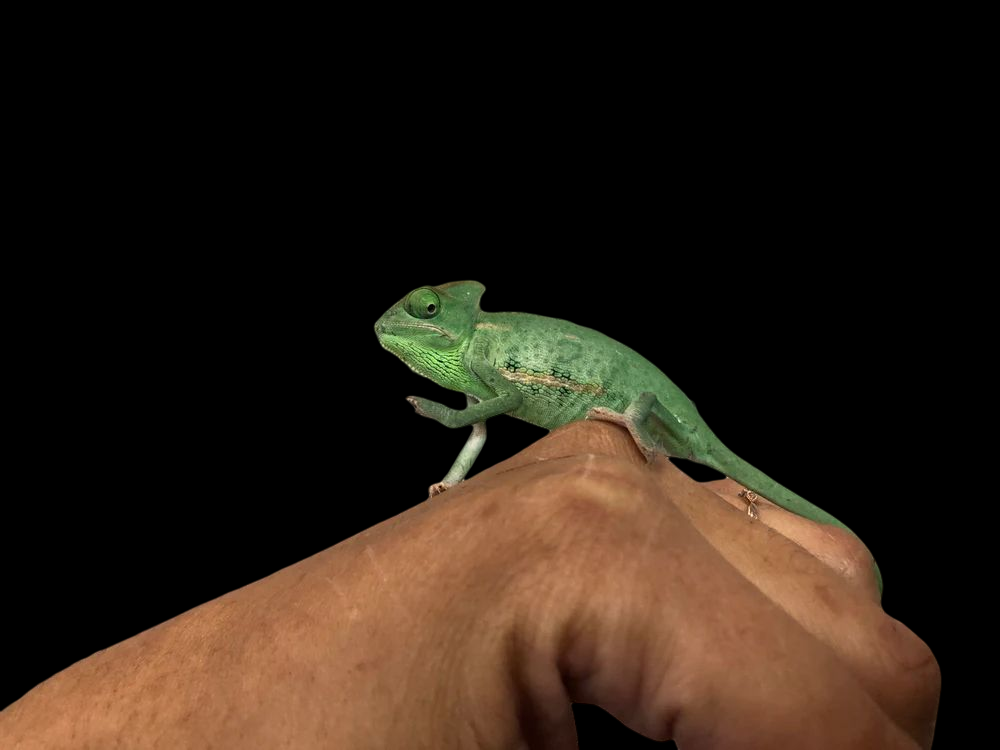
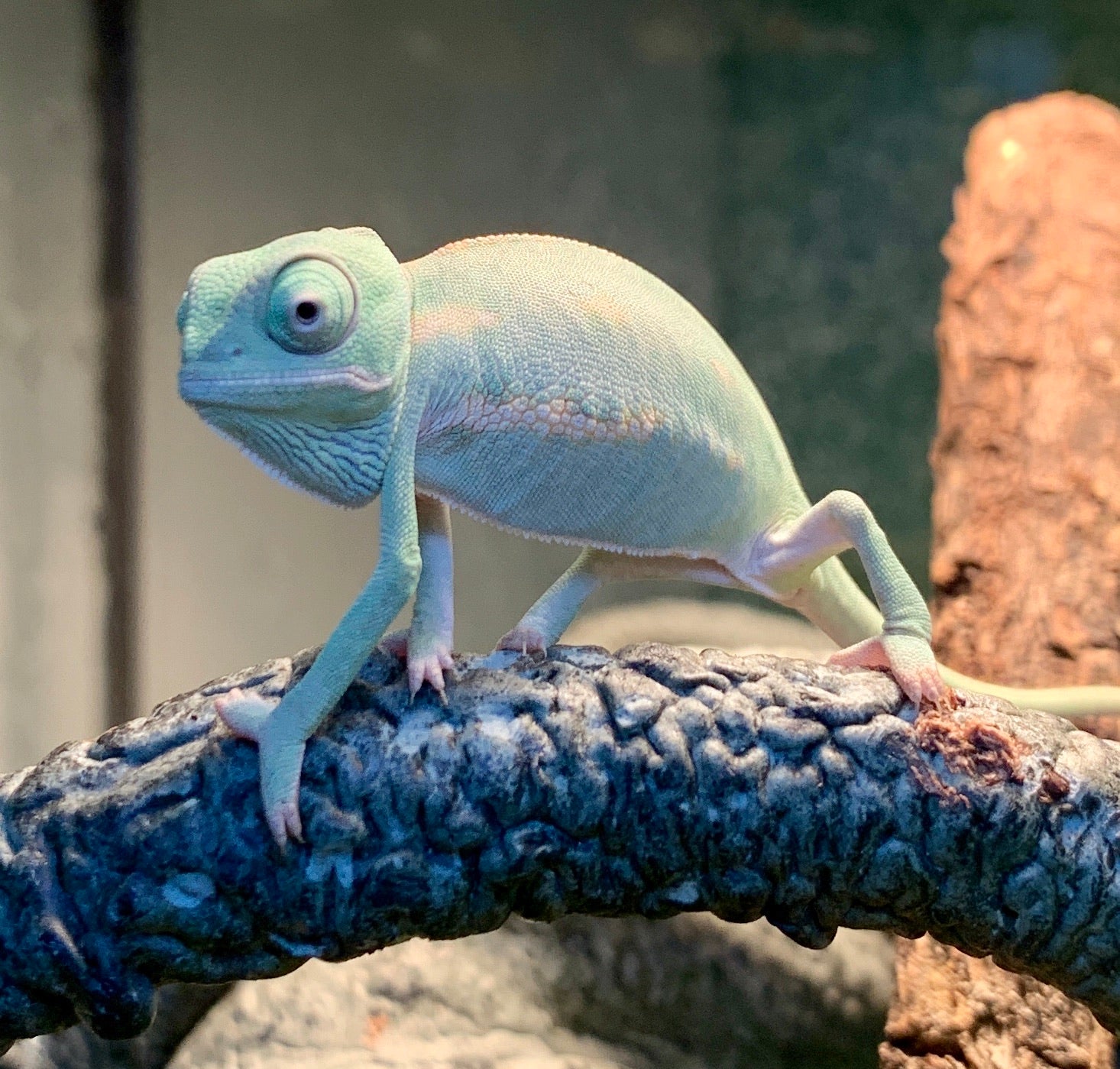
Veiled Chameleon
Scientific Name: Chamaeleo calyptratus
Common Name: Veiled Chameleon, Yemen Chameleon
Species Overview
Size: Adults typically reach 18 to 24 inches (46 to 61 cm) in total length, with males being larger, more robust, and possessing taller casques than females.
Appearance: The Veiled Chameleon is a highly recognisable species with a tall casque atop the head, vibrant green base colouration, and vertical bands of yellow, turquoise, or orange. Males display more intense colouration and develop prominent tarsal spurs on the hind feet. Females are smaller, rounder-bodied, and exhibit rich patterning when gravid. Their skin texture is finely granular, allowing smooth colour transitions depending on mood, temperature, and social cues.
Distribution: Native to Yemen and southwestern Saudi Arabia.
Habitat: This species inhabits dry to semi-arid mountain slopes, wadis, scrubland, and areas with seasonal vegetation. They experience a mix of high daytime heat, cool nights, and periodic rainfall. They spend nearly all their lives in shrubs and trees.
Behaviour: Veiled Chameleons are diurnal, arboreal, and solitary. They are highly territorial and communicate with posture, colour change, and inflation displays. In captivity they remain active climbers but do not tolerate handling well. They thrive in spacious vertical enclosures with abundant foliage and strong lighting.
Captive Care
Enclosure: Provide an enclosure at least 36 × 18 × 36 inches (90 × 45 × 90 cm) for one adult, with a preferred upgraded size of 48 × 24 × 48 inches (120 × 60 × 120 cm) for improved environmental stability and climbing space. Furnish with sturdy branches, vertical pathways, live or artificial plants, and ample basking and hiding options. Good ventilation is essential—screen-front or hybrid enclosures are ideal.
Temperature and Humidity:
Basking area: 95 to 105°F (35 to 40°C)
Ambient daytime: 75 to 85°F (24 to 29°C)
Cool side: 72 to 75°F (22 to 24°C)
Night temperatures: 65 to 72°F (18 to 22°C)
Humidity: 50 to 70%, with a cycle of misting and drying to mimic natural fluctuations.
Lighting: Provide strong full-spectrum lighting with high-output UVB (10%). Bright lighting supports natural behaviours and healthy casque growth. Chameleons require distinct basking and shaded regions to thermoregulate properly.
Diet: Offer a varied insectivorous diet including crickets, roaches, silkworms, hornworms, black soldier fly larvae, and occasional waxworms. Provide leafy greens such as collard, mustard, or dandelion greens, as Veiled Chameleons readily consume plant matter. Gut-load all insects and dust with calcium frequently and multivitamins weekly.
Behaviour in Captivity: Veiled Chameleons are active but prefer minimal handling. They display natural climbing, basking, and hunting behaviours in a well-planted, vertical enclosure. Males are especially territorial and should always be housed singly.
Special Considerations:
• Avoid handling unless necessary—stress levels are high in this species.
• Provide excellent ventilation to prevent respiratory issues.
• Females require a laying bin even without mating.
• Avoid placing enclosures in high-traffic areas, as visual stress is common.
• Maintain hydration through misting and drippers rather than standing water.
Taxonomy Note
Chamaeleo calyptratus belongs to the Old World chameleon family and is one of the most widely kept species in captivity. Its distinctive casque and ease of breeding contributed to its establishment in the reptile trade.
Genetics Note
While Veiled Chameleons have no formally recognised wild-type morphs, a recessive Translucent line does exist in captivity, producing partially transparent skin in animals that inherit two copies of the trait. Aside from this selectively bred variation, differences seen in colour intensity, pattern clarity, and casque size among captive Veiled Chameleons are considered normal genetic diversity rather than defined morph
Estimate shipping