


Photo Disclaimer
Description
Yellow Mud Turtle
Scientific Name: Kinosternon flavescens
Common Name: Yellow Mud Turtle
Species Overview
Size: Males typically reach 4 to 5 inches (10 to 13 cm), while females grow slightly larger at 5 to 6 inches (13 to 15 cm).
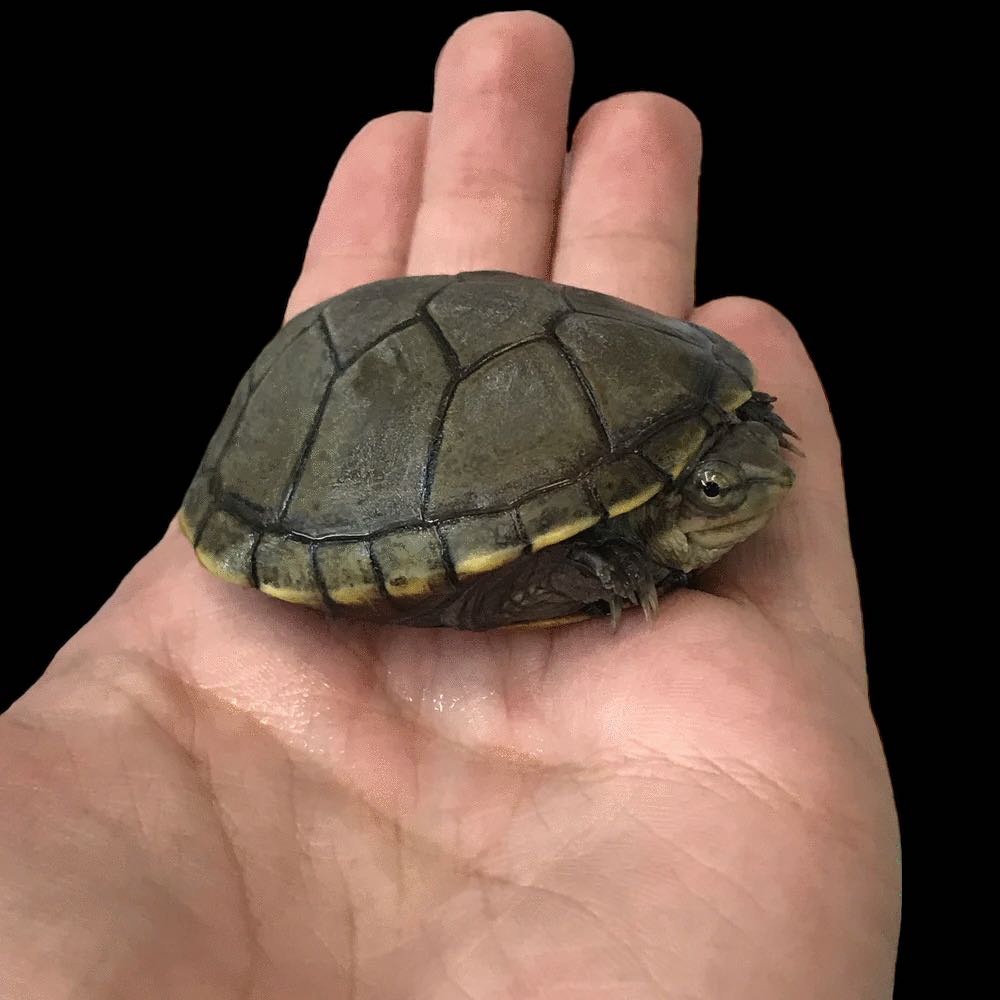
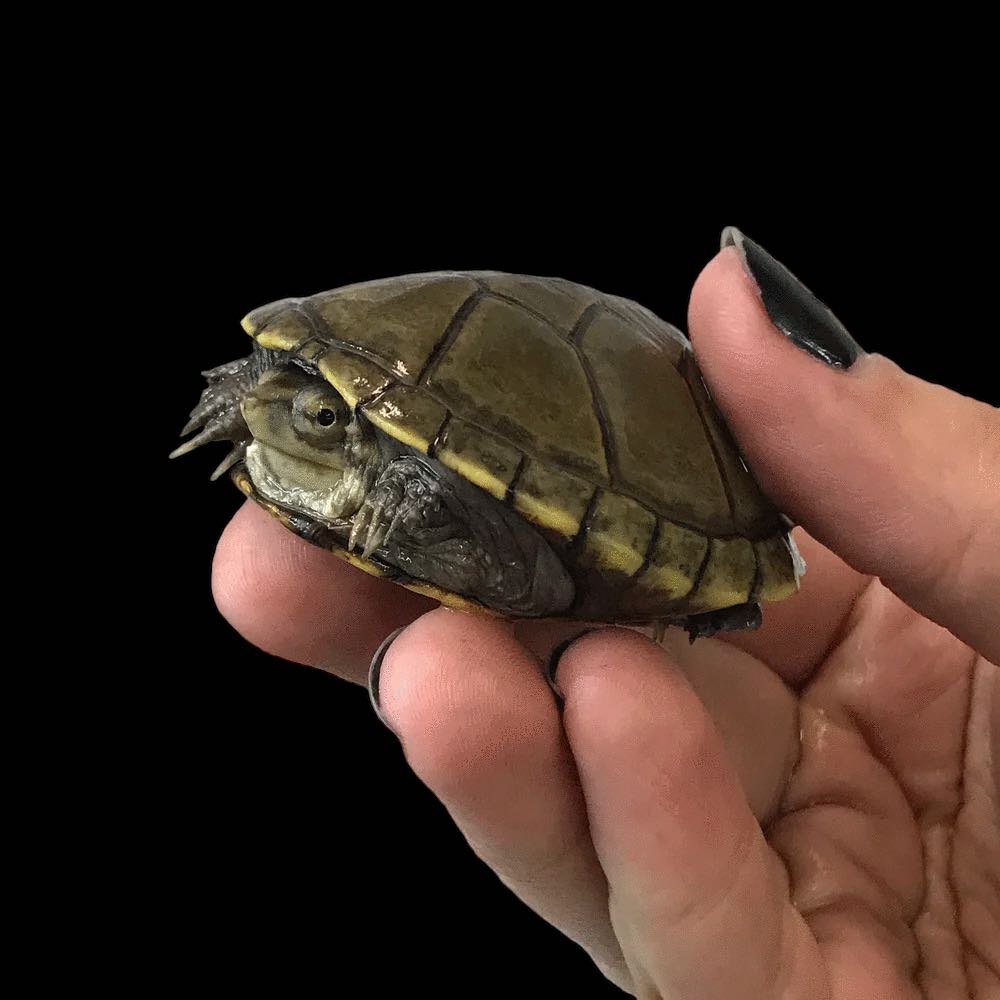
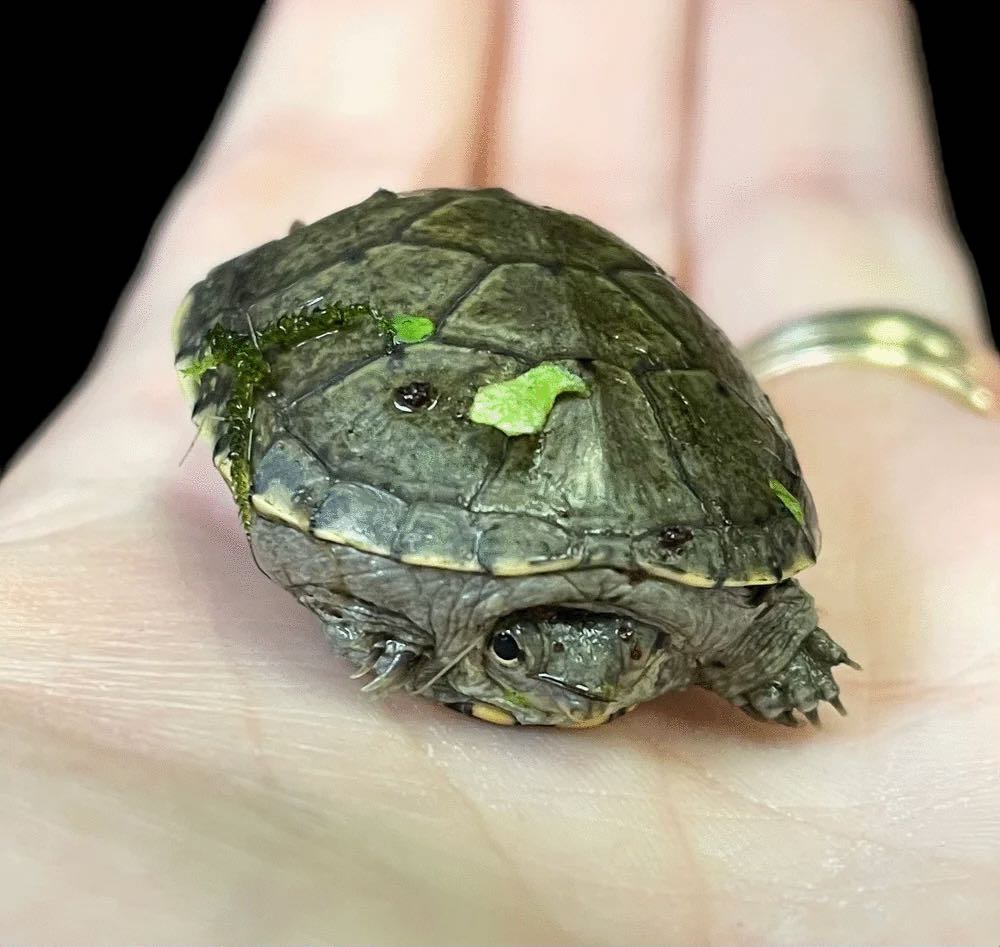
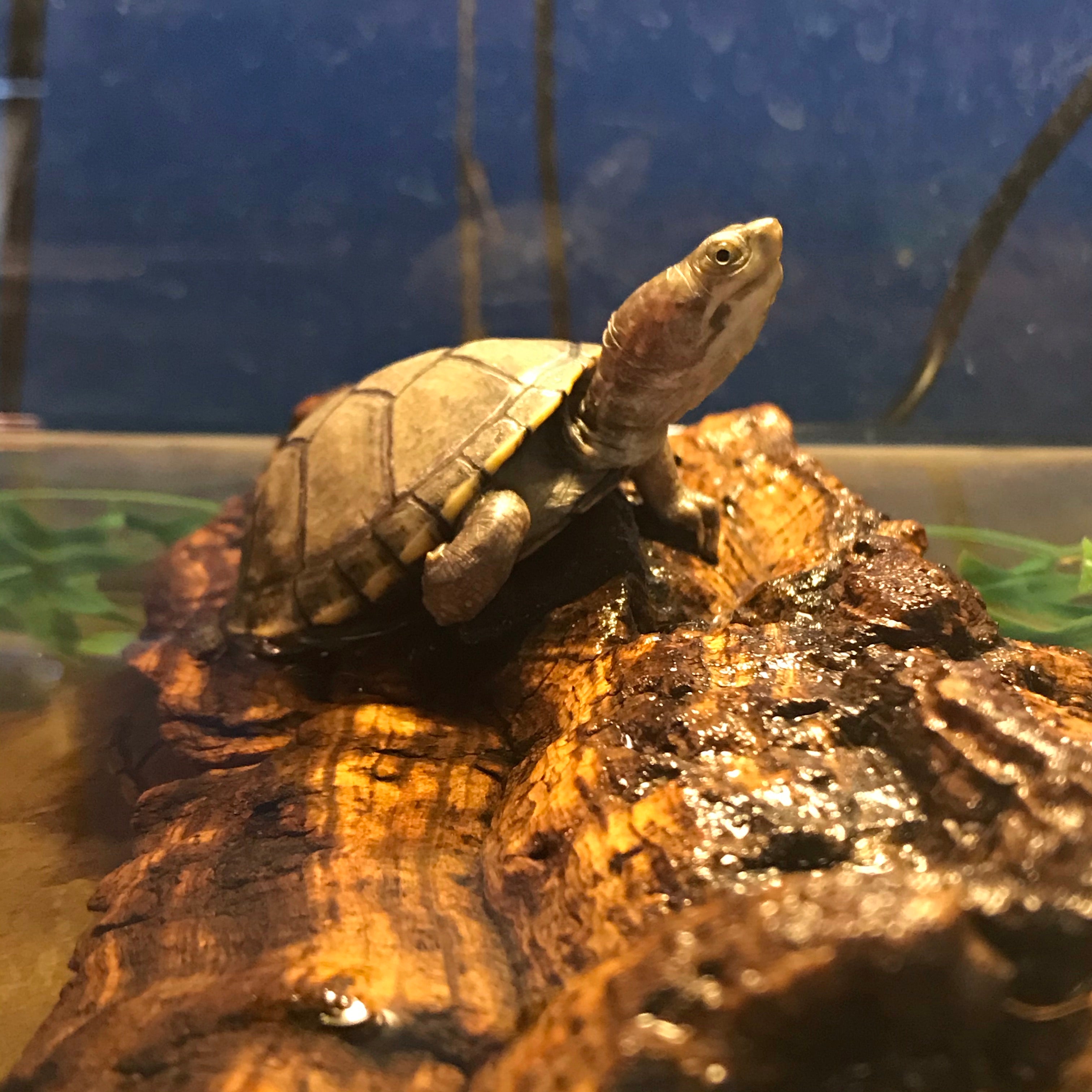
Appearance: The Yellow Mud Turtle has a smooth, oval carapace that ranges from olive and tan to dark brown, often with a subtle yellowish cast that gives the species its name. The head is grey to olive with fine yellow speckling, and the throat and chin often appear distinctly pale or yellowish. The plastron is larger than that of many mud turtles, hinged at the rear, and typically yellow to tan with darker seams. Limbs are sturdy and lightly scaled. Males have longer, thicker tails with visible cloacal openings farther from the shell, while females are rounder and broader.
Distribution: Native to the central United States, including Texas, Oklahoma, Kansas, New Mexico, Colorado, Nebraska, and parts of northern Mexico.
Habitat: This species inhabits shallow ponds, marshes, cattle tanks, ephemeral pools, and slow-moving waterways in semi-arid regions. It is well adapted to dry climates and frequently buries itself during drought or temperature extremes. In captivity, it requires a warm aquatic enclosure with moderate depth and plentiful bottom structure.
Behaviour: Yellow Mud Turtles are bottom-walkers, preferring shallow or moderately deep water. They are diurnal to crepuscular, shy at first but highly food-motivated once settled. They burrow extensively in mud or soft substrate and may aestivate during dry periods. They bask occasionally and use hides frequently.
Captive Care
Enclosure: Provide an aquatic setup with a minimum footprint of 36 × 18 inches (90 × 45 cm) for an adult. Offer shallow to moderate water depth, submerged hides, driftwood, river rocks, and resting ledges. Include a fully dry basking area accessible by gentle ramps. Filtration should be strong but low-flow to maintain water quality while avoiding excessive current.
Temperature and Humidity:
Water temperature: 75 to 80°F (24 to 27°C)
Basking area: 90 to 94°F (32 to 34°C)
Ambient air temperature: 78 to 84°F (26 to 29°C)
Lighting: Provide full-spectrum lighting with 10–12% UVB to ensure healthy shell development and proper metabolic function. Keep the basking zone dry, stable, and easy to access.
Diet: Offer a varied omnivorous diet including insects, worms, snails, small fish, aquatic invertebrates, high-quality turtle pellets, leafy greens, and aquatic plants. Juveniles require more protein, while adults thrive on a balanced omnivorous diet with moderate plant matter.
Behaviour in Captivity: Yellow Mud Turtles are hardy, adaptable, and active bottom explorers. They thrive in well-structured aquatic environments with multiple hides. Once comfortable, they become bold feeders and show frequent digging or burrowing behaviour.
Special Considerations
• Provide shallow or moderate water—avoid very deep setups without resting platforms.
• Offer soft substrate or leaf litter to allow natural burrowing behaviour.
• Maintain excellent water quality with gentle filtration.
• Juveniles require higher protein intake.
Taxonomy Note
Kinosternon flavescens is one of the more arid-adapted mud turtles and is closely related to other North American Kinosternon species. Its pale facial colouring and preference for semi-dry habitats distinguish it from similar species.
Genetics Note
There are no recognised morphs for the Yellow Mud Turtle. Shell tone, facial yellowing, and pattern intensity vary naturally among individuals and regional populations.