

Photo Disclaimer
Description
African Common Toad
Scientific Name: Sclerophrys regularis
Common Name: African Common Toad
Species Overview
Size: Adults typically reach 3 to 5 inches (7.5 to 12.5 cm), with females generally larger and more robust than males.
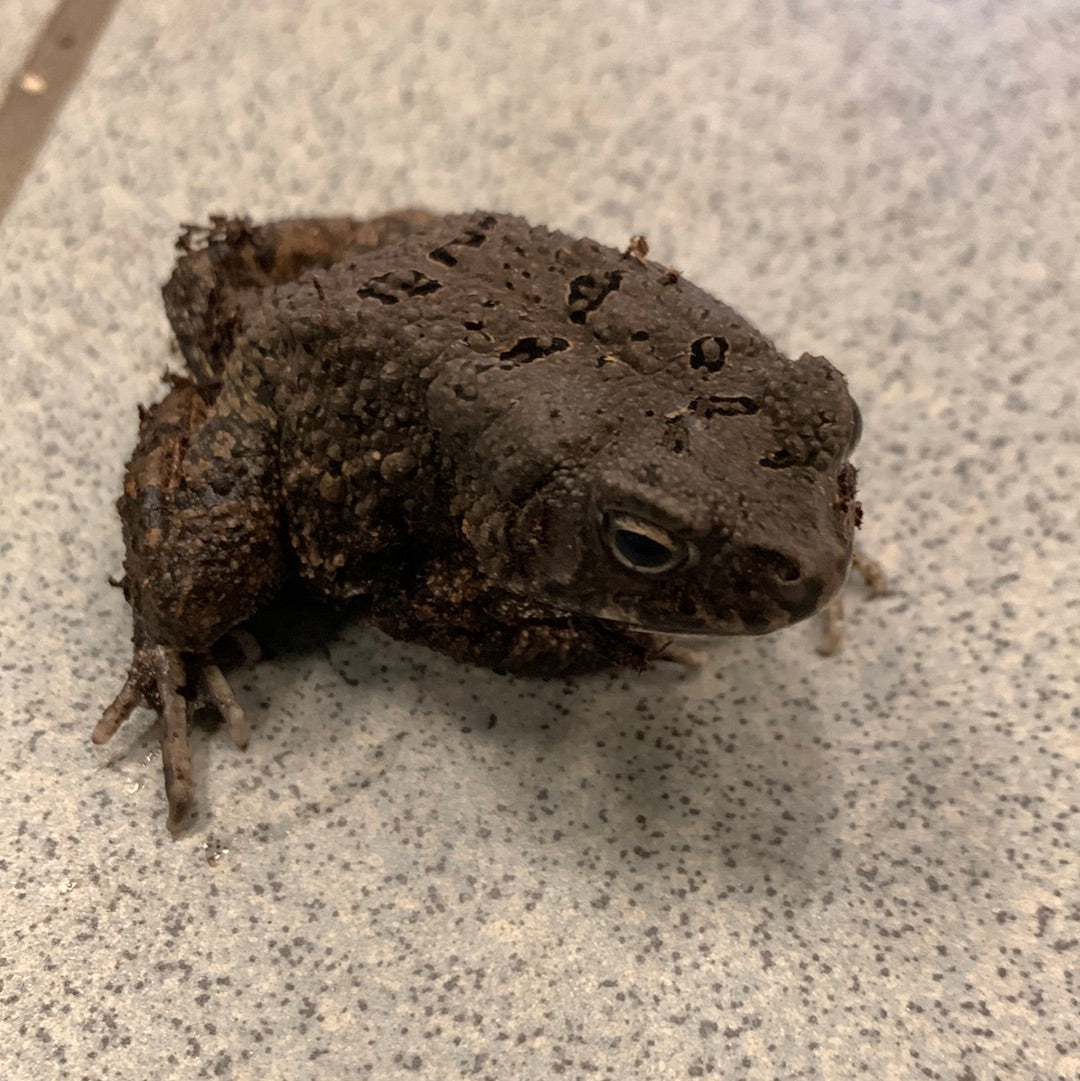
Appearance: The African Common Toad is a sturdy, broad-bodied amphibian with textured, warty skin that ranges from grey and tan to olive or darker brown. Many individuals display a pale dorsal stripe, though it is not present in all. Parotoid glands are large and raised, positioned behind the copper or bronze-coloured eyes with horizontal pupils. The underside is pale and lightly speckled. Females tend to be rounder, while males may develop subtle nuptial pads during breeding periods.
Distribution: Widespread across sub-Saharan Africa, including Senegal, Ethiopia, Kenya, Tanzania, Uganda, Zambia, and parts of southern Africa. They are highly adaptable and thrive in both natural and human-modified environments.
Habitat: Wild African Common Toads occupy savannas, grasslands, woodlands, agricultural lands, and suburban areas. They favour regions with seasonal rainfall and breed in temporary or permanent freshwater sources. In captivity, they thrive in terrestrial setups with moderate humidity, deep soil, and ample hiding options.
Behaviour: Primarily nocturnal, these toads emerge at night to forage. They rely heavily on camouflage, remaining still when threatened, and may produce mild defensive secretions when handled. They are solitary outside of the breeding season and move with short, deliberate hops.
Captive Care
Enclosure: A single adult can be housed in a 24 × 18 × 18 inches (60 × 45 × 45 cm) enclosure. Provide deep, slightly moist soil or coconut fibre substrate with leaf litter, cork bark, driftwood, and dense plant cover for secure hiding. Include a shallow water dish large enough for soaking. For those keeping multiples, upgrading to 36 × 18 × 18 inches (90 × 45 × 45 cm) offers more space and reduces territorial pressure.
Temperature and Humidity:
Ambient temperature: 75 to 82°F (24 to 28°C)
Warm area: 84 to 88°F (29 to 31°C)
Night temperature: 70 to 74°F (21 to 23°C)
Humidity: 50 to 70%, with daily misting and partial drying between sprays.
Lighting: Although nocturnal, African Common Toads benefit from low-level UVB (2 to 5%). Provide a gentle day and night cycle with indirect lighting.
Diet: Offer a varied insectivorous diet that includes crickets, roaches, worms, black soldier fly larvae, and occasional soft-bodied invertebrates. Supplement with calcium and vitamins as appropriate. Juveniles require more frequent feeding, while adults thrive on a controlled, spaced-out schedule.
Behaviour in Captivity: These toads adapt well with consistent care. They remain hidden through the day and become active and bold feeders after dark. They are generally hardy but should not be handled unnecessarily due to sensitive skin and defensive secretions.
Genetics Note
There are no recognised morphs for the African Common Toad. Variation in dorsal tone, patterning, and dorsal stripe visibility occurs naturally across its large range and is not considered morph-based.