

Photo Disclaimer
Description
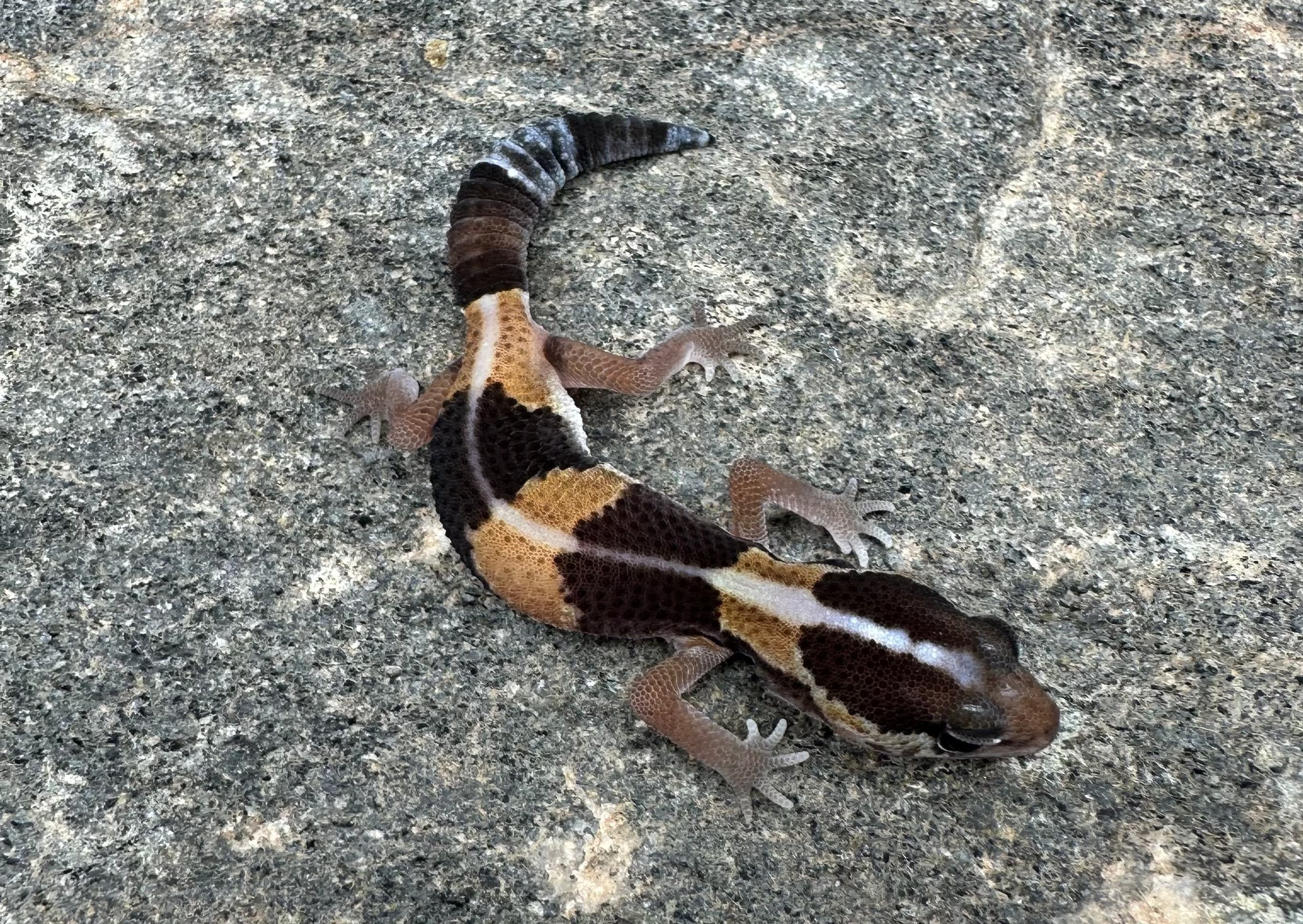
African Fat Tail Gecko (Stripe)
Scientific Name: Hemitheconyx caudicinctus
Common Name: African Fat Tail Gecko
Species Overview
Size: Adult African Fat Tail Geckos typically reach 7–8 inches (18–20 cm) in length, with males being slightly larger and more muscular. Their thick tails serve as fat storage, helping them regulate energy during periods of reduced feeding.
Appearance: The Striped African Fat Tail Gecko features a clean dorsal stripe that runs from head to tail, contrasting beautifully against a deep brown or chocolate background.
Distribution: Native to West Africa, including Senegal, Ghana, Togo, Benin, and Nigeria, where they inhabit semi-arid savannas, rocky grasslands, and dry scrub regions.
Habitat: In the wild, these geckos occupy burrows or shaded rocky shelters during the day to avoid harsh temperatures. In captivity, they thrive in naturalistic enclosures that replicate these environments, featuring compact soil-sand mixes, stable humidity, and multiple hides for thermoregulation and security.
Behaviour: Striped African Fat Tail Geckos are nocturnal, gentle, and easy to handle once accustomed to captivity. They adapt quickly to consistent care and display calm, steady movements typical of the species.
Captive Care
Enclosure: Provide a minimum enclosure of 24 inches × 18 inches × 12 inches (60 × 45 × 30 cm) for a single adult. Naturalistic setups are preferred, using a compact soil-sand-clay substrate that allows burrowing. For juveniles or temporary setups, reptile carpet, tile, or paper towel can be used for ease of cleaning and reduced ingestion risk. Offer at least three hides—one on the warm side, one on the cool side, and one humid hide to assist with shedding.
Temperature & Humidity: Maintain a warm-side surface temperature of 88–92°F (31–33°C) and a cool side between 75–80°F (24–27°C). Nighttime temperatures may drop to 70–74°F (21–23°C). Keep humidity between 50–70%, with a slightly damp hide available for proper shedding.
Lighting: Although UVB is not essential, providing a low-level UVB source (2–5%) supports healthy activity and natural circadian rhythms. Maintain a 12-hour light cycle year-round.
Diet: Feed a variety of gut-loaded insects, including crickets, dubia roaches, mealworms, and silkworms. Supplement with calcium and multivitamin powders regularly. Juveniles should be fed daily, while adults do well on a feeding schedule of every 2–3 days.
Behaviour in Captivity: Calm, slow-moving, and resilient, Striped African Fat Tail Geckos make reliable captives that respond well to routine care. They rarely display defensive behaviours and can be gently handled with ease.
Special Considerations: Always use thermostats to regulate heat sources and prevent burns. Monitor tail thickness to ensure proper health and fat storage.
Sand: Addressing Concerns and Misconceptions
Sand has been a long-debated substrate for geckos due to the risk of impaction. However, when used as part of a compacted soil-sand mixture and maintained properly with correct heating and nutrition, the risk is low. Issues primarily arise from loose or calcium-based sands combined with poor husbandry. For hatchlings, juveniles, or new arrivals, simpler substrates such as reptile carpet, tile, or paper towel are safer until fully established.
Taxonomy Note
The African Fat Tail Gecko (Hemitheconyx caudicinctus) is a member of the Eublepharidae family, which includes the Leopard Gecko (Eublepharis macularius). Members of this family retain functional eyelids and lack adhesive toe pads, making them fully terrestrial. This species exhibits consistent physical traits across its range, with minor natural variation among regional populations.
Genetics Note
Stripe (Recessive): Produces a continuous or near-continuous dorsal stripe, replacing the species’ typical broken banding. This gene forms the foundation for several popular combination morphs.