

Photo Disclaimer
Description
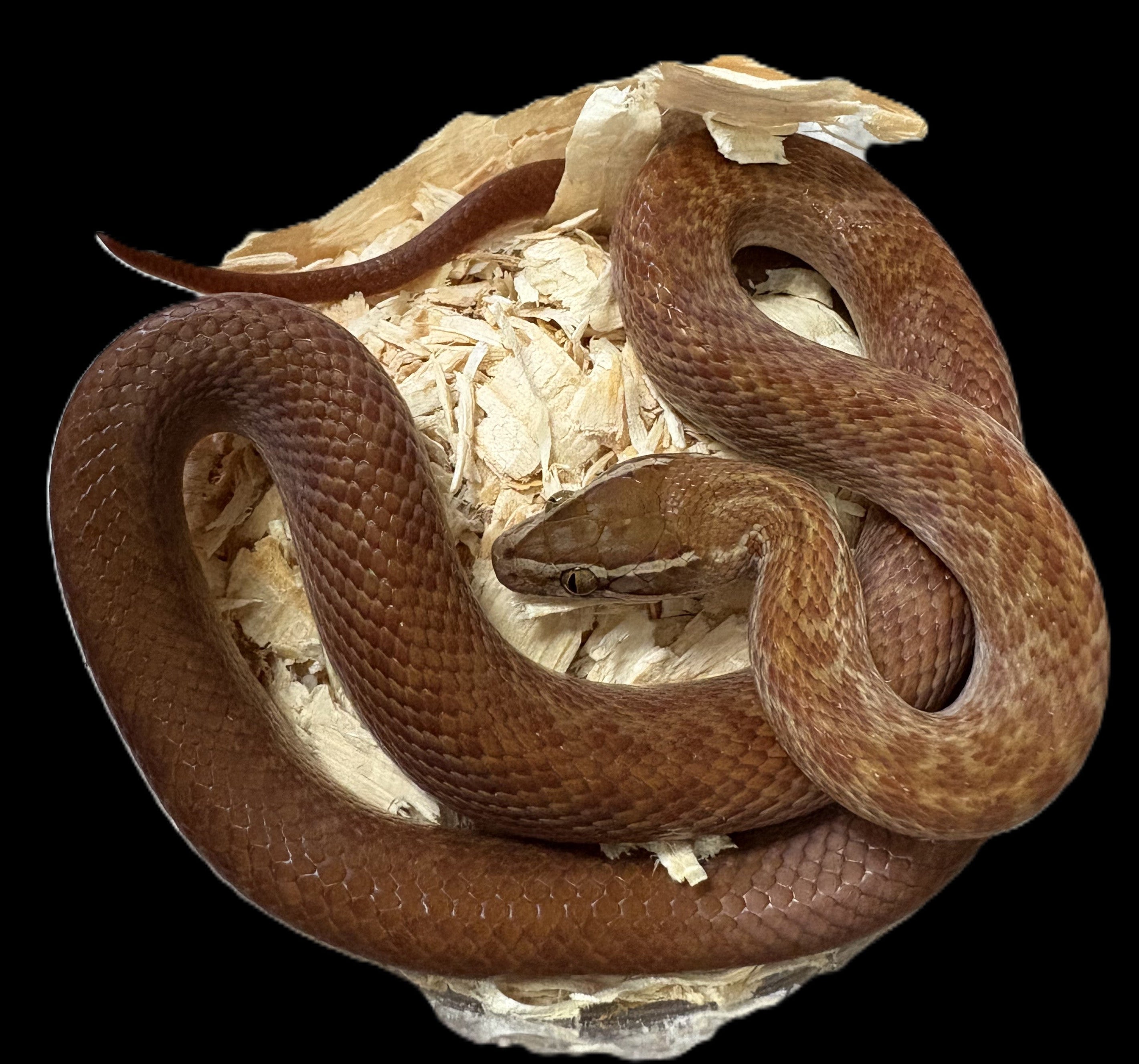
African House Snake (Red)
Scientific Name: Boaedon capensis
Common Name: African House Snake
Species Overview
Size: Adult African House Snakes typically reach 2.5–4 feet (0.75–1.2 m) in length, with females often growing larger and more robust than males. They are slender, smooth-scaled constrictors with a sleek, agile build and large, intelligent eyes.
Appearance: The Red African House Snake is a vibrant selectively bred line that emphasizes warm red and copper pigmentation throughout the body. The base colour varies from deep orange-brown to brick-red, sometimes with faint patterning that softens with maturity. Some individuals display a near-solid red tone, while others show subtle marbling or side striping. The eyes are bronze to reddish-brown, complementing the snake’s overall fiery appearance. This line enhances the naturally warm tones of Boaedon capensis, producing one of the most visually intense and sought-after colour forms of the species.
Distribution: Native to sub-Saharan Africa, including South Africa, Namibia, Botswana, and extending north into Kenya and Tanzania. The red colouration has been refined through selective breeding in captivity rather than tied to a specific wild locality.
Habitat: In the wild, African House Snakes inhabit grasslands, open forests, and rural areas where they thrive near human dwellings due to abundant rodent prey. In captivity, they do well in moderately humid terrestrial enclosures with hides, climbing opportunities, and soft substrate for burrowing.
Behaviour: Calm, intelligent, and adaptable, African House Snakes are known for their steady temperament and consistent feeding habits. The Red line retains the same gentle disposition as the wild type, making it a hardy and beginner-friendly choice.
Captive Care
Enclosure: Provide an adult enclosure at least 3 feet × 18 inches × 18 inches, though larger setups are appreciated. Use soft substrate such as coconut husk, soil blend, or aspen to allow for limited burrowing. Include at least two hides—one on the warm side and one on the cool side—and branches or vines for light climbing.
Temperature & Humidity: Maintain a daytime gradient of 78–86°F (25–30°C) with a basking spot near 88–90°F (31–32°C). Nighttime temperatures can drop to 70–74°F (21–23°C). Keep humidity between 40–60%, allowing slightly higher levels during shedding.
Diet: Offer thawed rodents proportional to the snake’s girth—juveniles every 5–7 days and adults every 10–14 days. African House Snakes are dependable feeders that accept frozen-thawed prey readily.
Behaviour in Captivity: Active and alert yet calm, Red African House Snakes are easy to handle and thrive in well-maintained enclosures. Their striking colour and friendly nature make them excellent display animals.
Special Considerations: As with all Boaedon, ensure the enclosure is secure—these snakes are curious and strong for their size. Regular handling and a stable routine encourage a confident, relaxed animal.
Taxonomy Note
This species was formerly classified under the genus Lamprophis and has since been reassigned following modern genetic and phylogenetic studies.
Former Classification: Lamprophis capensis
Current Accepted Name: Boaedon capensis
This reclassification separates southern African Lamprophis species from the genetically distinct Boaedon group, which includes a wide variety of African “House Snakes.” The name Boaedon capensis is now recognized as the valid and accepted classification in scientific and herpetocultural contexts.
Genetics Note
Red (Polygenic): A line-bred colour trait selectively developed to enhance red and copper pigmentation across the body. Expression varies between individuals, with deeper tones appearing through continued selective breeding. This is a naturally stable, non-recessive colour line rather than a single-gene mutation.