


Photo Disclaimer
Description
West African Mud Turtle
Scientific Name: Pelusios castaneus
Common Name: West African Mud Turtle, African Side-necked Mud Turtle
Species Overview
Size: Males typically reach up to 9.8 inches (25 cm), while females grow larger up to 11 inches (28 cm).
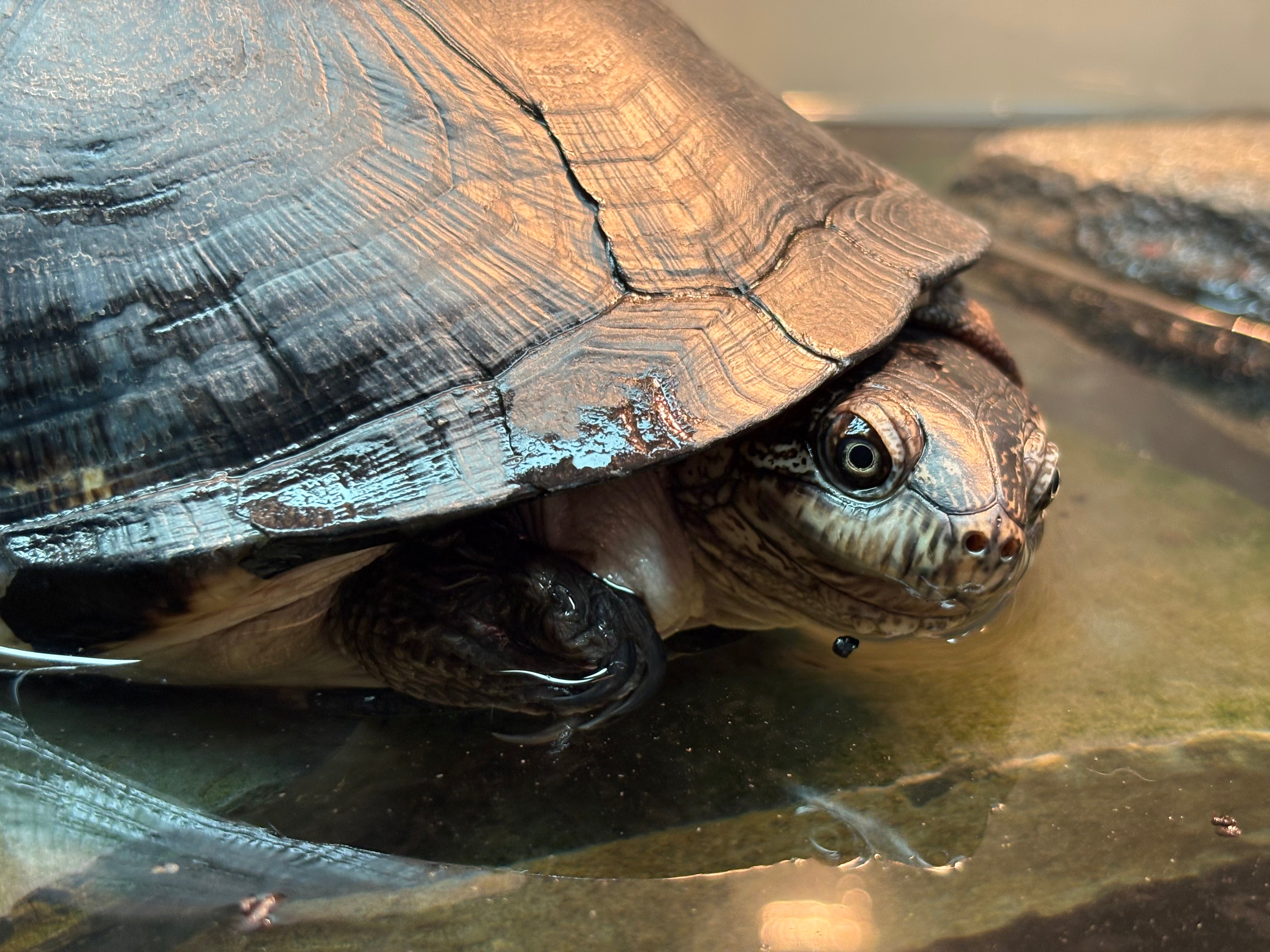
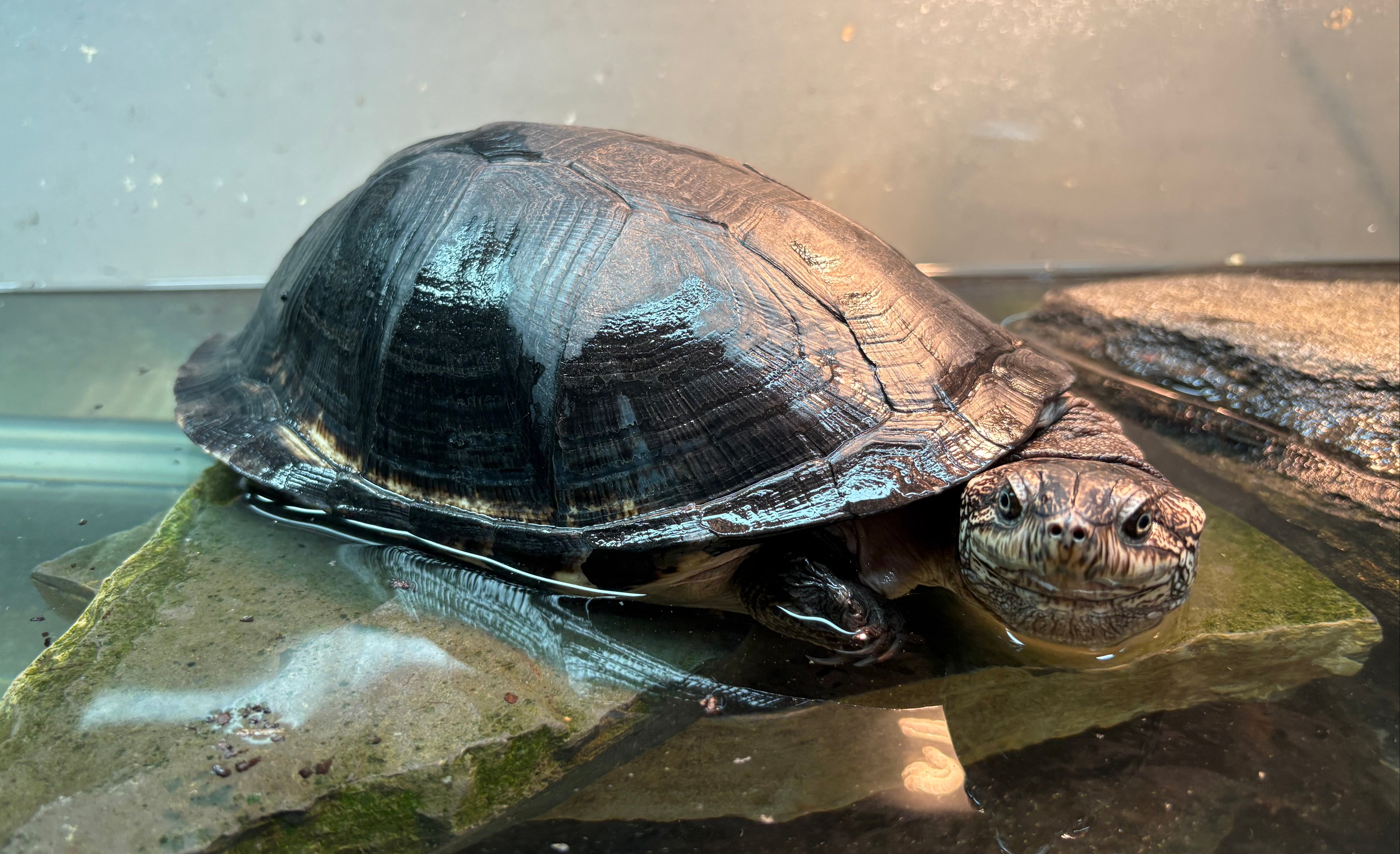
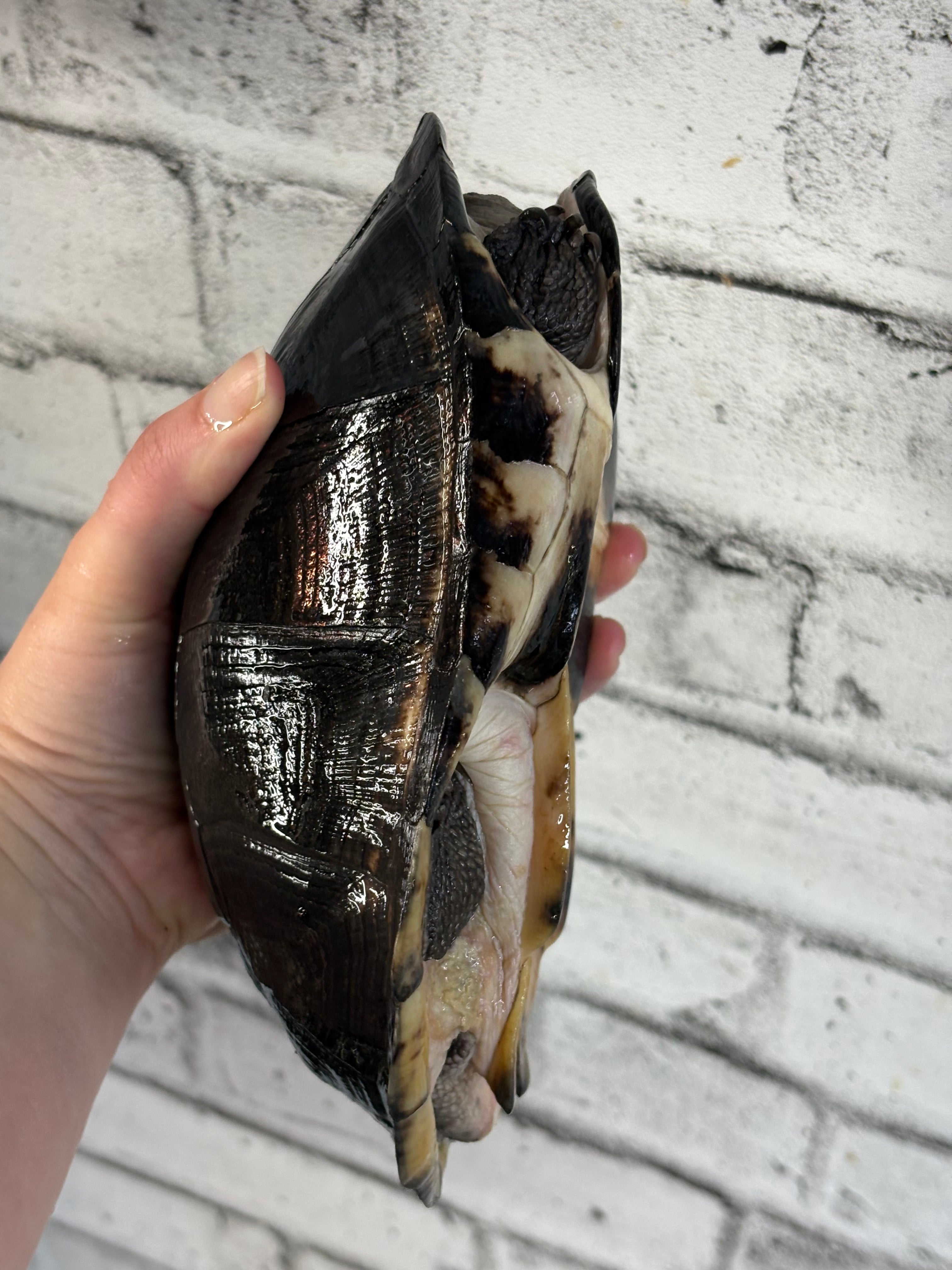
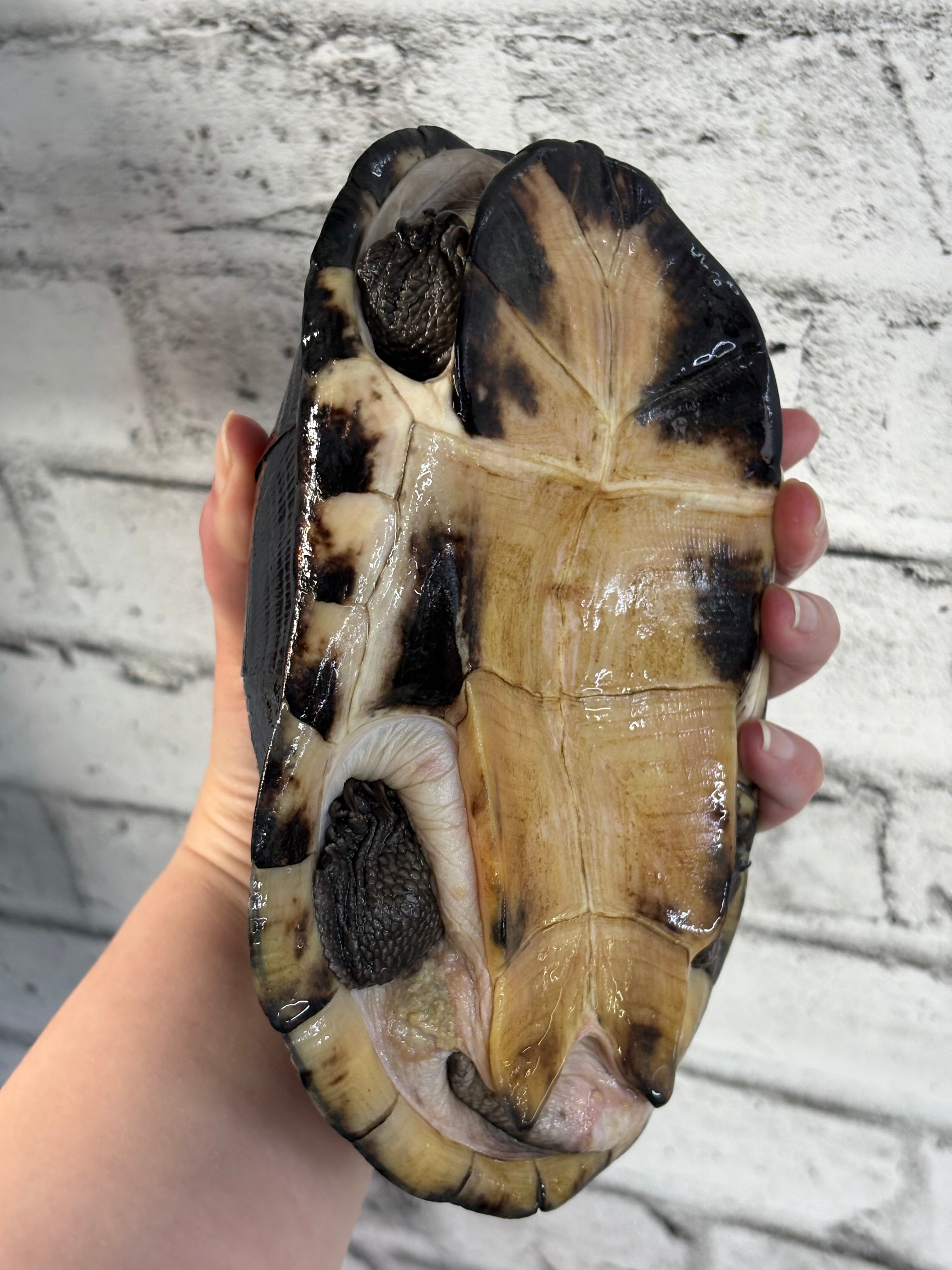
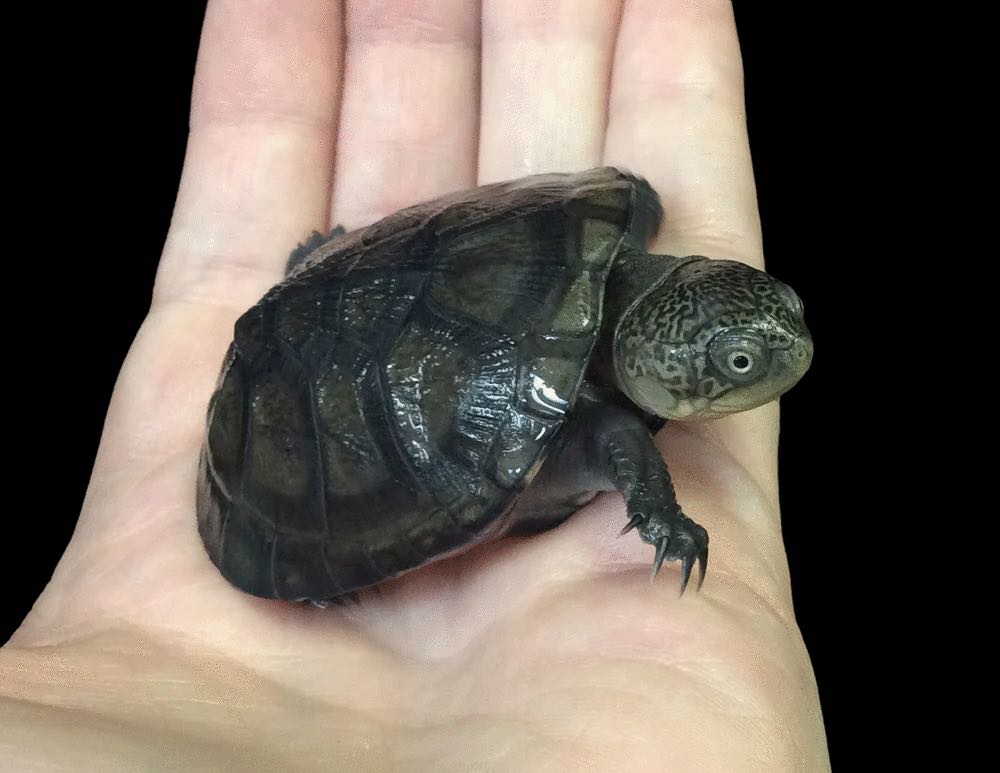
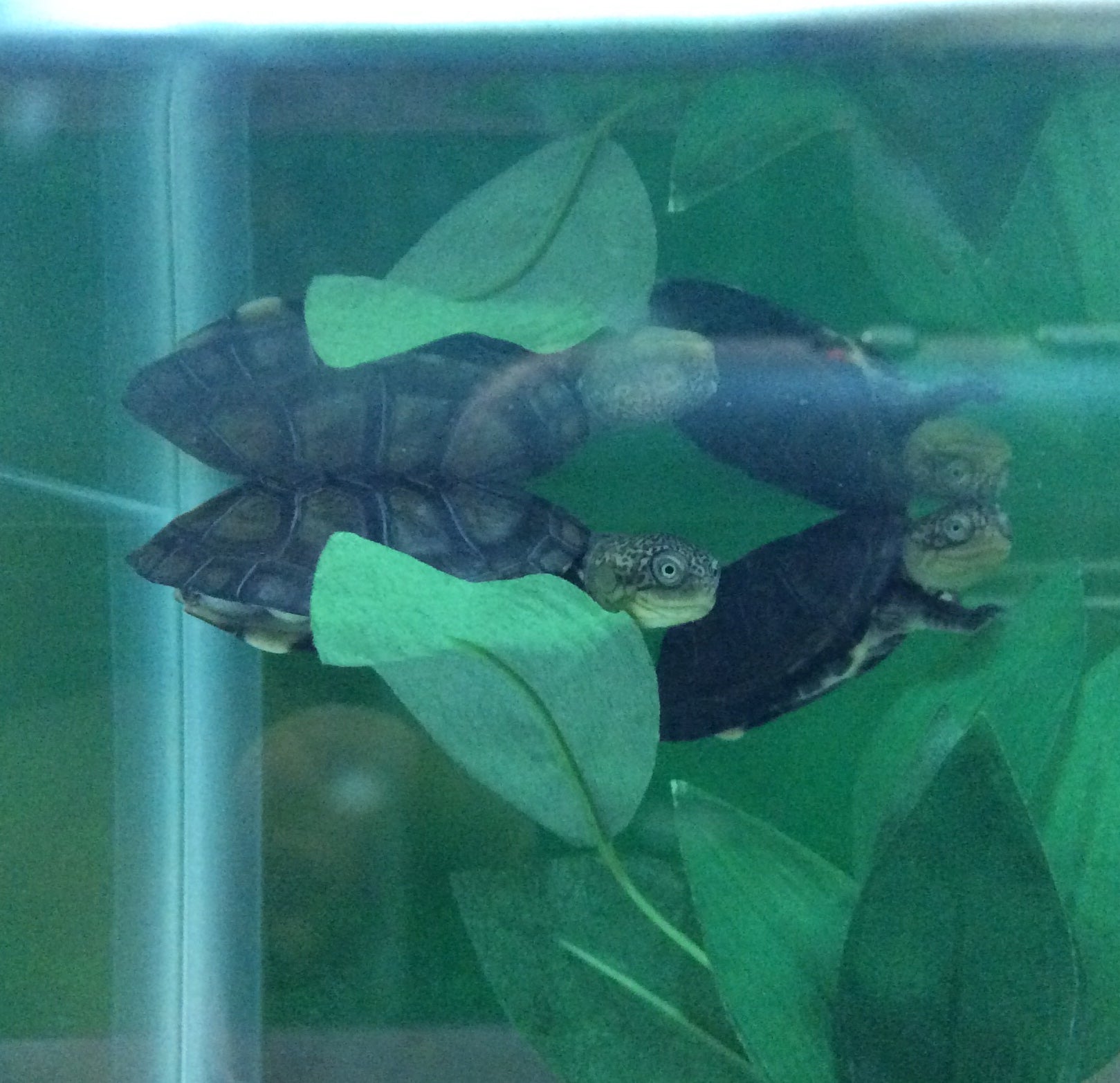
Appearance: The West African Mud Turtle has a smooth, oval carapace ranging from dark brown to rich chestnut, often with subtle lighter edging along the scutes. The plastron is large, hinged, and yellow to tan with darker borders. The head is robust and typically grey or brown with lighter speckling, while the limbs are thick and heavily scaled. As a side-necked species, it folds its neck sideways beneath the shell rather than retracting it straight back. Females will have flat plastrons, while the males will have a deep, very concave plastron and longer, thicker tails.
Distribution: Widespread across West and Central Africa, including Senegal, Ghana, Nigeria, Benin, Togo, Cameroon, and surrounding regions.
Habitat: In the wild, this species occupies shallow lakes, marshes, swamps, slow-moving rivers, rice paddies, and seasonally flooded wetlands. It tolerates varying water depths and thrives in warm, vegetated environments. In captivity, they require a warm aquatic enclosure with moderate depth, stable basking access, and strong filtration.
Behaviour: West African Mud Turtles are diurnal, bold, and active. They are strong swimmers but also walk along the bottom and rest in shallow areas. They bask frequently and quickly learn feeding schedules. This species is hardy and adaptable, often becoming interactive with keepers.
Captive Care
Enclosure: Provide an aquatic enclosure with a minimum footprint of 48 × 24 inches (120 × 60 cm) for an adult female; males may be housed in slightly smaller enclosures, though larger is always beneficial. Offer moderate to deep water, strong basking platforms, submerged driftwood, hides, rocks, and aquatic plants to create visual cover. Filtration must be robust due to their high activity level.
Temperature and Humidity:
Water temperature: 78 to 82°F (26 to 28°C)
Basking area: 92 to 96°F (33 to 36°C)
Ambient air temperature: 80 to 86°F (27 to 30°C)
Lighting: Provide full-spectrum lighting with 10–12% UVB to support shell strength and healthy metabolism. Ensure the basking platform remains fully dry and easily accessible.
Diet: Offer a varied omnivorous diet including insects, earthworms, snails, crustaceans, fish, high-quality aquatic turtle pellets, leafy greens, vegetables, and aquatic plants. Juveniles require higher protein intake, while adults benefit from a balanced plant-to-animal ratio.
Behaviour in Captivity: These turtles are hardy, personable, and often bold feeders. They enjoy swimming, exploring, and basking. They adapt quickly to captive conditions when provided warm, clean water and environmental enrichment.
Special Considerations
• Strong filtration is essential, as this species produces substantial waste.
• Provide both deep water for swimming and shallow resting areas.
• Highly food-motivated—avoid overfeeding.
• Females require significantly more space due to larger adult size.
Taxonomy Note
Pelusios castaneus is part of the African side-necked turtle family (Pelomedusidae). It is one of the most widespread and adaptable species within the genus Pelusios, leading to considerable natural variation across its range.
Genetics Note
There are no recognised morphs for the West African Mud Turtle. Variations in shell tone, head speckling, and plastron pattern are natural differences between individuals and populations.
Estimate shipping