


Photo Disclaimer
Description
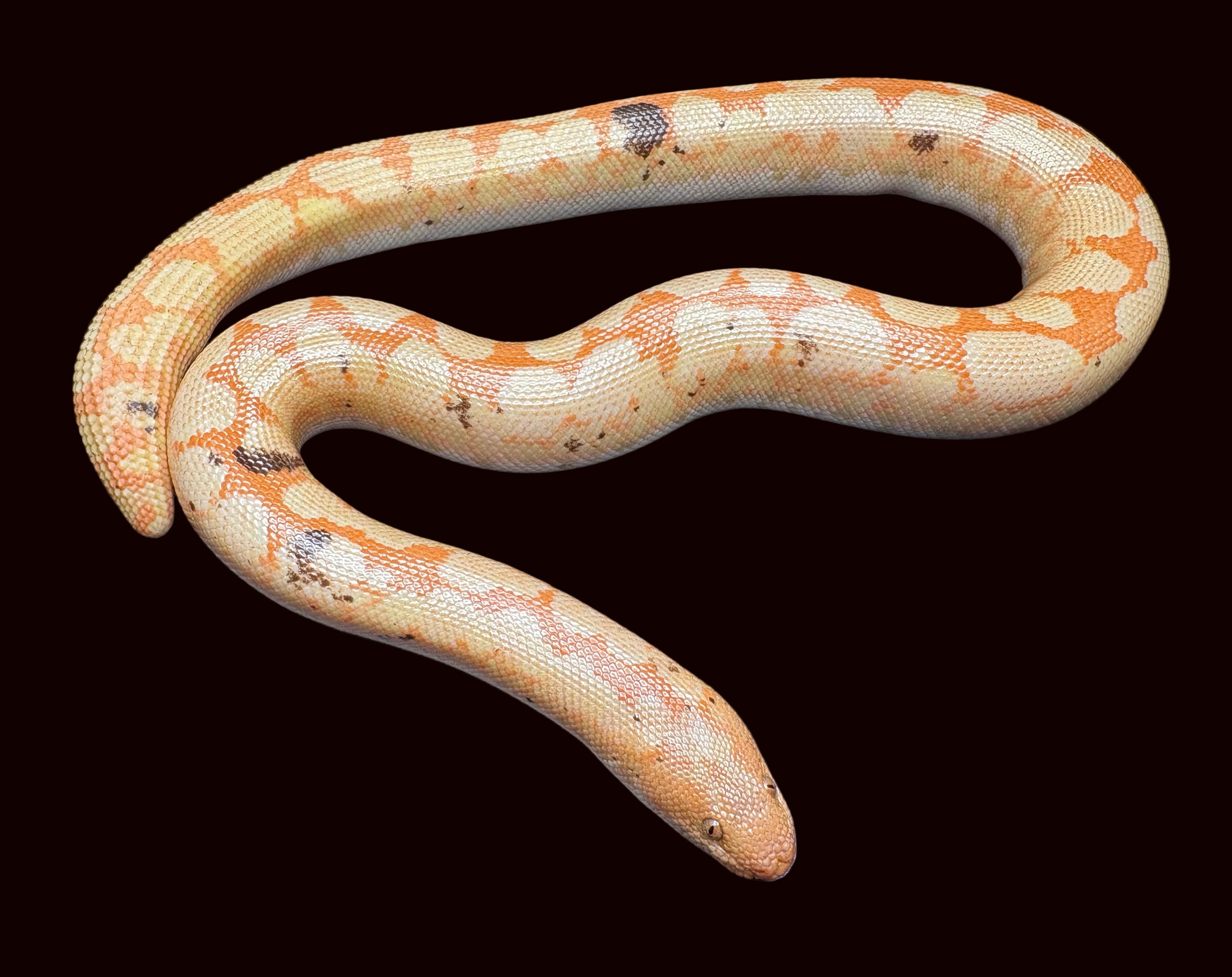
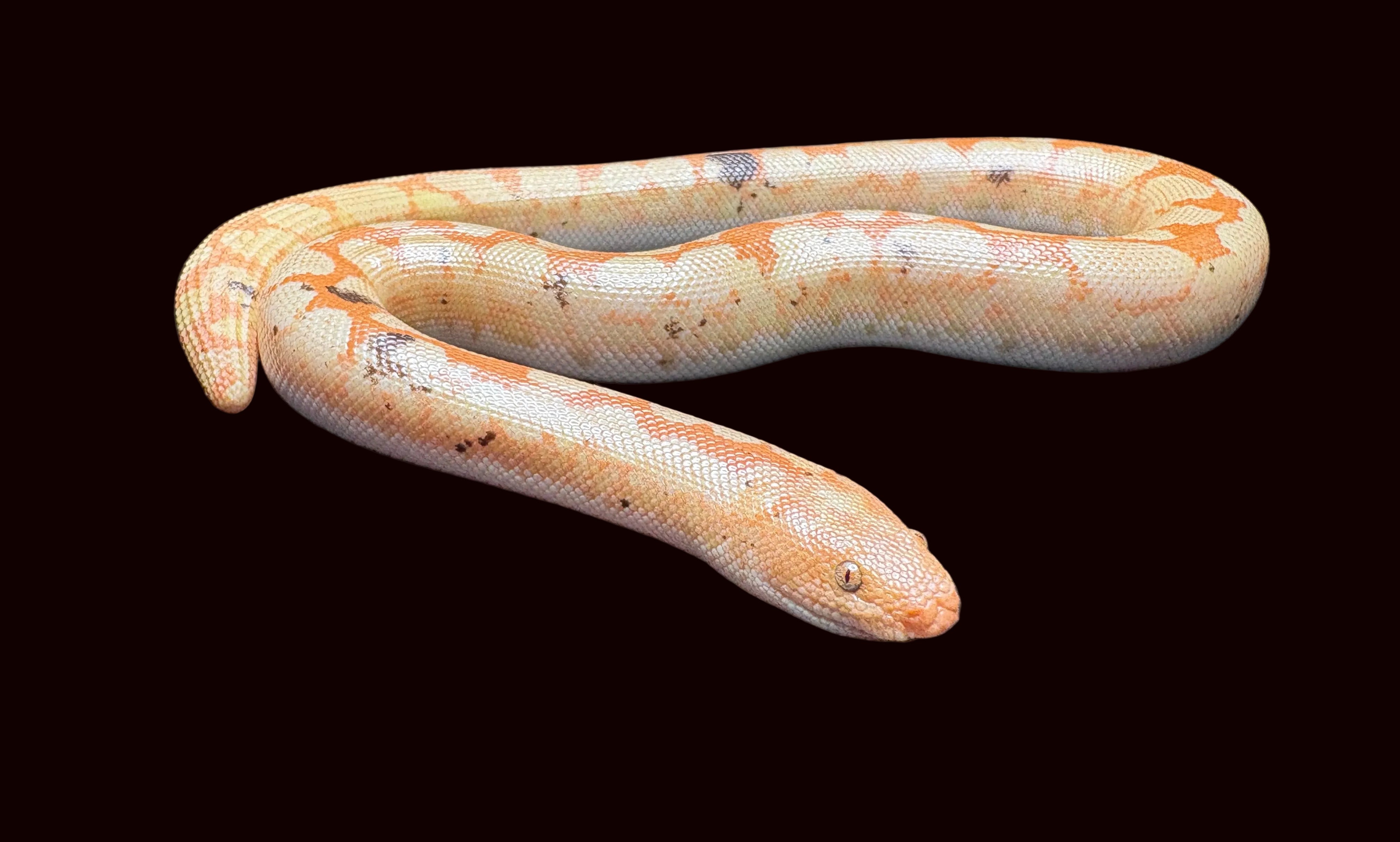
Kenyan Sand Boa (Paradox Albino)
Eryx colubrinus
Common Names: Kenyan Sand Boa, East African Sand Boa
Species Overview
-
Size: Adults typically measure 18–30 inches (45–75 cm), with females larger and bulkier than males.
-
Appearance: A unique expression of the Albino morph where the typical bright orange-and-white pattern is interrupted by random darker pigment patches. These paradox markings can appear anywhere on the body, ranging from small spots to large irregular blotches, creating a one-of-a-kind “paint-splattered” look. They also have the red or pink eyes characteristic of Albino boas.
-
Distribution: Native to East Africa, including Kenya, Ethiopia, and Sudan.
-
Habitat: Prefers arid savannahs, deserts, and scrublands, where it burrows into sandy or loose soils.
-
Behaviour: A fossorial, nocturnal ambush predator that spends most of its life buried just beneath the substrate, striking at prey such as rodents, birds, or reptiles.
Captive Care
-
Enclosure: A 20-gallon long tank (or equivalent) works for most adults. Provide deep, loose substrate (aspen, sand, or a sand/soil mix) for burrowing. Include a water dish and at least one secure hide.
-
Temperature & Humidity: Keep a gradient of 78–82°F (25–28°C) with a basking spot of 90–95°F (32–35°C). Night drops to 72–75°F (22–24°C) are acceptable. Humidity should remain low, around 30–50%, to reflect natural conditions.
-
Diet: Feed juveniles pinky mice every 5–7 days; adults every 10–14 days on small rodents. Monitor body condition, as Kenyan Sand Boas can become overweight easily.
-
Behaviour in Captivity: Generally docile, secretive, and tolerant of handling. They spend most of their time hidden, surfacing mainly when feeding.
-
Special Considerations: A deep burrowing substrate is essential for their well-being.
Genetics Note
-
Albino (Recessive): Removes melanin, producing the bright orange-and-white base coloration.
-
Paradox Expression: A rare, selectively bred form of albino where patches of dark pigment appear unpredictably on the otherwise albino body. The inheritance of paradox markings is not fully understood and is not guaranteed to pass reliably.
-
Care Requirements: Husbandry is identical to wild-type Kenyan Sand Boas; only coloration differs.