



Photo Disclaimer
Description
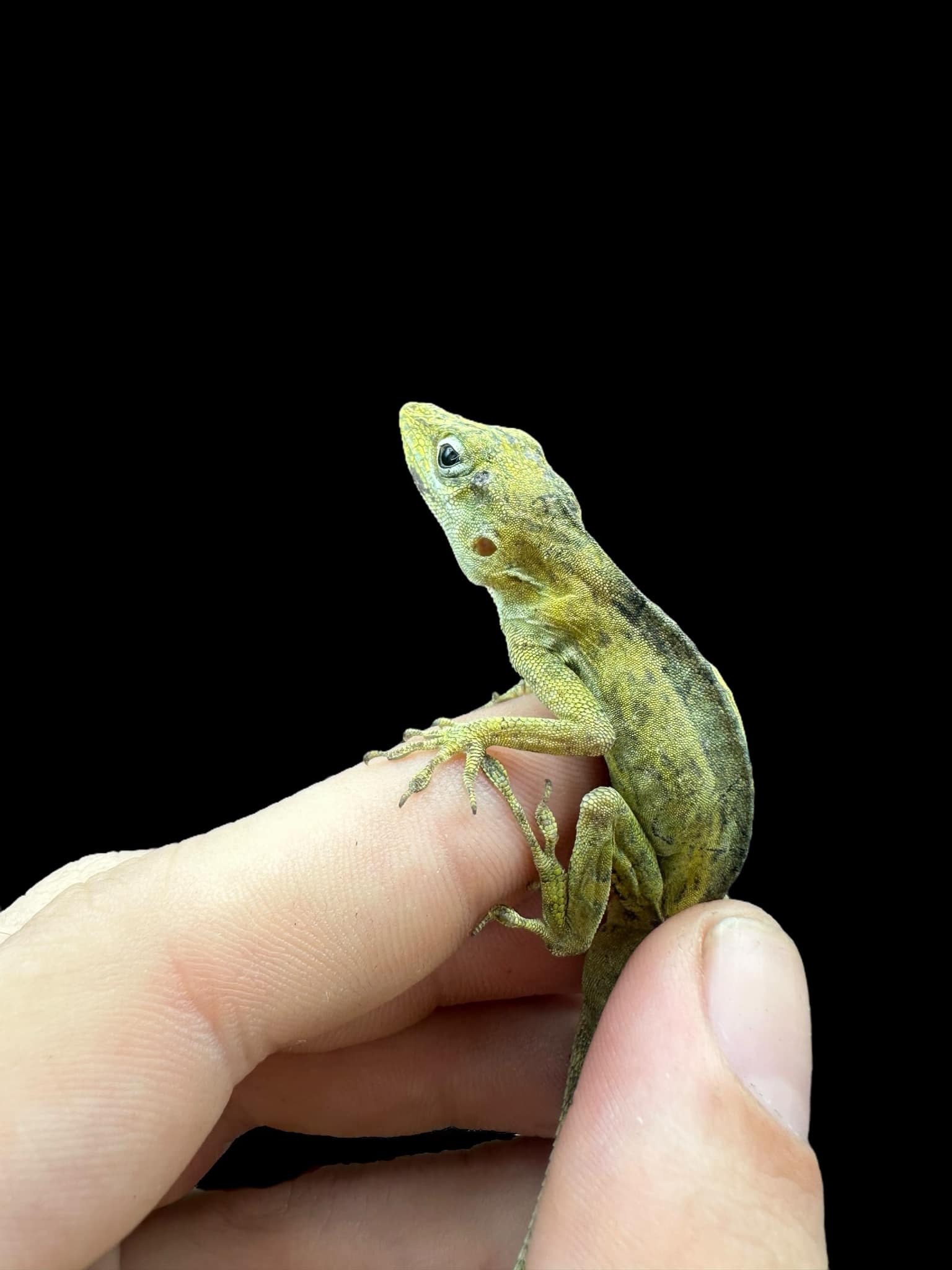
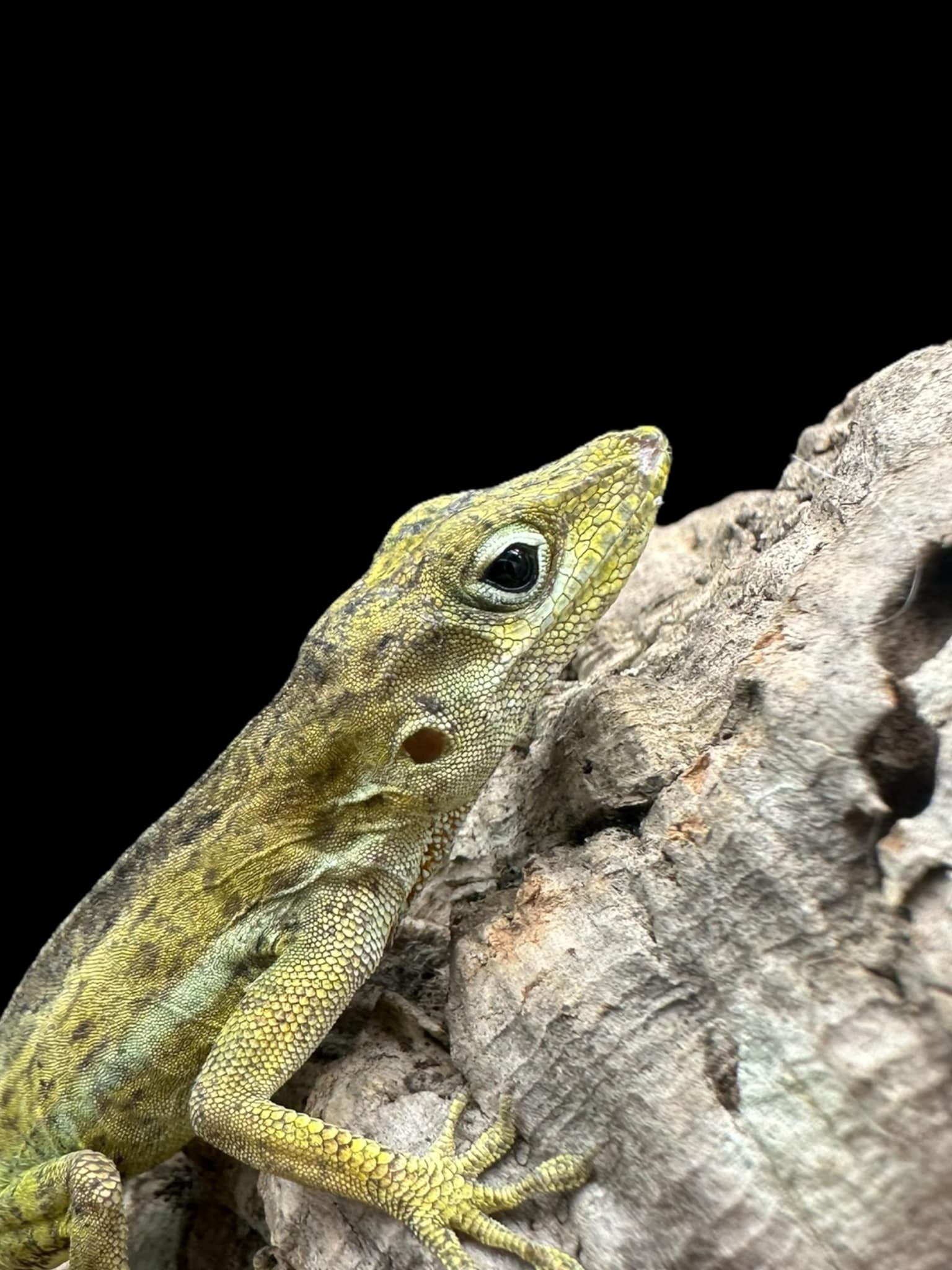
Anguilla Anole
Scientific Name: Anolis gingivinus
Common Name: Anguilla Anole
Species Overview
Size: Adults typically reach 7 to 8 inches (18 to 20 cm) in total length, with roughly half of that length made up by the tail.
Appearance: The Anguilla Anole is a slender, elegant lizard with a smooth body, long limbs, and a narrow head. Its base colour ranges from brown to olive or grey, often accented by fine speckling or faint striping along the body. Males possess a distinctive pale pink to whitish dewlap, which they display during territorial or courtship behaviours. Subtle turquoise or green highlights may appear along the flanks or tail when the animal is warm and active. The species’ long tail and agile build make it exceptionally quick and well-suited for arboreal living.
Distribution: Endemic to the island of Anguilla and nearby islets in the Lesser Antilles.
Habitat: In the wild, Anguilla Anoles inhabit dry forests, scrublands, coastal vegetation, and rocky outcrops. They spend much of their time perched on branches, fenceposts, and tree trunks, actively surveying their surroundings. In captivity, they thrive in vertically oriented enclosures with dense plant cover and ample climbing surfaces.
Behaviour: Anguilla Anoles are diurnal, alert, and very active. They display head-bobs, push-ups, and dewlap flashes during social interactions. While not typically aggressive, they are flighty and best kept as display animals. Handling should be minimal, as they are quick and easily stressed.
Captive Care
Enclosure: A vertically oriented enclosure measuring at least 24 inches × 18 inches × 24 inches (60 × 45 × 60 cm) is suitable for a pair or small group. Provide live or artificial plants, vines, cork bark, branches, and elevated basking sites. Fine mesh lids or well-ventilated tops are essential.
Temperature & Humidity: Maintain a basking area of 90 to 95°F (32 to 35°C) with ambient daytime temperatures of 78 to 85°F (25 to 29°C). Night temperatures can drop to 70 to 75°F (21 to 24°C). Humidity should remain 60 to 80%, with daily misting to provide hydration and maintain microclimates.
Lighting: Provide full-spectrum lighting with moderate UVB (5%) on a 12-hour cycle. UV exposure is important for calcium metabolism and general health.
Diet: Offer small insects such as crickets, fruit flies, bean beetles, mini roaches, and small silkworms. Feeding should occur daily for juveniles and every 1–2 days for adults. All prey should be gut-loaded and dusted with calcium and multivitamins. Provide water droplets through misting, as they rarely drink from dishes.
Behaviour in Captivity: Anguilla Anoles are active climbers and visually oriented lizards. When provided with ample foliage, they settle well and display a full range of natural behaviours. They prefer areas with consistent warmth, strong perches, and good vantage points.
Special Considerations: These anoles are sensitive to dehydration and require stable humidity. Their speed and fragility make handling inadvisable. Secure enclosures with narrow gaps are crucial to prevent escapes.
Taxonomy Note
The Anguilla Anole belongs to the genus Anolis, one of the most diverse reptile genera in the world. Caribbean anoles often exhibit island-specific adaptations, and A. gingivinus is a classic example of a small-island climber with strong territorial and display behaviours.
Genetics Note
There are no recognised morphs or selective colour lines for the Anguilla Anole. Natural variation occurs in shade, pattern intensity, and dewlap colour saturation, but these differences are locality-based rather than genetically defined morphs.