

Photo Disclaimer
Description
Morne Constant Anole (Anolis ferreus)
Scientific Name: Anolis ferreus
Common Name: Morne Constant Anole, Marie-Galante Anole
Species Overview
Size: Adults typically reach 8 to 10 inches (20 to 25 cm) in total length, with males noticeably larger and more robust than females.
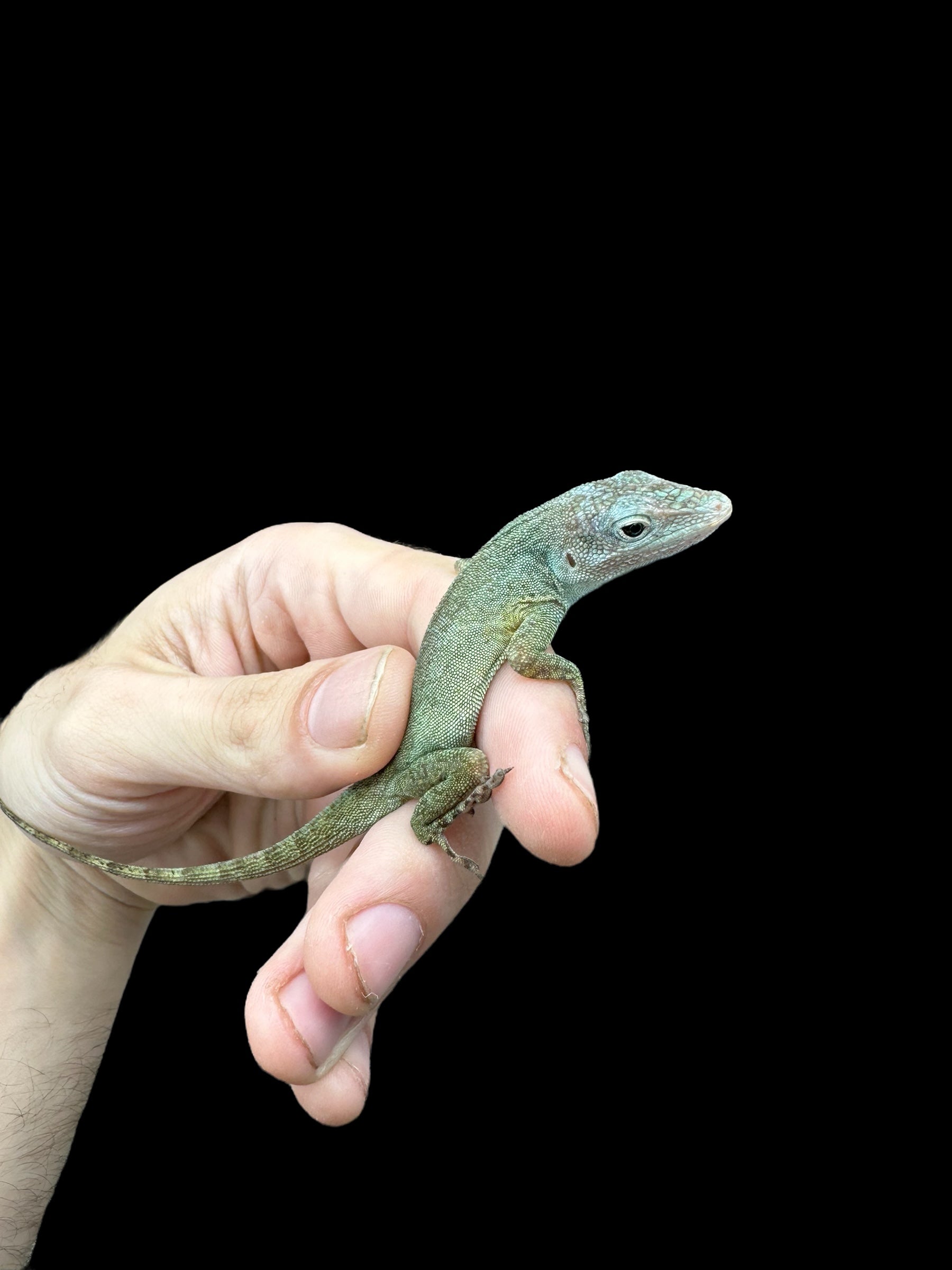
Appearance: The Morne Constant Anole is a striking species with a bright green to yellow-green base colour that may shift depending on temperature, mood, and lighting. Males often display bold yellow highlights on the head and a large, vivid yellow dewlap used in visual displays. Their bodies are slender but muscular, with long limbs adapted for agile climbing and perching. The tail is long and expressive, aiding in balance among branches. Females are generally smaller and have a reduced dewlap.
Distribution: Endemic to the island of Marie-Galante in the Lesser Antilles.
Habitat: This species inhabits dry to moderately humid forests, scrublands, gardens, and forest edges. They favour sunlit perches on tree trunks, branches, and shrubs, using elevated positions for both hunting and display.
Behaviour: Morne Constant Anoles are diurnal, arboreal, and highly territorial. Males perform frequent head-bobs, dewlap extensions, and push-up displays to communicate with rivals and attract mates. They are active insectivores and may also consume small arthropods and occasional plant matter. Their alertness and quick movements make them well adapted to exposed perching sites.
Captive Care
Enclosure: Provide a vertically oriented enclosure at least 36 × 18 × 36 inches (90 × 45 × 90 cm) for an adult or pair. Include abundant vertical climbing branches, cork bark, vines, and dense foliage to create shaded and exposed perching zones. A larger option such as 4 × 2 × 2 feet (120 × 60 × 60 cm) offers superior environmental stability and display space.
Temperature and Humidity:
Basking area: 90 to 95°F (32 to 35°C)
Ambient daytime temperature: 78 to 85°F (26 to 29°C)
Night temperatures: 70 to 75°F (21 to 24°C)
Humidity should range from 60 to 80 percent with regular misting and good air movement to prevent stagnation.
Lighting: Provide strong full-spectrum lighting with moderate UVB (5 to 7 percent). A bright light gradient encourages natural basking, activity, and colour expression.
Diet: Feed a varied insectivorous diet including crickets, roaches, black soldier fly larvae, silkworms, flies, and occasional waxworms. Juveniles may require smaller prey such as fruit flies. Gut-load feeders and supplement with calcium frequently and multivitamins weekly.
Behaviour in Captivity: Morne Constant Anoles are lively, alert, and visually interactive. They thrive in tall, densely planted enclosures that provide both cover and open basking perches. Handling is not recommended—they remain fast and easily stressed—but they make excellent display animals with engaging natural behaviours.
Special Considerations:
• Provide numerous perches at different heights to support territorial and display behaviour.
• Ensure strong lighting for proper basking and dewlap display.
• Avoid excessive handling, as this species is easily stressed.
• Maintain stable humidity, but avoid stagnant, overly wet conditions.
• Securely cover the enclosure—anoles are agile and quick.
Taxonomy Note
The Morne Constant Anole belongs to the genus Anolis, one of the most diverse reptile genera in the world. Anolis ferreus is part of the Eastern Caribbean anole radiation and is notable for its isolated evolution on the island of Marie-Galante.
Genetics Note
No recognized morphs exist for this species. Natural variation includes differences in overall green intensity, dewlap brightness, and head patterning, reflecting normal locality and individual diversity.
Estimate shipping