

Photo Disclaimer
Description
Smallwood’s Anole
Scientific Name: Anolis smallwoodi
Common Name: Smallwood’s Anole, Cuban Blue Anole
Species Overview
Size: Adults typically reach 6 to 8 inches (15 to 20 cm) in total length, with more than half of that length being the tail.
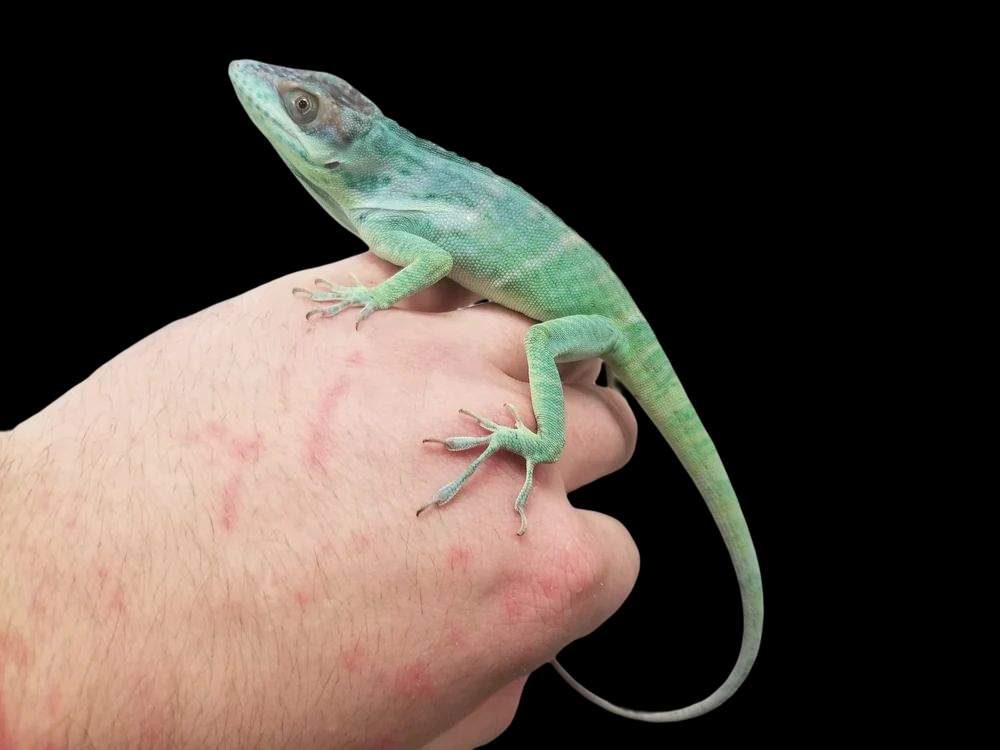
Appearance: Smallwood’s Anole is a visually striking species known for its brilliant blue tones, especially in males. The body ranges from turquoise to teal with subtle patterning, while females and juveniles may appear greener or more subdued. Males display a vibrant dewlap that shifts from pale blue to lavender or pinkish hues depending on locality. The body is slender, with long limbs and toes adapted to arboreal life. Their colours intensify under proper lighting and low-stress conditions.
Distribution: Endemic to Cuba, particularly in the central and eastern regions.
Habitat: This species inhabits tropical and subtropical forests, forest edges, palm stands, and areas with abundant vertical vegetation. They favour well-lit arboreal environments with high humidity and ample perching surfaces.
Behaviour: Smallwood’s Anoles are diurnal, alert, and highly arboreal. Males may display head-bobbing, dewlap flashing, and territorial posturing. They move quickly and prefer elevated perches where they can observe their surroundings. While they are not suited for handling, they thrive as active display lizards.
Captive Care
Enclosure: Provide an enclosure measuring at least 36 × 18 × 36 inches (90 × 45 × 90 cm) for a single adult, with 48 × 24 × 48 inches (120 × 60 × 120 cm) strongly preferred to accommodate their arboreal activity. Furnish with vertical branches, vines, cork tubes, and dense live or artificial plants to create visual security and climbing opportunities. Use a tropical soil-based substrate that maintains humidity while remaining well-drained.
Temperature and Humidity:
Basking area: 90 to 95°F (32 to 35°C)
Ambient daytime: 77 to 82°F (25 to 28°C)
Cooler shaded zones: 72 to 75°F (22 to 24°C)
Night temperatures: 68 to 72°F (20 to 22°C)
Humidity: 60 to 80%, maintained with misting and ample vegetation.
Lighting: Provide bright full-spectrum lighting with moderate UVB (5 to 7%). Strong visible light encourages natural basking, coloration, and activity, while shaded zones allow for temperature and light gradient control.
Diet: Offer a varied insectivorous diet including crickets, roaches, black soldier fly larvae, small silkworms, fruit flies, and the occasional waxworm. Supplement with small amounts of soft fruit or fruit-based gecko diets if desired. All feeders should be gut-loaded and dusted with calcium frequently, with multivitamins offered weekly.
Behaviour in Captivity: Smallwood’s Anoles are active, alert, and display-oriented. They thrive in tall, densely planted enclosures with minimal handling. Males may become territorial and should be housed singly unless breeding is intended. When secure, they show natural climbing, dewlap displays, and hunting behaviours.
Special Considerations:
• Provide numerous perches at varying heights for thermoregulation and security.
• Avoid cohabiting males; they are strongly territorial.
• Maintain high humidity with proper ventilation to prevent respiratory issues.
• Handling should be minimal due to their speed and sensitivity.
• Strong lighting enhances colour expression in this species.
Taxonomy Note
Anolis smallwoodi is part of the diverse Anolis genus, known for its impressive variety of colours, ecological niches, and adaptive behaviours. Smallwood’s Anole is one of the most vibrant Cuban species and is closely related to other blue-anole complexes.
Genetics Note
There are no recognised morphs for Anolis smallwoodi. Natural variations include differences in blue saturation, dewlap hue, and patterning between localities and individuals. These differences reflect natural diversity rather than selective breeding.