

Photo Disclaimer
Description
Antilles Leaf-toed Gecko
Scientific Name: Hemidactylus palaichthus
Common Name: Antilles Leaf-toed Gecko
Species Overview
Size: Adult Antilles Leaf-toed Geckos typically reach 4–5 inches (10–13 cm) in total length, including the tail. They are slender and agile, with delicate limbs and broad, flattened toe pads that give them excellent climbing ability.
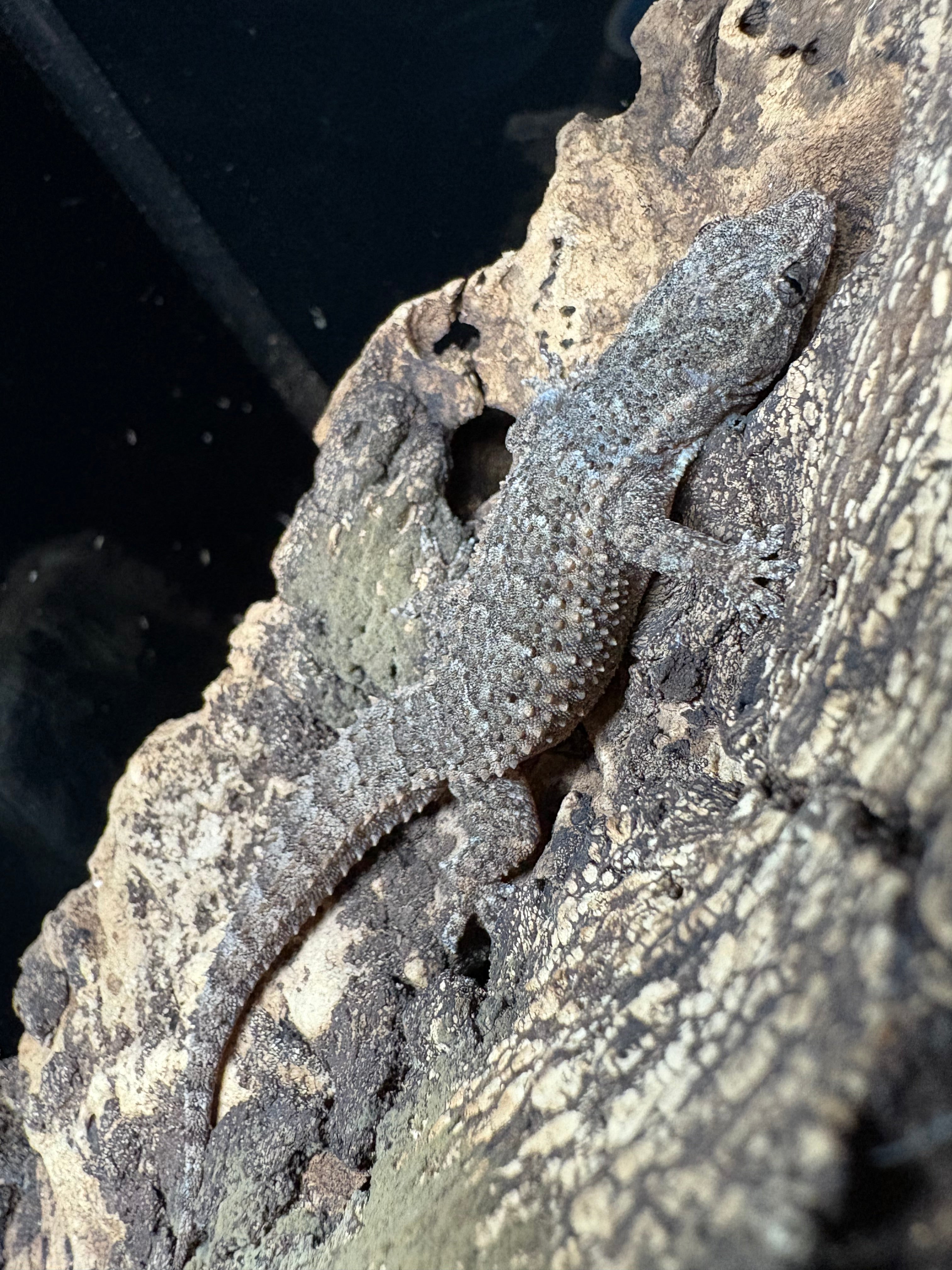
Appearance: This species is a small, semi-transparent gecko with soft grey, tan, or light brown tones that can shift slightly depending on mood and light conditions. The skin often shows fine spotting or faint striping, and the underside is pale white to cream. The broad leaf-shaped toes, from which the species gets its name, are highly specialized for gripping smooth surfaces. Their large eyes feature vertical pupils and golden or bronze irises, perfectly adapted for nocturnal life.
Distribution: Found throughout the Lesser Antilles and coastal regions of northern South America, including Trinidad, Tobago, and parts of Venezuela and Guyana.
Habitat: In the wild, Antilles Leaf-toed Geckos inhabit lowland forests, rocky hillsides, and human dwellings. They are adept climbers, commonly found on walls, tree trunks, and beneath bark or stones. In captivity, they thrive in enclosures that provide vertical space, textured surfaces, and moderate humidity.
Behaviour: These geckos are nocturnal and fast-moving, relying on agility rather than aggression. While they are shy and not ideal for frequent handling, they are fascinating display animals. With consistent care and secure environments, they settle well into captivity and display natural behaviours such as climbing, hunting, and territorial posturing.
Captive Care
Enclosure: Provide a vertically oriented enclosure of at least 12 inches × 12 inches × 18 inches (30 × 30 × 45 cm) for a single adult. Use cork bark, branches, and foliage to create climbing opportunities. A compact soil-coconut fibre or sandy soil base works well for humidity control. Ensure tight-fitting lids—these geckos are expert escape artists.
Temperature & Humidity: Maintain daytime temperatures of 78–84°F (26–29°C) with a nighttime drop to around 70–74°F (21–23°C). Humidity should range between 60–75%, with light evening misting to simulate natural dew.
Lighting: Provide low-level UVB lighting (2–5%) on a 12-hour day/night cycle to promote calcium absorption and overall health. Although nocturnal, they benefit from a gentle daytime gradient and access to shaded areas.
Diet: Offer a diet of small, gut-loaded insects such as pinhead crickets, fruit flies, and small roaches. Occasional supplementation with soft-bodied worms or gecko diet powders containing fruit puree can provide variety. Dust insects with calcium and multivitamin supplements regularly.
Behaviour in Captivity: Antilles Leaf-toed Geckos are alert and quick but rarely aggressive. They prefer to observe from cover and will display more natural behaviour in well-furnished enclosures. These geckos are best appreciated as display animals rather than handled pets.
Special Considerations: Provide secure hides and vertical cover to minimize stress. Avoid excessive handling and ensure good ventilation to prevent respiratory issues in humid environments.
Sand: Addressing Concerns and Misconceptions
While this species is primarily arboreal, a fine compacted soil or soil-sand substrate can be used at the enclosure base. When kept correctly with proper humidity and feeding practices, the risk of impaction is minimal. For young geckos, paper towel or coconut fibre is recommended for safety.
Taxonomy Note
The Antilles Leaf-toed Gecko (Hemidactylus palaichthus) belongs to the family Gekkonidae, one of the most diverse reptile families globally. Members of Hemidactylus are commonly referred to as “house geckos” or “leaf-toed geckos,” known for their adaptability and adhesive toe pads. This species is closely related to Hemidactylus mabouia (the Tropical House Gecko) but remains distinct due to its smaller size, translucent skin, and more delicate features.
Genetics Note
There are currently no recognized colour morphs or genetic variations of the Antilles Leaf-toed Gecko in the pet trade. However, natural variation occurs between island populations, with some individuals showing lighter or more reddish-brown tones. These differences are typically environmental or locality-based rather than genetic.