

Photo Disclaimer
Description
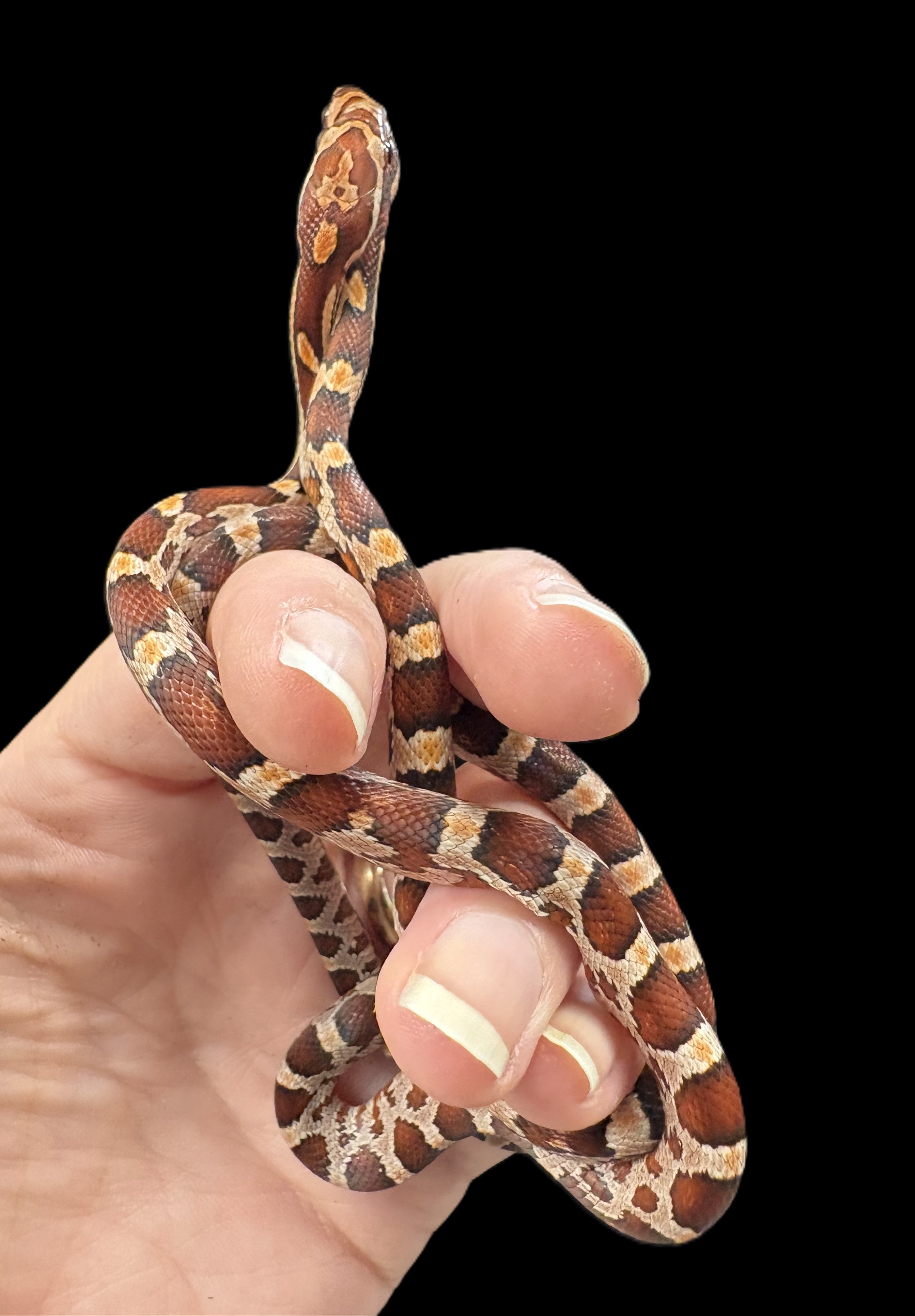
Corn Snake (Normal)
Scientific Name: Pantherophis guttatus
Common Name: Corn Snake
Species Overview
Size: Adults typically reach 3–5 feet (0.9–1.5 m) in length, with a slender yet muscular body and smooth, glossy scales.
Appearance: The Normal Corn Snake represents the wild-type coloration and pattern that define the species. This Corn Snake displays a rich palette of red or orange saddles bordered in black, arranged along a warm orange, brown, or gray background. The belly features a distinct black-and-white checkered pattern, while the head typically bears a dark spear-shaped marking. Individual variation occurs across regional lineages, with some showing more contrast or deeper tones than others. The Normal Corn Snake’s natural appearance has long been admired for its balance of vibrancy and pattern clarity, serving as the foundation for countless selectively bred morphs within the species.
Distribution: Native to the southeastern United States, ranging from New Jersey to Florida and west into Texas.
Habitat: Found in pine forests, grasslands, rocky outcroppings, and agricultural areas. Corn Snakes thrive near human settlements, often inhabiting barns and abandoned structures where rodent prey is abundant. In captivity, they do best in naturalistic terrariums that mimic this varied environment.
Behaviour: Calm, intelligent, and alert. Corn Snakes are crepuscular, most active around dawn and dusk. The Normal Corn Snake exhibits the same dependable temperament and consistent feeding habits that have made the species one of the most popular reptiles in the pet trade.
Captive Care
Enclosure: A naturalistic 40-gallon terrarium (36” × 18” × 18”) or larger works well for adults. A soil-based or bioactive substrate layered with leaf litter supports burrowing and exploration. Provide multiple hides, cork flats, climbing branches, and plant cover for enrichment and security.
Temperature & Humidity: Maintain a daytime temperature gradient of 75–82°F (24–28°C) with a basking area of 86–88°F (30–31°C). Allow nighttime drops to 70°F (21°C). Keep humidity between 40–60%, offering a humid hide during shedding.
Diet: Offer frozen-thawed rodents every 7–10 days for juveniles and every 10–14 days for adults. Prey should be approximately 1.25× the width of the snake’s mid-body.
Behaviour in Captivity: Calm, confident, and easy to manage. Corn Snakes thrive in consistent, naturalistic setups and tolerate handling well. The Normal Corn Snake’s resilience, temperament, and timeless beauty make it an excellent choice for both beginners and experienced keepers.
Special Considerations: Although often overlooked in favor of designer morphs, the Normal Corn Snake remains an essential part of breeding programs and continues to display the purest representation of the species’ natural genetics.
Genetics Note
Normal (Wild-Type)
Displays the natural coloration and pattern typical of wild Corn Snakes. This is the baseline genetic form from which all other morphs are derived.
Genetic Combination Summary
The Normal Corn Snake expresses the standard wild-type coloration with no visible morph traits.
-
Normal = Natural red, orange, and black coloration and checkered belly pattern
This gene set forms the cornerstone of all Corn Snake morph development. The Normal Corn Snake embodies the essence of Pantherophis guttatus—a hardy, beautiful species that showcases nature’s original design while anchoring the genetics of every color and pattern variation seen today.