

Photo Disclaimer
Description
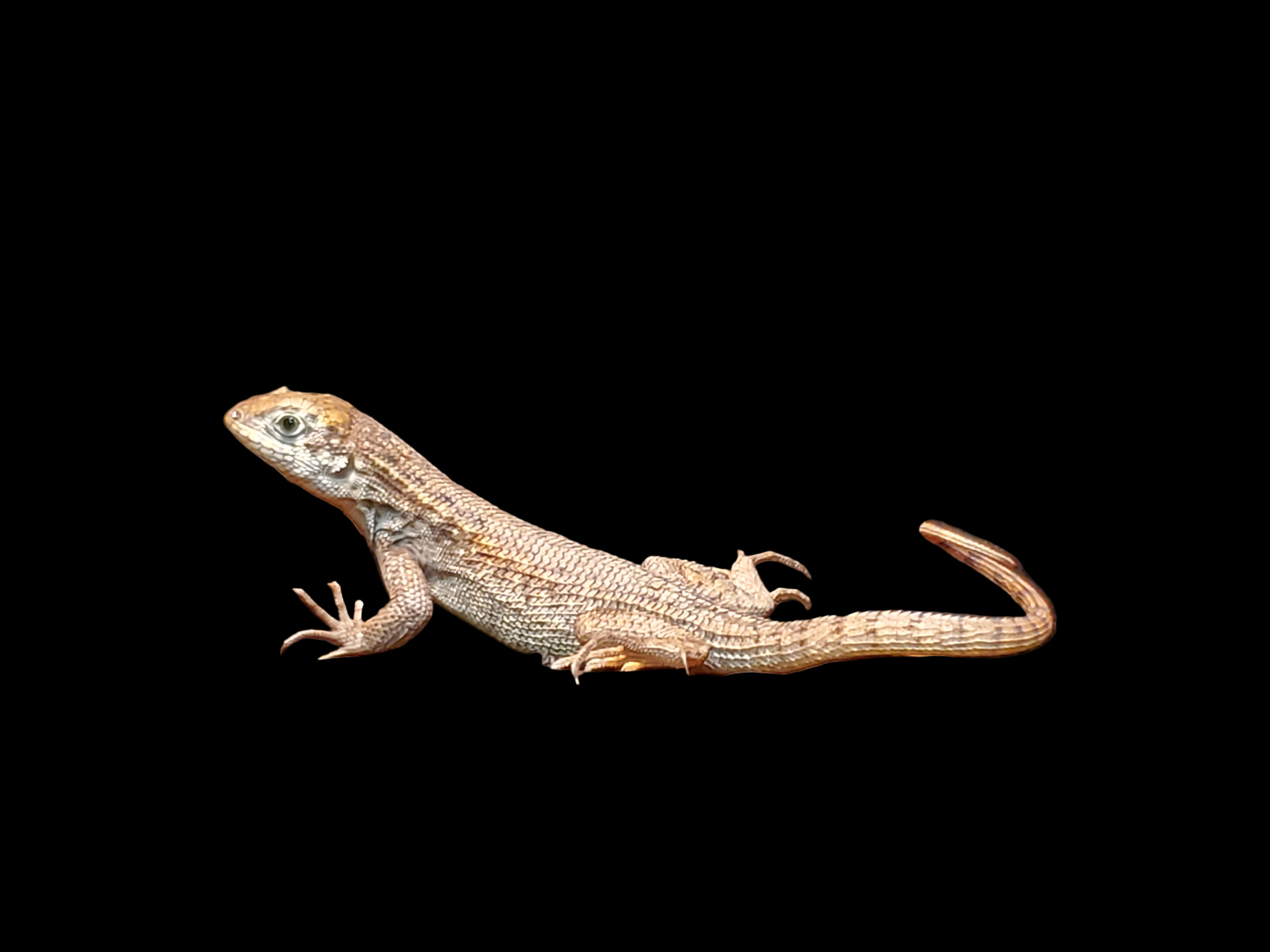
Bahamian Curly-tailed Lizard
Scientific Name: Leiocephalus carinatus
Common Name: Bahamian Curly-tailed Lizard
Species Overview
Size: Adults typically reach 10 to 12 inches (25 to 30 cm) in total length, with males being slightly larger and more robust.
Appearance: The Bahamian Curly-tailed Lizard is a sturdy, ground-dwelling species known for its characteristic upward-curled tail, which remains raised when basking, exploring, or alert. Colouration ranges from sandy beige and light brown to grey, often with darker mottling or faint banding. The scales are keeled, giving the body a textured, rugged appearance. Males may show brighter flank or throat tones depending on locality. Their strong limbs, angular head, and muscular build contribute to their confident, active look.
Distribution: Native to the Bahamas and nearby islands. Established introduced populations also occur in parts of southern Florida.
Habitat: In the wild, this species occupies open, sun-exposed environments such as sandy coastal areas, beaches, scrublands, rocky outcrops, and developed urban spaces. They bask actively on rocks, pavement, driftwood, and fallen logs. In captivity, they thrive in spacious, terrestrial setups with dry substrate, bright light, and multiple basking platforms.
Behaviour: Bahamian Curly-tailed Lizards are diurnal, fast, observant, and bold feeders. They communicate with body posture and tail carriage and rely on sprinting and agility to evade threats. While hardy and active, they are not suited to frequent handling due to their speed and sensitivity. They make excellent display animals when kept in appropriately structured enclosures.
Captive Care
Enclosure: A terrestrial enclosure measuring at least 36 inches × 18 inches × 18 inches (90 × 45 × 45 cm) is suitable for a single adult or a pair. Provide dry, sandy or sandy-soil substrate, flat basking stones, cork bark, low climbing features, and open ground for running.
Temperature & Humidity:
-
Basking area: 110 to 120°F (43 to 49°C)
-
Ambient daytime temperatures: 85 to 95°F (29 to 35°C)
-
Night temperatures: 70 to 75°F (21 to 24°C)
Humidity should remain low, ideally between 30 and 50%, with strong ventilation.
Lighting: Provide bright full-spectrum lighting and high-output UVB (10%) for 12 to 14 hours daily. This species depends on intense light and heat for proper activity and digestion.
Diet: Bahamian Curly-tailed Lizards are omnivores. Offer a varied diet of crickets, roaches, mealworms, silkworms, black soldier fly larvae, chopped greens, flowers, fruits, and occasional soft vegetables. Juveniles require daily feeding; adults can be fed every 1–2 days. All insect prey should be gut-loaded and dusted with calcium and multivitamins.
Behaviour in Captivity: These lizards are highly active and display natural basking, sprinting, tail-curling, and digging behaviours when given adequate space and lighting. They are confident feeders and often display bold personalities, though they remain better suited to observation than handling.
Special Considerations: Because of their speed and agility, secure enclosures with tight-fitting lids are essential. They are sensitive to high humidity and require consistently arid conditions. Handling should be minimal to avoid stress or injury.
Taxonomy Note
The Bahamian Curly-tailed Lizard belongs to the genus Leiocephalus, a group of Caribbean ground lizards known for their curled tails, rapid sprinting ability, and preference for bright, open habitats.
Genetics Note
There are no recognised morphs or selectively bred lines for the Bahamian Curly-tailed Lizard. Natural variation in shade, pattern density, and tail banding reflects island-based locality differences rather than formal genetic morphs.