

Photo Disclaimer
Description
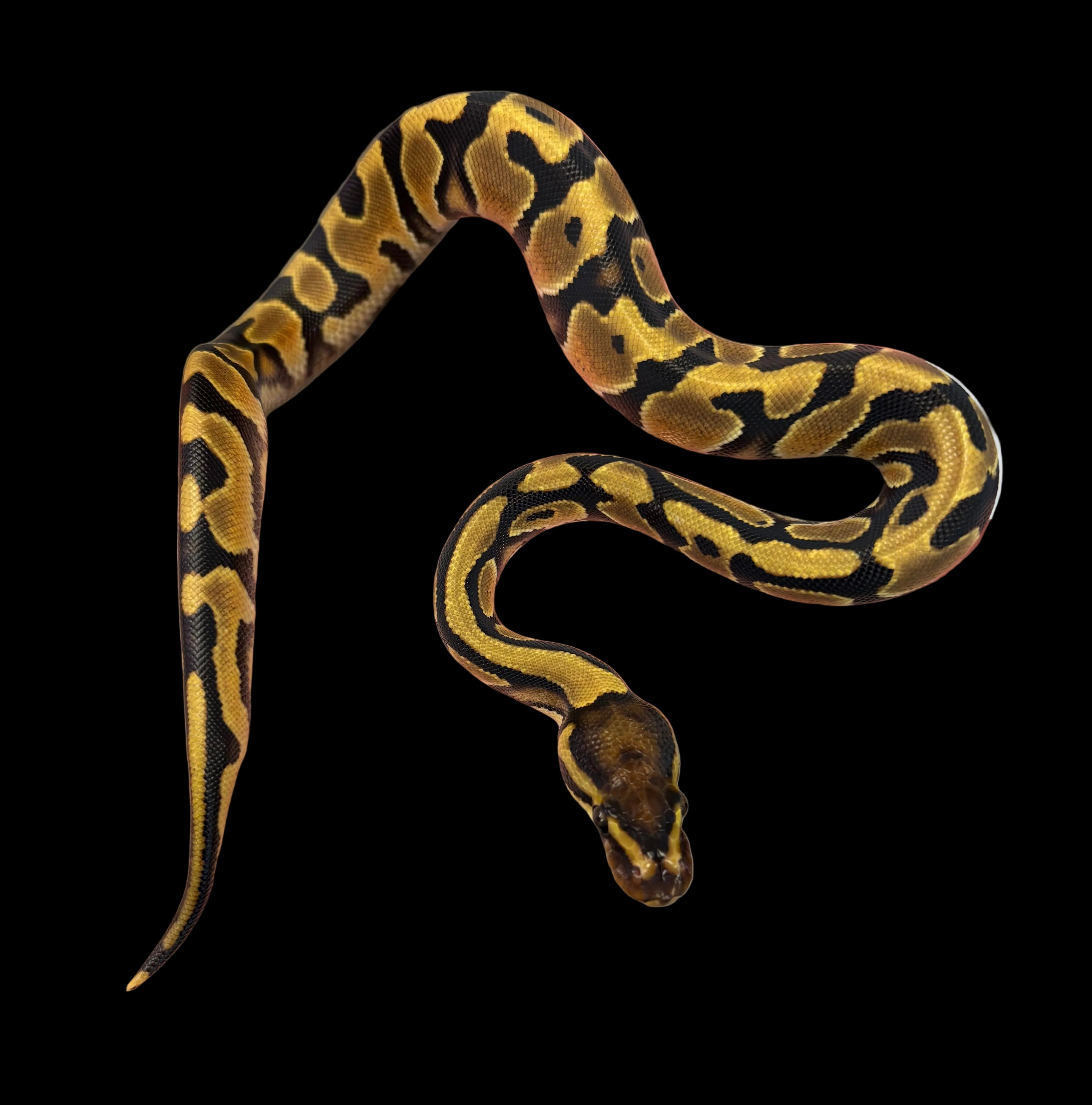
Ball Python (Orange Dream)
Python regius
Common Names: Ball Python, Royal Python
Species Overview
-
Size: Adults typically reach 3–5 feet (0.9–1.5 m), with females often larger and heavier-bodied than males. Some exceptional females may approach 6 feet.
-
Appearance:
-
Orange Dream (OD, co-dominant): Brightens orange and golden tones, sharpens markings, and cleans up the overall pattern.
-
-
Distribution: Wild-type ball pythons are native to West and Central Africa, found across savannahs, farmlands, and woodland edges.
-
Habitat: Primarily burrow-dwelling, they seek shelter in rodent burrows for stable humidity and protection.
-
Behaviour: A nocturnal ambush predator, feeding mainly on small mammals and birds.
Captive Care
-
Enclosure: Most adults thrive in a 40-gallon breeder (36” × 18” × 18”) or equivalent setup. Provide secure hides on both warm and cool sides, climbing décor, and a water dish large enough for soaking.
-
Temperature & Humidity: Maintain daytime temps of 78–82°F (25–28°C) with a basking zone of 88–92°F (31–33°C). Nighttime drops to 72–75°F (22–24°C) are acceptable. Keep humidity between 50–60%, with slightly higher levels during shed cycles.
-
Diet: Juveniles feed well on hopper mice or rat pups every 5–7 days; adults typically thrive on medium rats every 10–14 days. Prey size should match the snake’s girth.
-
Behaviour in Captivity: Orange Dream DH Hypo/Clown ball pythons share the calm, manageable nature of the species, making them excellent captives for both beginner and advanced keepers.
-
Special Considerations: While morphs change appearance and breeding value, all ball pythons share identical husbandry requirements.
Genetics Note
-
Orange Dream (Co-Dominant): Enhances colour, producing rich golden/orange tones and sharper pattern edges.
The Orange Dream is a clean, bright visual morph.