

Photo Disclaimer
Description
Bearded Dragon (Assorted “Select” Quality)
Scientific Name: Pogona vitticeps
Common Name: Bearded Dragon (Assorted “Select” Quality)
Species Overview
Size: Adults typically reach 18 to 22 inches (46 to 56 cm) in total length, with males being slightly larger and broader-headed.
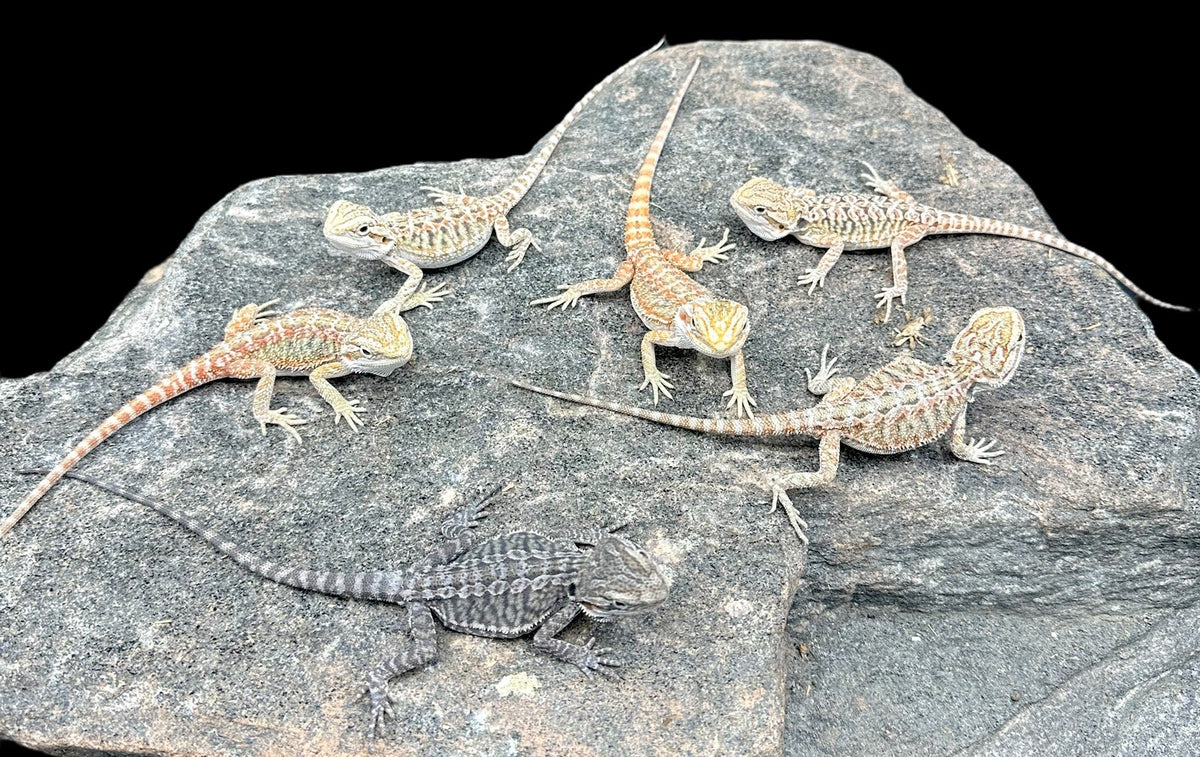
Appearance: Assorted “Select” Quality Bearded Dragons represent a mixed group chosen for above-average visual traits rather than any single morph or genetic line. This category may include dragons with stronger colouration, cleaner patterning, sharper contrast, or overall enhanced appearance. Colours in this group can range from warm browns to bright reds, oranges, yellows, citrus tones, or mixed combinations. Some individuals display pronounced patterning, while others may appear more uniform. Because these animals come from varied morph backgrounds and breeding projects, appearance varies widely and no single visual trait defines the group.
Distribution: Native to the arid interior regions of central Australia.
Habitat: In the wild, Bearded Dragons inhabit semi-desert scrublands, dry woodlands, rocky outcrops, and open plains. In captivity, they require spacious, terrestrial enclosures with strong basking access and well-ventilated, dry conditions.
Behaviour: Bearded Dragons are diurnal, alert, and generally calm. They exhibit natural behaviours such as basking, digging, arm-waving, head-bobbing, and exploring. The “Select” label does not influence temperament; it refers only to visual quality. These dragons thrive when kept in properly heated, well-lit environments with opportunities for natural behaviours.
Captive Care
Enclosure: Provide a terrestrial enclosure at least 48 inches × 24 inches × 24 inches (120 × 60 × 60 cm) for an adult. Use a soil–sand substrate mixture that is dry on top but deep enough to retain some moisture in the lower layers, supporting natural digging. Include basking platforms, branch pieces, hiding areas, and open room for movement.
Temperature & Humidity:
-
Basking area: 110 to 115°F (43 to 46°C)
-
Warm side: 88 to 95°F (31 to 35°C)
-
Cool side: 75 to 82°F (24 to 28°C)
Night temperatures may drop to 68 to 72°F (20 to 22°C). Humidity should remain between 30 and 40%.
Lighting: Provide bright full-spectrum lighting and high-output UVB (10–12%) for 12 to 14 hours per day. Proper UVB exposure is essential for bone development, calcium absorption, and overall health.
Diet: Bearded Dragons are omnivorous. Feed a mixture of insects (crickets, roaches, silkworms, hornworms, black soldier fly larvae) along with leafy greens, vegetables, and occasional fruits. Juveniles require daily meals; adults can be fed every 1–2 days. Supplements should include calcium and multivitamins.
Behaviour in Captivity: These dragons are active and interactive when provided with proper care. They readily bask, dig, explore, and respond visually to their environment. They adapt well to routine and do best in enclosures with stable temperatures, strong lighting, and defined basking zones.
Special Considerations: Ensure strong UVB, correct basking temperatures, and dry, well-ventilated enclosure conditions. Overfeeding, inadequate lighting, or poor heating are frequent sources of health complications in Bearded Dragons.
Taxonomy Note
The Bearded Dragon belongs to the genus Pogona, a group of Australian agamids adapted to hot, arid environments. Pogona vitticeps is the most widely kept species in captivity due to its manageable size, hardiness, and engaging behaviours.
Genetics Note
“Assorted ‘Select’ Quality” refers to a diverse group of Bearded Dragons originating from various morphs and colour lines. These animals are chosen for superior visual appeal rather than specific genetic traits. Because they come from mixed lineages, genetics vary widely between individuals, and no single morph, gene, or inheritance pattern is implied by this label. Visual outcomes are therefore highly variable across the group.
Estimate shipping