

Photo Disclaimer
Description
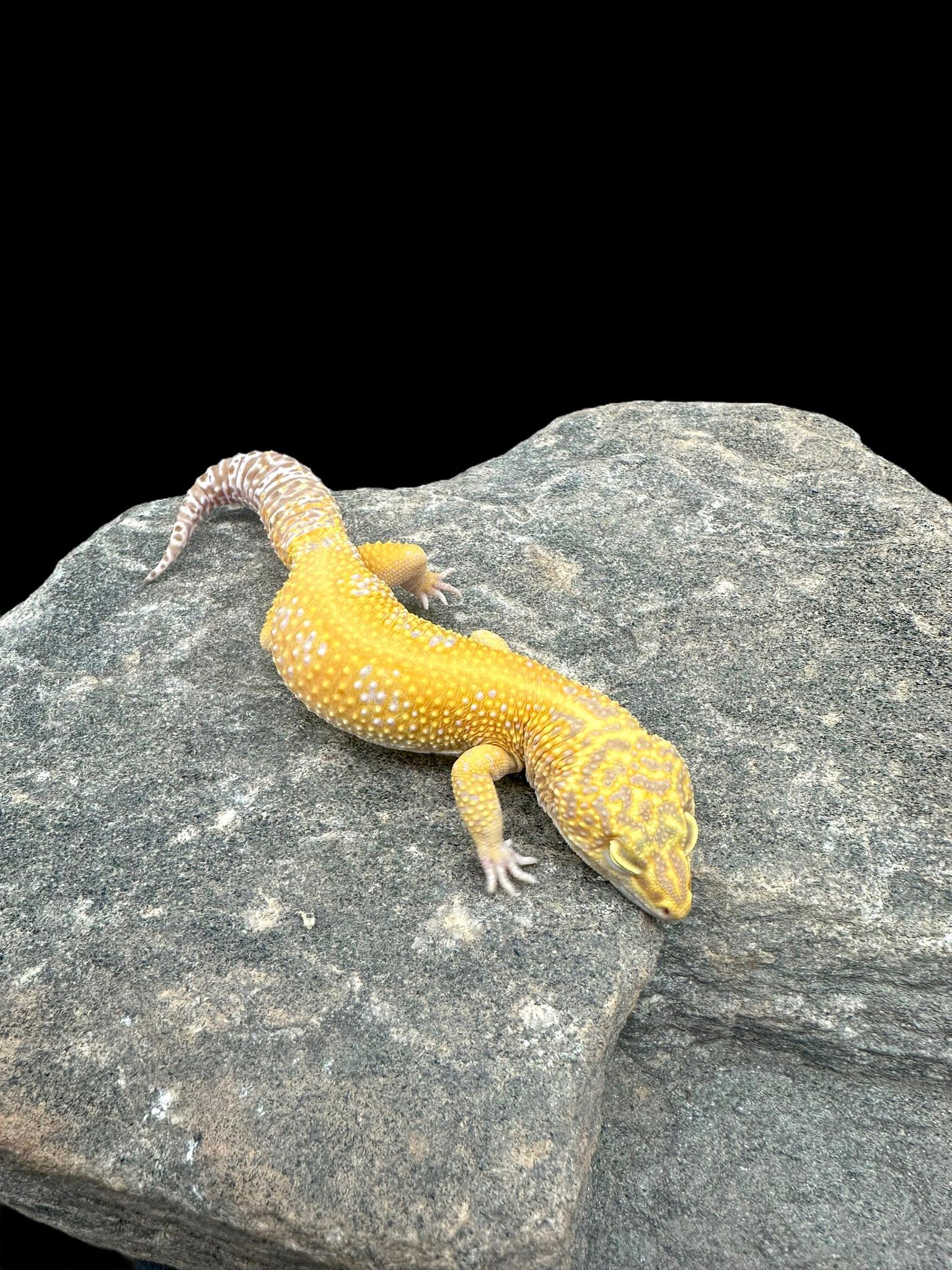
Leopard Gecko (Blood Bell Sunglow)
Scientific Name: Eublepharis macularius
Common Name: Leopard Gecko (Blood Bell Sunglow)
Species Overview
Size: Adult Leopard Geckos typically reach 8–10 inches (20–25 cm). They are medium-sized, robust lizards well suited to arid environments.
Appearance: The Blood Bell Sunglow morph combines intense orange colour enhancement with the soft pastel tones of the Bell Albino line. The Blood trait deepens and intensifies orange pigmentation, especially along the head, neck, and dorsal region. Bell Albino removes black pigment, replacing it with warm pinkish, reddish, and cream tones while producing pinkish-red eyes. Sunglow selectively reduces spotting and sharpens overall brightness, creating a clean, saturated gecko with rich orange and yellow hues. The resulting animal is vibrant, warm-toned, and visually striking, with a smooth, glossy appearance and minimal dark patterning.
Distribution: The species originates from Pakistan, Afghanistan, northwestern India, and Iran.
Habitat: In the wild, Leopard Geckos inhabit rocky, semi-arid deserts where they shelter in burrows and crevices during the day. Captive environments should replicate these warm, dry conditions with secure hiding spots.
Behaviour: Leopard Geckos are nocturnal, gentle, and curious. They tolerate calm handling and adapt well to routine care. They exhibit natural behaviours such as burrowing, exploring at night, and actively hunting insects.
Captive Care
Enclosure: Provide a terrestrial enclosure at least 24 inches × 18 inches × 12 inches (60 × 45 × 30 cm). Include a warm hide, cool hide, and humid hide. A naturalistic substrate such as sandy soil or a clay-based mix encourages digging and natural behaviour.
Temperature & Humidity: Maintain a warm side of 88–92°F (31–33°C) and a cool side of 75–80°F (24–27°C). Nighttime temperatures may drop to 70–74°F (21–23°C). Keep overall humidity around 30–40%, with a humid hide elevated to 60–70% for shedding support. Always use a thermostat for heat regulation.
Lighting: Low-level UVB (2–5%) benefits metabolic and skeletal health. A 12-hour day/night light cycle is recommended.
Diet: Feed gut-loaded insects such as roaches, crickets, mealworms, and silkworms. Adults should be fed every other day; juveniles daily. Supplement prey with calcium and multivitamins. Provide fresh water at all times.
Behaviour in Captivity: Leopard Geckos adapt well to stable routines and typically thrive long-term, often living 15–20 years or more with proper care. They remain hardy, responsive feeders, and display predictable behaviour patterns.
Special Considerations: Colour traits such as Blood and Sunglow influence appearance only. No additional care requirements are needed beyond standard Leopard Gecko husbandry.
Taxonomy Note
The Leopard Gecko (Eublepharis macularius) belongs to the family Eublepharidae. It is one of the most genetically diverse reptiles in captivity, with extensive selective breeding resulting in a wide variety of morphs including albino lines, orange-enhancing lines, and pattern-reducing traits.
Genetics Note
This morph combines three traits:
-
Bell Albino (recessive) – Removes black pigment, producing pinkish to reddish eyes and pastel tones.
-
Blood (polygenic / line-bred) – Enhances deep, saturated orange pigmentation across the head and body.
-
Sunglow (polygenic / line-bred) – Reduces dark spotting and increases overall brightness and clarity.