

Photo Disclaimer
Description
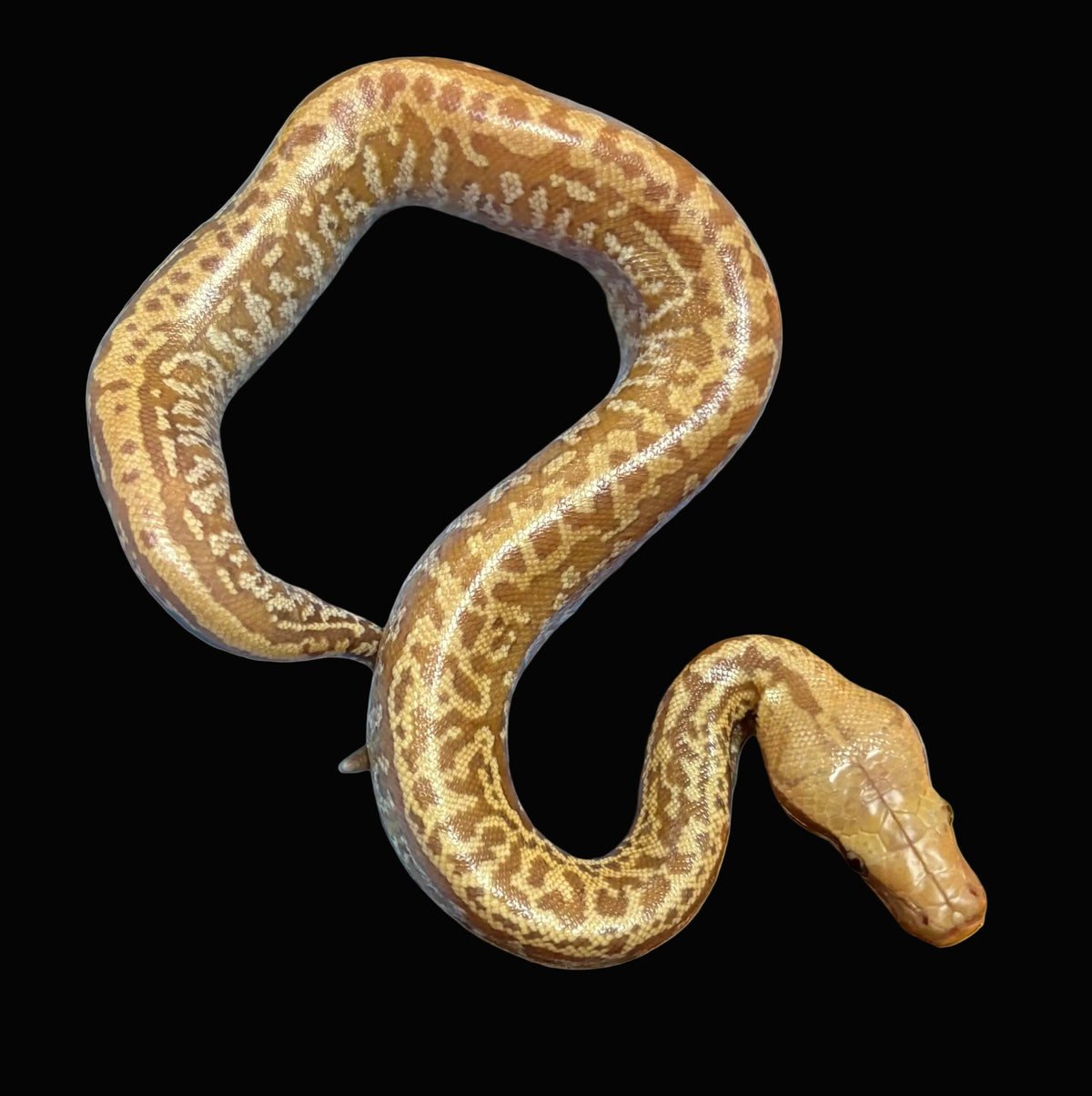
Blood Python (Batik T+ Albino)
Python brongersmai
Common Names: Blood Python, Brongersmai Python
Species Overview
-
Size: Adults typically measure 4–6 feet (1.2–1.8 m), with females being stockier and heavier-bodied. Rare individuals may exceed 7 feet.
-
Appearance: This animal displays two distinct visual genetics, the Batik trait and the T+ Albino trait. The body's shattered, pixelated patterns and lighter head colouration are further enhanced by the replacement of all black pigmentation with caramel and gold, leading to a glowing snake with mesmerizing scale markings.
-
Distribution: Wild-type Blood Pythons are native to Peninsular Malaysia, Sumatra, and nearby islands.
-
Habitat: They thrive in swampy forests, marshlands, and humid lowland habitats, making use of dense ground cover.
-
Behaviour: A terrestrial ambush predator, relying on camouflage and power to capture rodents, birds, and other small prey.
Captive Care
-
Enclosure: Adults thrive in enclosures measuring at least 4 ft × 2 ft × 1.5–2 ft, with emphasis on floor space. Provide a snug hide, deep humidity-retentive substrate, and a large water bowl for soaking.
-
Temperature & Humidity: Keep a basking area at 86–88°F (30–31°C) and a cooler end at 78–80°F (25–27°C). Humidity should be maintained at 60–70%, increasing to 80% during shedding.
-
Diet: Juveniles should be fed hopper rats or equivalent prey every 5–7 days; adults thrive on medium to large rats every 10–14 days. Overfeeding should be avoided, as Blood Pythons are prone to obesity.
-
Behaviour in Captivity: Captive-bred T- Albinos are generally hardy and reliable feeders, though they may be defensive if startled and are strongly food-motivated. With consistent husbandry, they usually become steady and manageable captives.
-
Special Considerations: They do best in naturalistic, humid setups with deep substrate, which supports hydration and burrowing behaviour.
Genetics Note
- Batik (Co-dominant – Visual): A highly recognizable morph, Batiks have a maze-like, pixelated pattern across their body. The head is often lighter with a distinctive stripe, and the body pattern appears “shattered” compared to the standard Blood Python.
-
T+ Albino (Recessive – Visual): This mutation is tyrosinase-positive, resulting in an animal with the typical black markings replaced with golden brown and caramel hues.
Estimate shipping