

Photo Disclaimer
Description
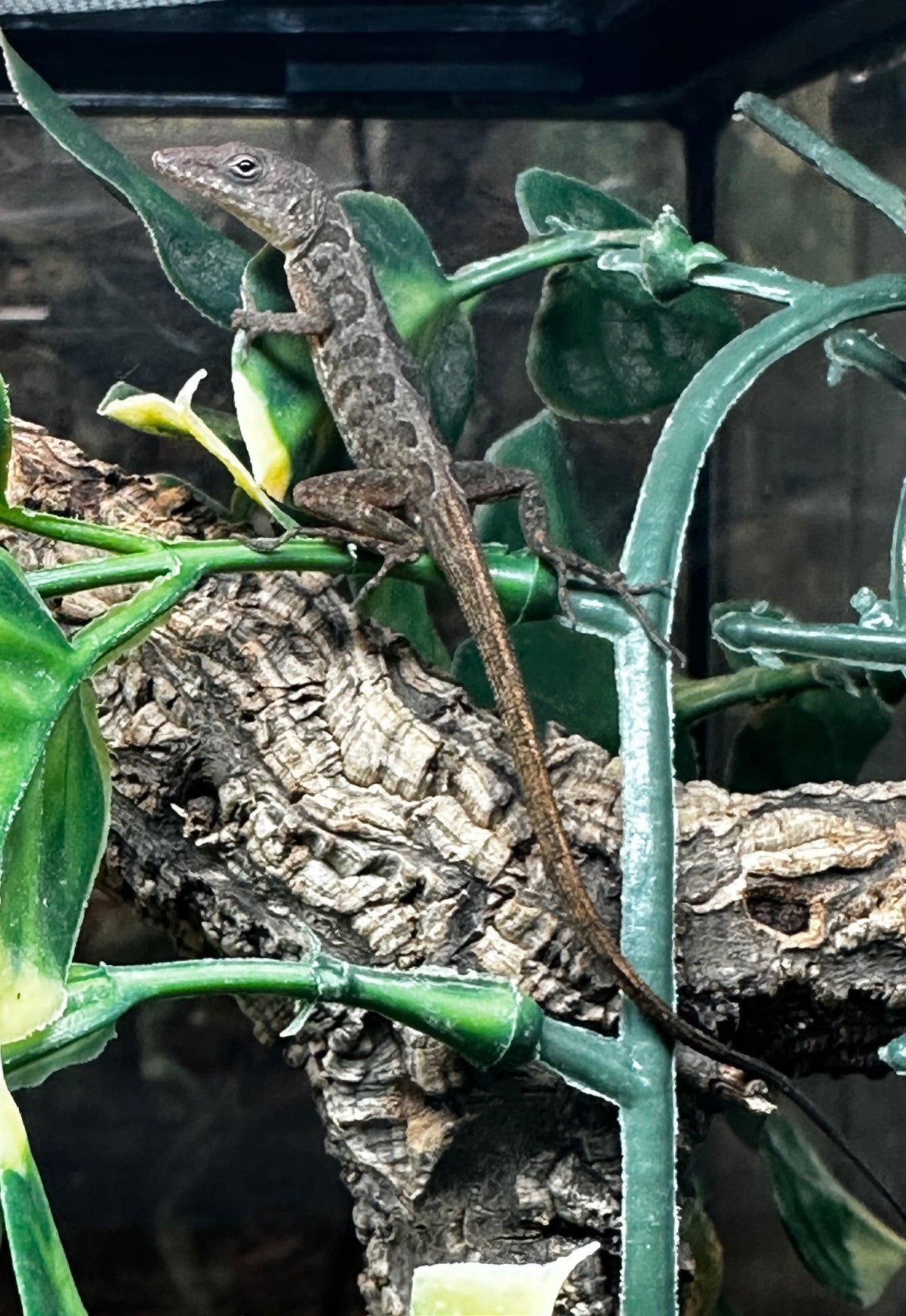
Blue Eyed Anole (Anolis pogus)
Scientific Name: Anolis pogus
Common Name: Blue Eyed Anole
Species Overview
Size: Adults typically reach 3–4 inches (7.5–10 cm) in snout-to-vent length (SVL), with a long, slender tail that can add an additional 4–5 inches (10–12.5 cm).
Appearance: Blue Eyed Anoles are named for their striking blue eyes, which contrast with their generally green to brown body. Males are slightly larger than females and display a colorful dewlap used for territorial and courtship displays. The body is slender, with smooth scales and well-developed limbs suited for climbing and perching.
Distribution: Native to Saint Martin in the Caribbean, where they inhabit coastal forests and scrublands.
Habitat: This species is arboreal, living in trees, shrubs, and low-lying vegetation. In captivity, they thrive in vertically oriented enclosures with branches, cork bark, and foliage for climbing and hiding.
Behaviour: Blue Eyed Anoles are diurnal, active, and territorial. Males may display aggressive behaviours toward other males. They are alert and quick, relying on agility to navigate their environment.
Captive Care
Enclosure: Provide a vertically oriented enclosure at least 18 inches × 18 inches × 24 inches (45 × 45 × 60 cm) for a single adult. Include climbing branches, live or artificial plants, cork bark, and secure hiding spots.
Temperature & Humidity:
-
Basking area: 85–90°F (29–32°C)
-
Ambient temperature: 75–85°F (24–29°C)
-
Night temperatures: 70–75°F (21–24°C)
-
Maintain humidity around 60–70%, with regular light misting to support hydration and shedding.
Lighting: Provide full-spectrum lighting with UVB (2–5%) on a 12-hour cycle to support vitamin D3 synthesis and calcium metabolism.
Diet: Offer a varied diet of small insects such as fruit flies, crickets, and pinhead roaches. Juveniles should be fed daily, while adults can be fed every 1–2 days. Dust prey with calcium and vitamin supplements.
Behaviour in Captivity: Blue Eyed Anoles are active, alert climbers. They enjoy vertical space and perching surfaces. They are best housed individually or in well-managed groups to prevent aggression.
Special Considerations: This is a small, active, and fast-moving species. Ensure secure enclosure and proper environmental enrichment to allow natural climbing and perching behaviours.
Taxonomy Note
The Blue Eyed Anole (Anolis pogus) belongs to the family Dactyloidae, which contains primarily arboreal lizards native to the Americas. They are valued for their striking eye coloration and engaging active behaviour.
Genetics Note
There are no recognized morphs or selectively bred variants for the Blue Eyed Anole. Natural variation is limited to subtle differences in body coloration and eye intensity.