

Photo Disclaimer
Description
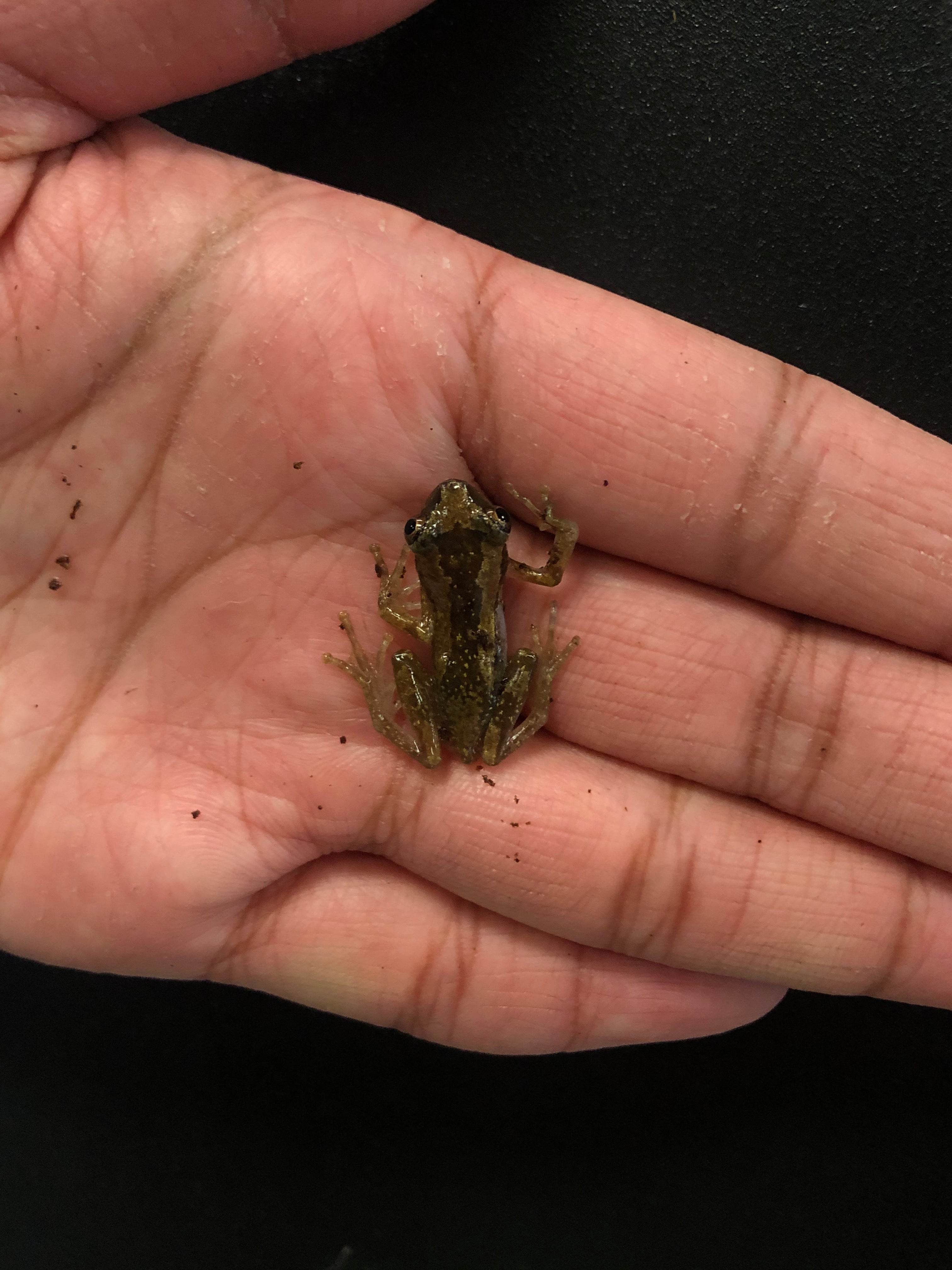
Brown Banana Reed Frog
Scientific Name: Afrixalus dorsalis
Common Name: Brown Banana Reed Frog, African Clown Reed Frog
Species Overview
Size: Adults typically reach 1 to 1.5 inches (2.5 to 4 cm), with females slightly larger.
Appearance: The Brown Banana Reed Frog is a slender, delicate species with smooth skin and distinctive patterning. Colouration ranges from tan to light brown or golden brown, often contrasted by dark dorsal stripes, chevrons, or mottling. Many individuals display a pale, creamy lateral line. Limbs are thin and lightly banded, and the toe pads are small but well developed for climbing fine vegetation. The underside is pale cream, and the overall look is refined and leaflike, suited to camouflage among grasses and reeds.
Distribution: Widely distributed in West and Central Africa, including countries such as Ghana, Nigeria, Cameroon, and Gabon.
Habitat: Wild individuals inhabit moist savannas, swamp margins, forest edges, and grassy wetlands. They favour reeds, tall grasses, and low shrubs near shallow water, where they lay eggs on vegetation overhanging ponds or temporary pools.
Behaviour: Primarily nocturnal and highly agile, these frogs perch on slender stems and leaves, often positioning themselves horizontally to blend in. Males produce soft trills or chirps during breeding season. They are social within their species and often found in small aggregations in the wild.
Captive Care
Enclosure: A single adult or small group thrives in an 18 × 18 × 24 inches (45 × 45 × 60 cm) enclosure, while larger groups benefit from a 24 × 18 × 24 inches (60 × 45 × 60 cm) setup. Provide tall, narrow perches such as grasses, reeds, thin branches, and dense foliage. Use a moisture-retentive substrate such as coco fibre, soil blends, or sphagnum mixes to maintain humidity without becoming waterlogged. Include a shallow water basin for hydration.
Temperature and Humidity:
Ambient temperature: 74 to 80°F (23 to 27°C)
Warm area: around 82°F (28°C)
Night temperature: 68 to 72°F (20 to 22°C)
Humidity: 70 to 90%, supported by frequent misting and good airflow.
Lighting: Provide low to moderate UVB (2 to 5%) with bright, diffused lighting.
Diet: Offer small insects such as flightless fruit flies, pinhead crickets, springtails, small roaches, and black soldier fly larvae. Supplement prey with calcium and multivitamins.
Behaviour in Captivity: Brown Banana Reed Frogs are active, agile climbers that appreciate tall plants and reed-like structures. They become most active at night and remain shy during the day. Handling should be avoided due to their delicate size and permeable skin.
Special Considerations:
• If handling is unavoidable, use wet, powder-free gloves or a soft, damp net.
• These frogs prefer narrow, elevated perches—include plenty of fine vegetation.
• Use only dechlorinated water for misting and hydration.
• Provide strong ventilation to prevent stagnant humidity.
• Avoid oversaturation of substrate; allow brief drying cycles between mistings.
• Ensure enclosure gaps are tightly sealed—this is a micro-sized, agile species.
Taxonomy Note
Afrixalus dorsalis belongs to the family Hyperoliidae, a group known for delicate, reed-dwelling frogs with unique reproductive behaviours. Many Afrixalus species lay their eggs folded inside leaves above water. The Brown Banana Reed Frog is closely related to other “banana frogs,” named for their slender shape and perching habits among grasses and reeds.
Genetics Note
There are no recognised morphs for Afrixalus dorsalis. Natural variation appears in dorsal stripe thickness, base colour, and spotting, but none represent defined genetic morphs.
Estimate shipping