


Photo Disclaimer
Description
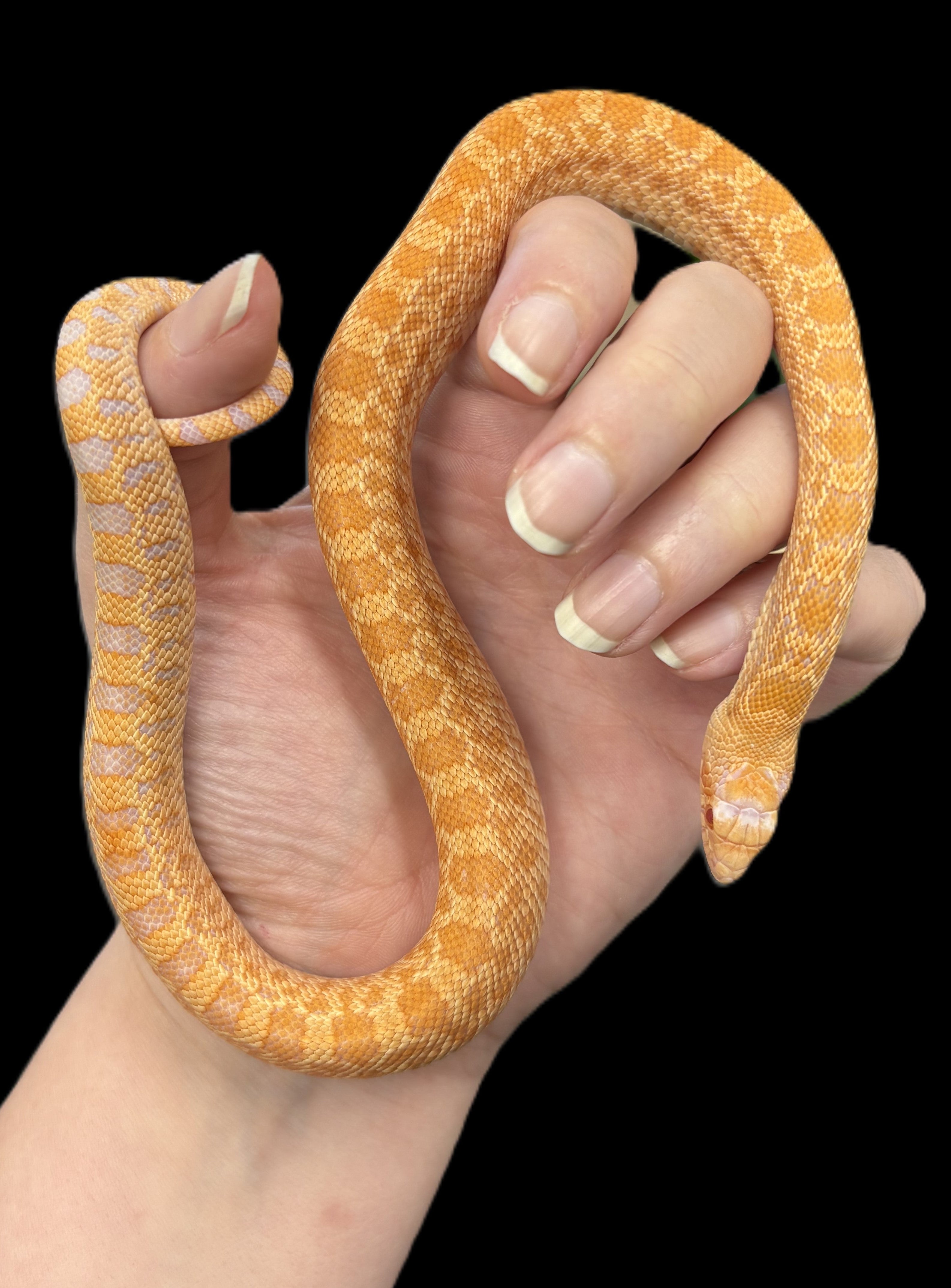
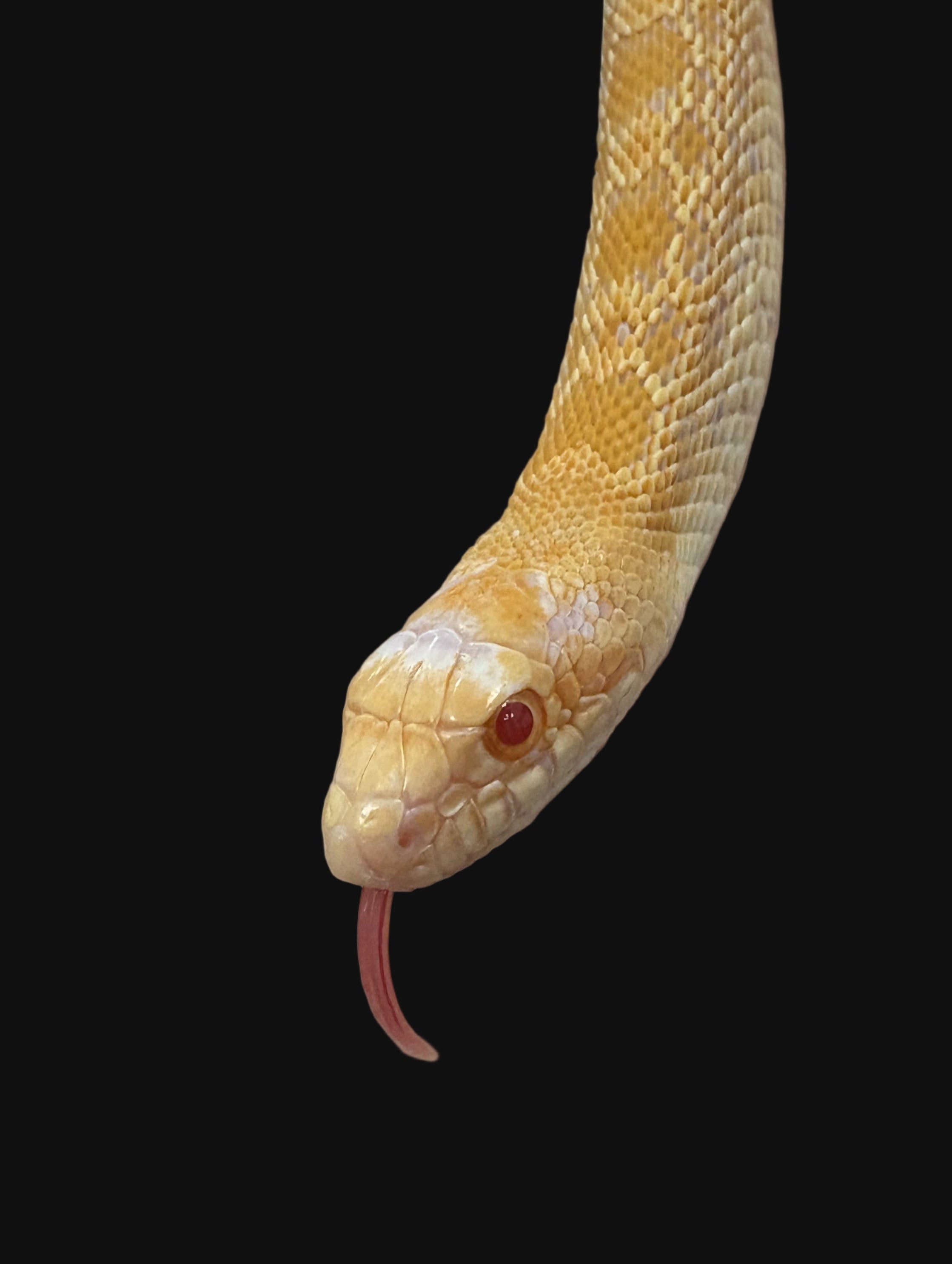
Bull Snake (Orange Albino)
Scientific Name: Pituophis catenifer sayi
Common Name: Bull Snake
Species Overview
Size: Adult Bull Snakes typically reach 5–7 feet (1.5–2.1 m) in length; in rare cases, they may approach 8 feet (2.4 m). They are among the largest North American colubrids, featuring a muscular build and distinctive keeled scales that give them a slightly rough texture.
Appearance: The Orange Albino Bull Snake is a vibrant and visually striking morph, showcasing the full effect of the Albino gene enhanced by selective breeding for intense orange and red tones. The Albino trait removes all dark pigmentation, leaving a brilliant palette of glowing orange, peach, and cream across the body. The result is a morph that radiates warmth and saturation, with the classic Bull Snake pattern visible as soft orange blotches on a lighter background. The eyes are ruby-red, a hallmark of the Albino gene. This morph stands out as one of the most visually appealing colour expressions within the species, combining the bold patterning of a Bull Snake with the fiery brightness of selective orange enhancement.
Distribution: Found throughout central North America, ranging from the southern Canadian prairies through the central United States into northern Mexico.
Habitat: Bull Snakes inhabit grasslands, open woodlands, and agricultural areas, often found near rodent burrows or sandy soils suitable for digging. In captivity, they thrive in large terrestrial enclosures with deep substrate for burrowing and ample hiding areas.
Behaviour: Bull Snakes are confident, curious, and highly active constrictors. They are known for their dramatic defensive displays, which include hissing and head-flattening to mimic rattlesnakes. Captive-bred individuals, however, usually tame down quickly and become engaging, inquisitive pets that display impressive intelligence and adaptability.
Captive Care
Enclosure: Provide an adult enclosure measuring at least 4 feet × 2 feet × 2 feet, though larger is ideal. Use deep, soft substrate such as cypress mulch, soil-sand mix, or aspen to encourage burrowing. Include multiple hides, climbing branches, and a large water bowl for soaking.
Temperature & Humidity: Maintain a daytime gradient of 78–86°F (25–30°C) with a basking area near 90°F (32°C). Allow nighttime drops to 70–74°F (21–23°C). Keep humidity moderate, between 35–55%, and slightly increase during shedding cycles.
Diet: Offer thawed rodents proportionate to the snake’s size—juveniles every 5–7 days and adults every 10–14 days. Bull Snakes are strong feeders and benefit from a consistent feeding schedule.
Behaviour in Captivity: Intelligent and engaging, Bull Snakes are alert and active during the day. They are excellent display animals and typically become calm and handleable with regular interaction.
Special Considerations: Due to their strength and size, Bull Snakes require secure, escape-proof enclosures. Their size and activity level make them better suited for experienced keepers with adequate space.
Genetics Note
Albino (Recessive): Removes black and dark pigmentation, revealing vivid yellows, oranges, and reds. The “Orange” line represents selectively bred Albinos chosen for enhanced red and orange hues, producing an exceptionally warm and saturated colour form.
Genetic Combination Summary
The Bull Snake (Orange Albino) expresses one recessive trait and one line-bred enhancement:
-
Albino (Recessive): Removes dark pigmentation, revealing bright yellow, orange, and red patterning.
-
Orange Line (Selective Breeding): Enhances and deepens orange and red tones for a more intense colour presentation.
This morph combines the timeless bold patterning of a Bull Snake with the fiery brightness of selective orange enhancement. The Orange Albino is a standout among Albino variants, making it a prized display animal and a valuable addition to colour-focused breeding projects.