

Photo Disclaimer
Description
Ocellated Uromastyx
Scientific Name: Uromastyx ocellata
Common Name: Ocellated Uromastyx, Ocellated Spiny-tailed Lizard
Species Overview
Size: Adults typically reach 12 to 14 inches (30 to 36 cm) in total length, with a stout, muscular build and a heavily spined tail.
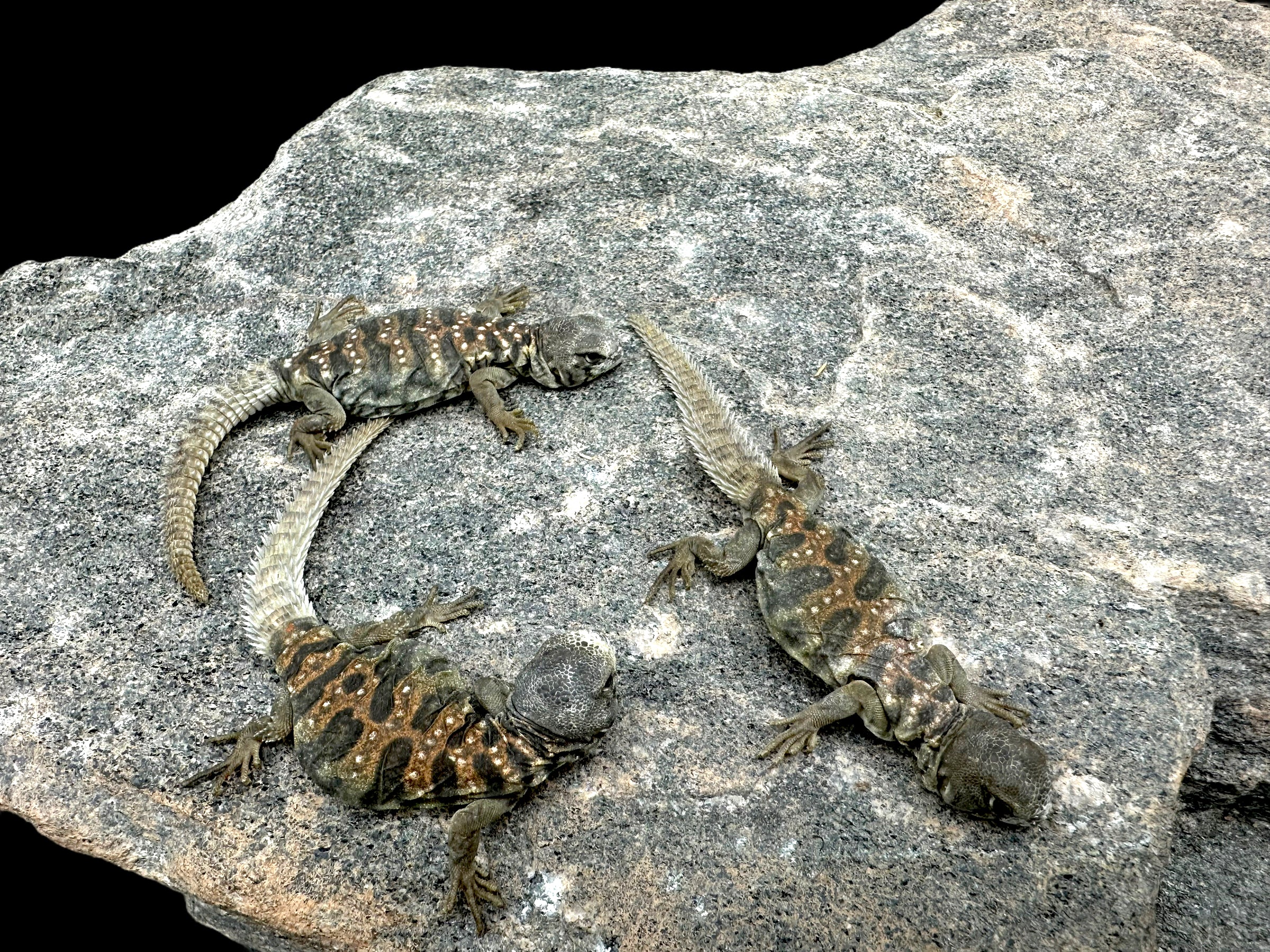
Appearance: The Ocellated Uromastyx is a visually striking desert species known for its bright turquoise, blue, green, and yellow spotting and banding. Males often display intense coloration across the back, flanks, and tail, while females tend to be more muted but still retain patterned ocelli. Their large, rounded scales and strong limbs are well adapted for climbing rocky terrain and digging deep burrows. The spined tail is used defensively and is characteristic of the genus.
Distribution: Native to northeastern Africa, including parts of Egypt, Sudan, Eritrea, and northern Ethiopia.
Habitat: This species inhabits rocky desert landscapes, dry hillsides, sandy plains, and gravel flats. They take refuge in deep burrows or crevices beneath rocks, using these shelters to escape heat and predators.
Behaviour: Ocellated Uromastyx are diurnal, heat-tolerant, and primarily herbivorous. They bask intensely throughout the day before retreating into burrows for thermoregulation. They may exhibit territorial behaviours, especially among males. Their natural diet consists of leaves, flowers, seeds, and desert vegetation.
Captive Care
Enclosure: Provide a terrestrial enclosure at least 4 × 2 × 2 feet (120 × 60 × 60 cm) for an adult. This size is suitable for proper movement, basking, and burrowing. Include deep, compactable substrate, stable rock structures, ledges, secure hides, and broad basking platforms. Extra floor space is beneficial but not required unless housing multiple individuals.
Temperature and Humidity:
Basking area: 120 to 130°F (49 to 54°C)
Warm side: 95 to 105°F (35 to 40°C)
Cool side: 75 to 85°F (24 to 29°C)
Night temperatures: 68 to 75°F (20 to 24°C)
Humidity should remain low, ideally 10 to 30 percent, with strong airflow.
Lighting: Provide intense full-spectrum lighting with high-output UVB (10 to 12 percent). Wide, bright basking surfaces support digestion, colour development, and metabolic health.
Diet: Offer a strict herbivorous diet including dark leafy greens, chopped vegetables, desert-adapted weeds, lentils, sprouts, flowers, and occasional seeds. Avoid fruits and high-oxalate greens. Provide calcium frequently and multivitamins sparingly.
Behaviour in Captivity: Ocellated Uromastyx are hardy, active display reptiles when kept with proper heat, diet, and space. They show natural basking, digging, and grazing behaviours. They generally tolerate keepers but handling should remain gentle and limited.
Special Considerations:
• Very high basking temperatures are essential.
• Provide deep substrate for burrowing—this is crucial for security and thermoregulation.
• Maintain low humidity to prevent respiratory issues.
• Ensure all rock décor is securely anchored.
• Avoid any animal protein in the diet.
Taxonomy Note
The Ocellated Uromastyx belongs to the genus Uromastyx, a group of herbivorous, spiny-tailed desert lizards adapted to extreme heat and arid environments. Uromastyx ocellata is noted for its colourful ocelli and smaller size compared to many other species in the genus.
Genetics Note
No recognized morphs exist for this species. Natural variation includes differences in ocelli brightness, blue or green saturation, and overall pattern density. These differences represent normal individual and locality-based variety rather than selective breeding.