


Photo Disclaimer
Description
Ornate Uromastyx
Scientific Name: Uromastyx ornata
Common Name: Ornate Uromastyx, Ornate Spiny-tailed Lizard
Species Overview
Size: Adults typically reach 12 to 14 inches (30 to 36 cm) in total length, with males sometimes growing slightly larger and displaying brighter colours.
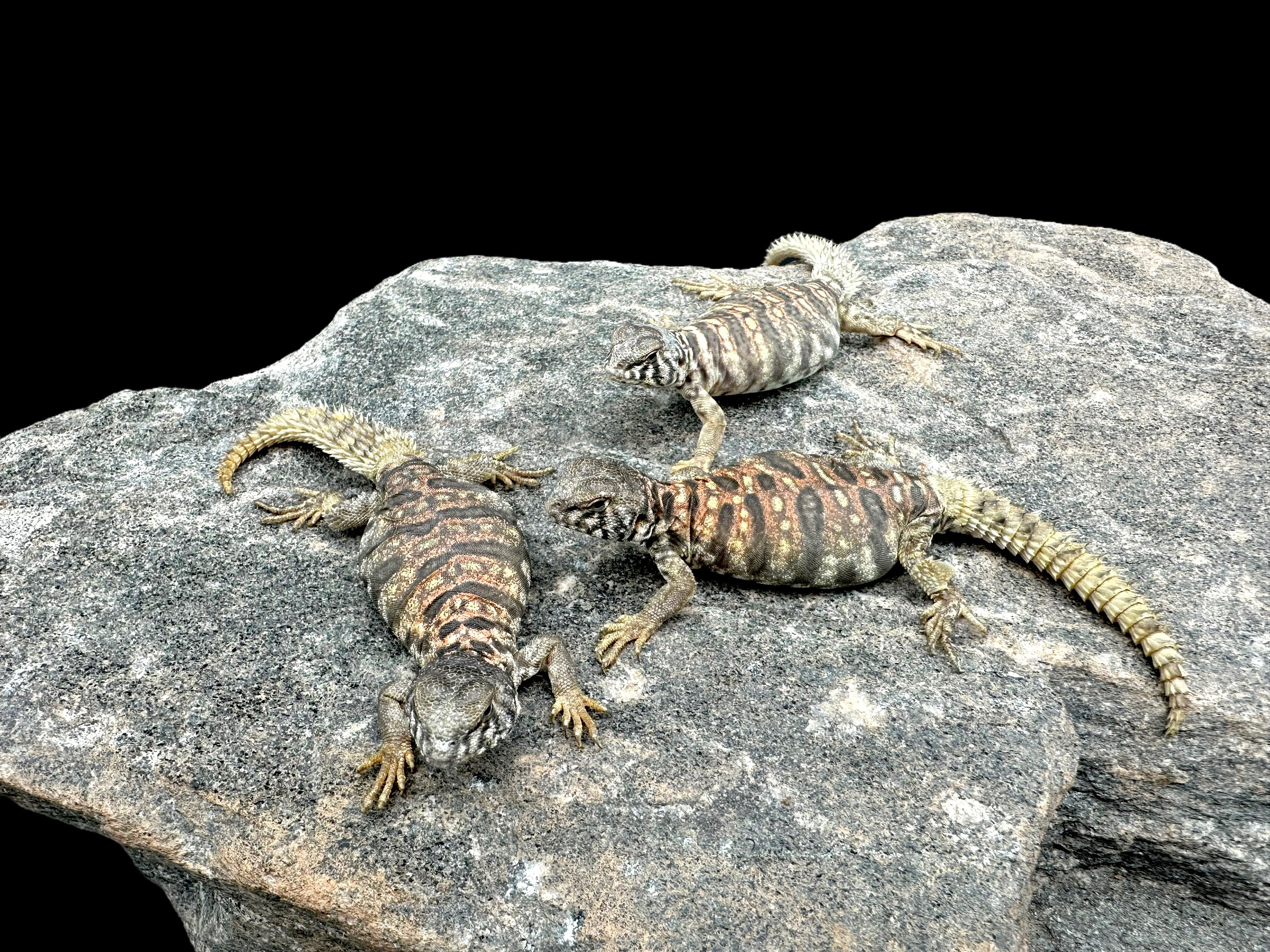
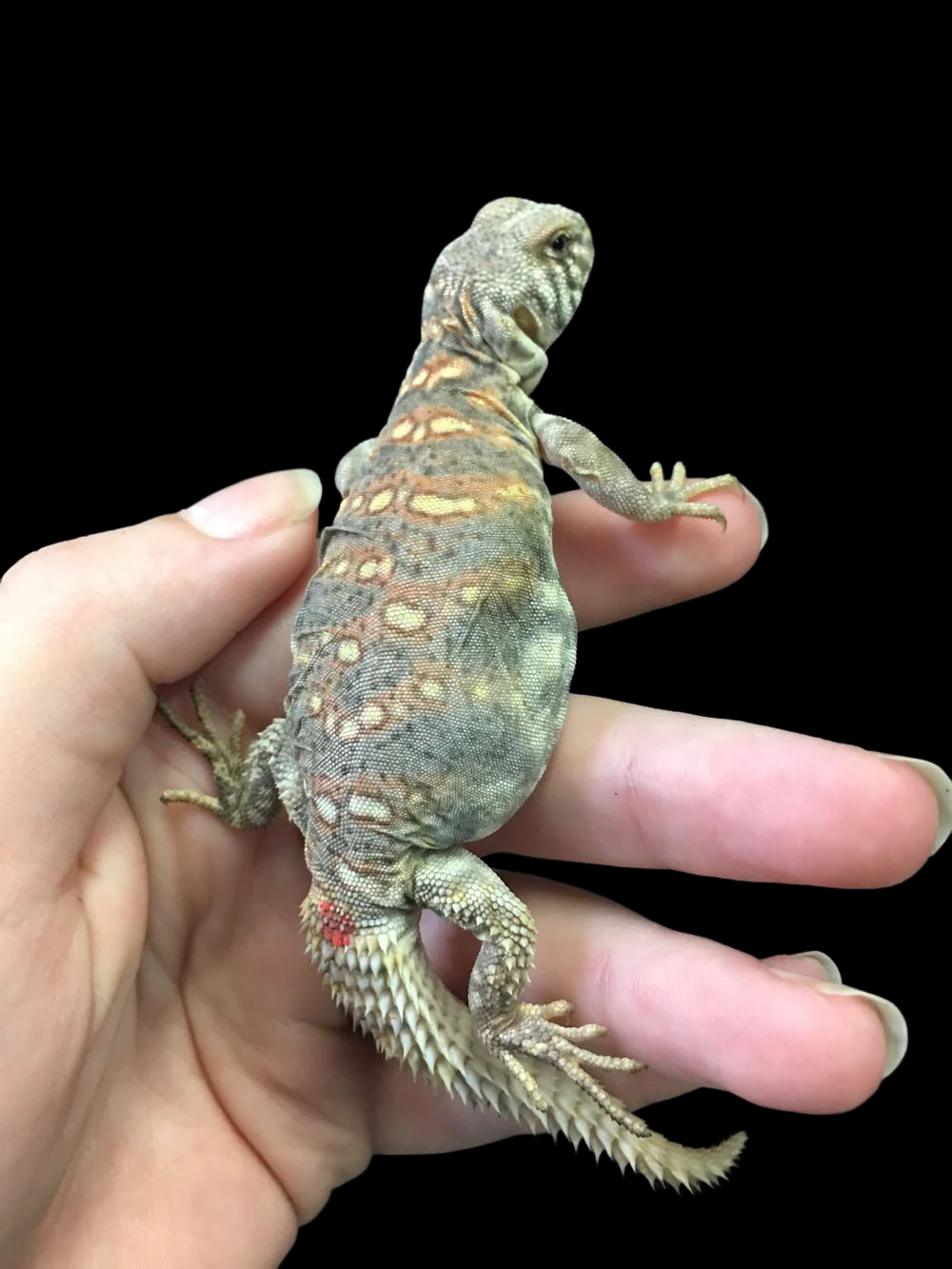
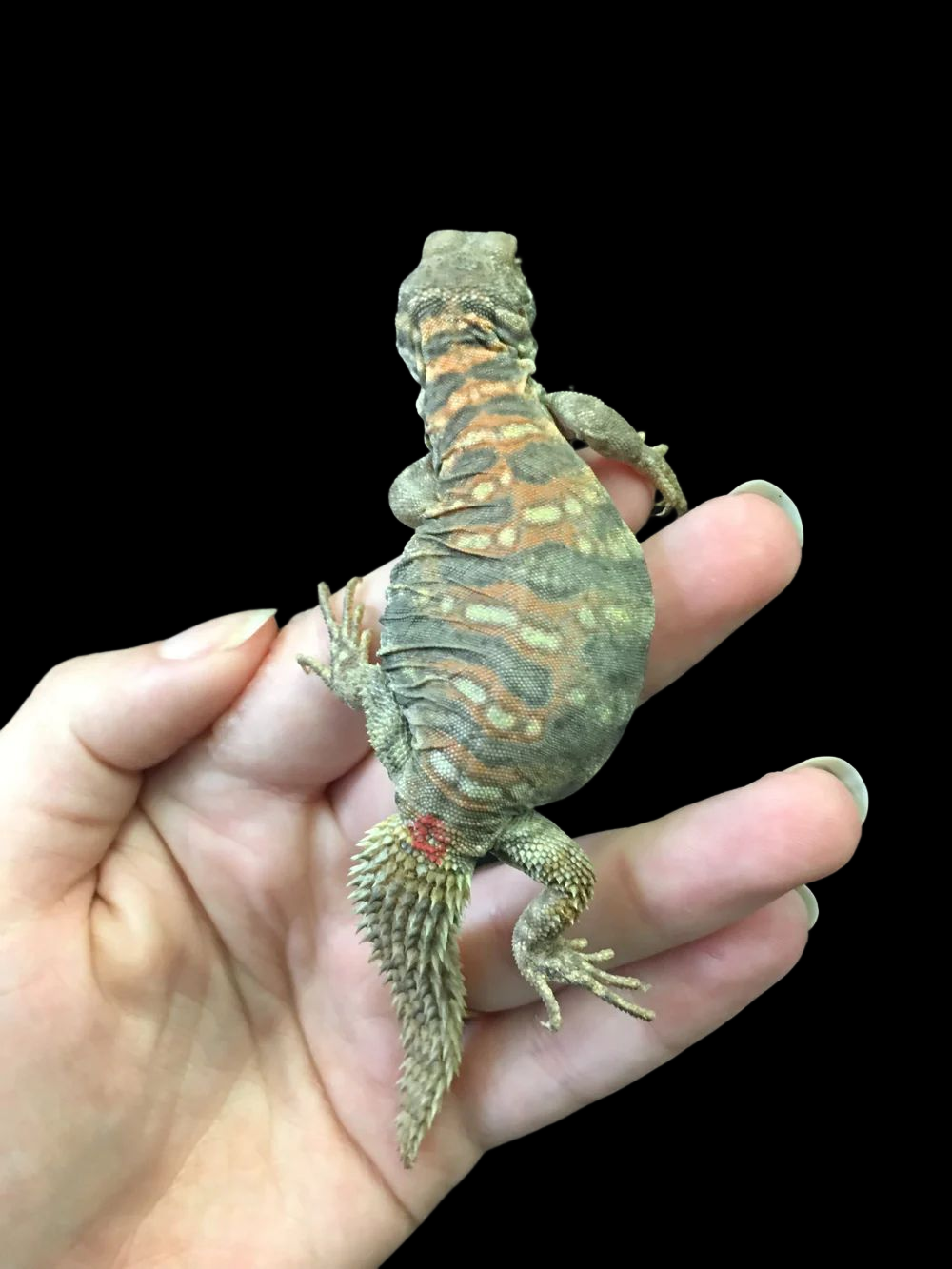
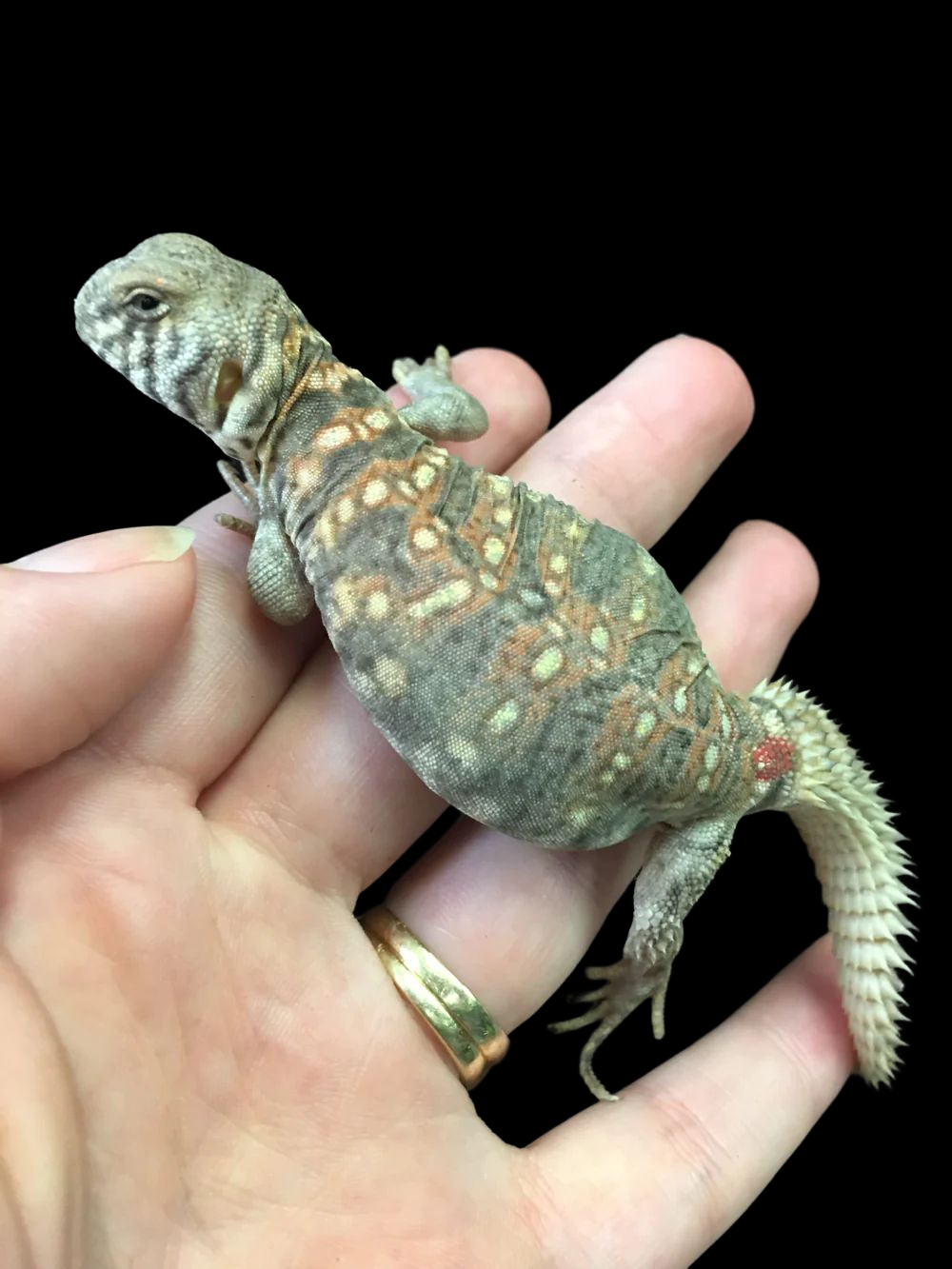
Appearance: The Ornate Uromastyx is one of the most visually striking members of the genus. Males commonly exhibit vibrant blues, greens, yellows, and reds arranged in mosaic-like patterns across the back, flanks, and tail. Females are more subdued but retain intricate patterning and warm earth tones. The body is stout and muscular, with strong limbs and a heavily spined tail used for defence. Their colourful, ornate appearance is the hallmark of this species.
Distribution: Native to the Middle East, including parts of Israel, Jordan, Saudi Arabia, and the Sinai Peninsula.
Habitat: This species inhabits rocky desert regions, limestone cliffs, arid plateaus, and dry valleys. They spend much of their time basking on sunlit rocks or retreating into crevices and burrows for safety and thermoregulation.
Behaviour: Ornate Uromastyx are diurnal, herbivorous, and highly heat-tolerant. They forage for leaves, flowers, seeds, and desert plants. Males may display territorial behaviours, including head-bobbing and chasing within their home range. They are generally alert but settle well in captivity when given proper heat, lighting, and hiding opportunities.
Captive Care
Enclosure: Provide a terrestrial enclosure at least 4 × 2 × 2 feet (120 × 60 × 60 cm) for an adult. This footprint is suitable for their size and activity level. Furnish the enclosure with deep, compactable substrate, secure rock structures, multiple basking platforms, and hides. Larger custom enclosures may be offered if desired but are not required beyond the standard recommendation.
Temperature and Humidity:
Basking area: 120 to 130°F (49 to 54°C)
Warm side: 95 to 105°F (35 to 40°C)
Cool side: 75 to 85°F (24 to 29°C)
Night temperatures: 68 to 75°F (20 to 24°C)
Humidity should remain low, ideally 10 to 30 percent.
Lighting: Provide intense full-spectrum lighting with high-output UVB (10 to 12 percent). Bright, broad basking platforms help maintain proper metabolism, energy levels, and colour expression.
Diet: Offer a strict herbivorous diet including dark leafy greens, chopped vegetables, desert-safe weeds, sprouts, and flowers. Avoid fruit and high-oxalate greens. Provide calcium frequently and multivitamins sparingly.
Behaviour in Captivity: Ornate Uromastyx are active, bright, and rewarding display reptiles when their needs are met. They bask openly, explore their enclosure, and exhibit natural grazing and burrowing behaviours. They can be cautious but generally adapt well to routine care.
Special Considerations:
• Provide deep substrate for digging and burrow formation.
• Keep humidity low to avoid respiratory problems.
• Ensure all rock structures are secure—these lizards are strong diggers.
• Avoid all animal protein.
• Very high basking temperatures are essential for proper activity and digestion.
Taxonomy Note
The Ornate Uromastyx belongs to the genus Uromastyx, a group of herbivorous, desert-dwelling lizards specialized for arid environments. Uromastyx ornata is prized for its brilliant coloration and intricate patterning, making it highly recognizable among the species.
Genetics Note
No formally recognized morphs exist for this species. Natural variation includes differences in colour saturation, the presence or absence of blue or green tones, and pattern complexity. These variations are locality- and individual-based rather than the result of selective breeding.
Estimate shipping