

Photo Disclaimer
Description
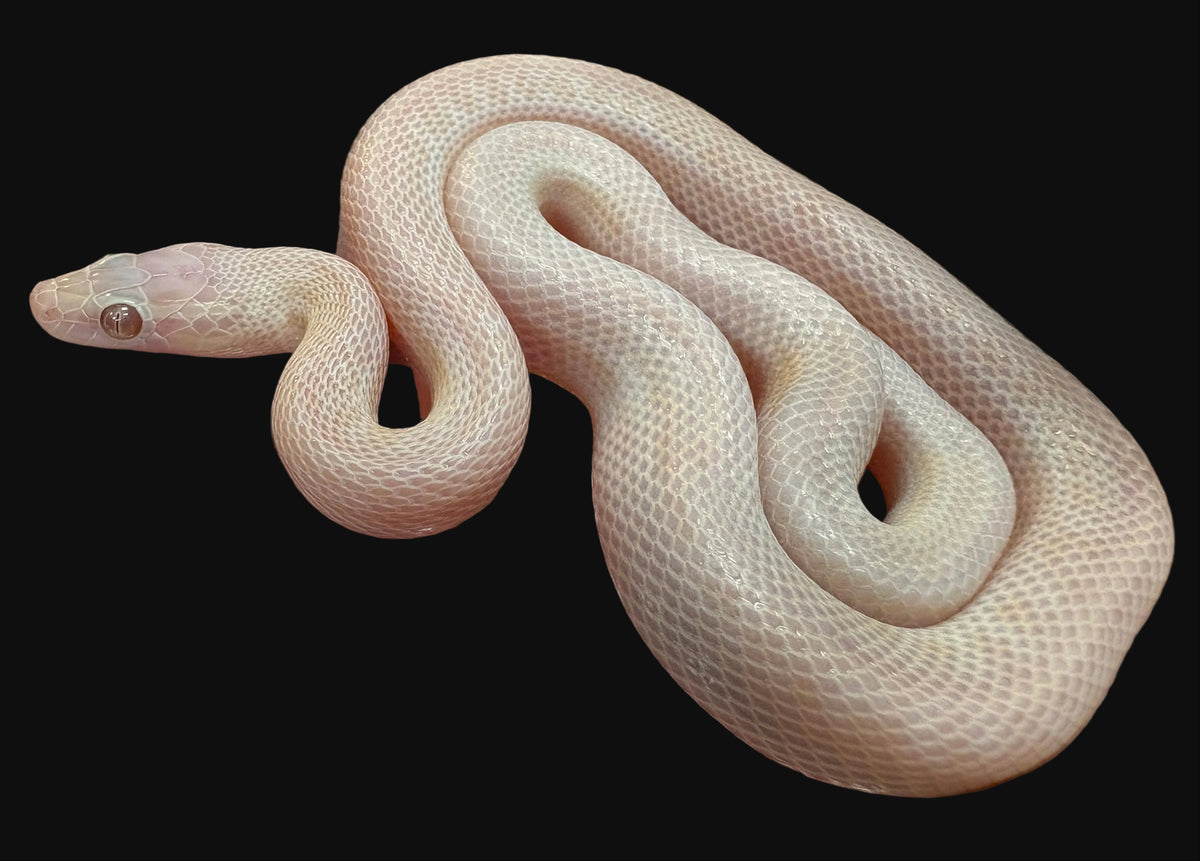
Cape House Snake (T- Albino Blue Eye)
Scientific Name: Boaedon capensis
Common Name: African House Snake, Cape House Snake, Brown House Snake
Species Overview
Size: Adult Cape House Snakes typically reach 2.5–4 feet (0.75–1.2 m) in length, with females often growing larger and more robust than males. They are slender, smooth-scaled constrictors with bright, alert eyes and a streamlined appearance.
Appearance: The T- Albino Blue Eye Cape House Snake is a striking colour morph that removes all dark pigmentation, revealing pale cream, white, and pink tones beneath. The typical chocolate-brown base of the wild-type snake is replaced by a cool-hued white with soft purple or pinkish hues, while the eyes appear purple-pink with red pupils. The pattern remains faintly visible, especially under natural light, producing a subtle marbled effect. The T- Albino form highlights the delicate structure and gentle sheen of this already elegant species, giving it a radiant, glowing quality.
While hatchlings are an almost translucent pink, they will become more opaque as they age, leading to solid white to cream snakes.
Distribution: Widespread across sub-Saharan Africa, from South Africa north through Kenya, Tanzania, and beyond. This species thrives in a wide range of habitats, including savannas, grasslands, and rural settlements.
Habitat: In the wild, Cape House Snakes are adaptable and frequently found around human dwellings where rodents are abundant. In captivity, they thrive in moderately humid terrestrial enclosures that provide secure hides, climbing opportunities, and soft substrate for burrowing.
Behaviour: Cape House Snakes are intelligent, calm, and highly adaptable. Known for their gentle temperament and consistent feeding habits, they are among the most beginner-friendly snake species. Despite their name, they are solitary by nature and should be housed individually.
Captive Care
Enclosure: Provide an adult enclosure at least 3 feet × 18 inches × 18 inches, though larger enclosures are appreciated. Use soft substrate such as coconut husk, soil blend, or aspen to allow for limited burrowing. Include at least two hides—one on the warm side and one on the cool side—and add branches or vines for light climbing.
Temperature & Humidity: Maintain a daytime gradient of 78–86°F (25–30°C) with a basking spot near 88–90°F (31–32°C). Nighttime temperatures can drop to 70–74°F (21–23°C). Keep humidity between 40–60%, allowing slightly higher levels during shedding.
Diet: Offer thawed rodents proportional to the snake’s girth—juveniles every 5–7 days and adults every 10–14 days. Cape House Snakes are reliable feeders that rarely refuse meals, making them an ideal choice for new keepers.
Behaviour in Captivity: Docile, easy to handle, and active during twilight hours, Albino Cape House Snakes quickly become comfortable in captivity. They explore readily and tolerate gentle handling well.
Special Considerations: As with all Albino snakes, sensitivity to bright lighting is common due to lack of melanin. Provide shaded hides and moderate lighting conditions.
Taxonomy Note
This species was formerly classified under the genus Lamprophis and has since been reassigned following updated genetic and phylogenetic studies.
Former Classification: Lamprophis capensis
Current Accepted Name: Boaedon capensis
This taxonomic revision reflects the genetic distinction between southern African Lamprophis species and the Boaedon lineage, which includes a wide variety of African “House Snakes.” The name Boaedon capensis is now universally accepted in scientific literature and herpetoculture.
Genetics Note
This is a double recessive animal, combining two recessive traits:
T- Albino (Recessive - Visual): Removes all melanin (dark pigment) with no presence of tyrosinase whatsoever, revealing an animal that is often a luminous white or cream with red pupils.
Blue Eye (Recessive - Visual): Alters pigmentation in the iris, leading to silvery to blue colouration. This appearance is further shifted into the pink range due to the T- Albino gene in this animal.
Estimate shipping