


Photo Disclaimer
Description
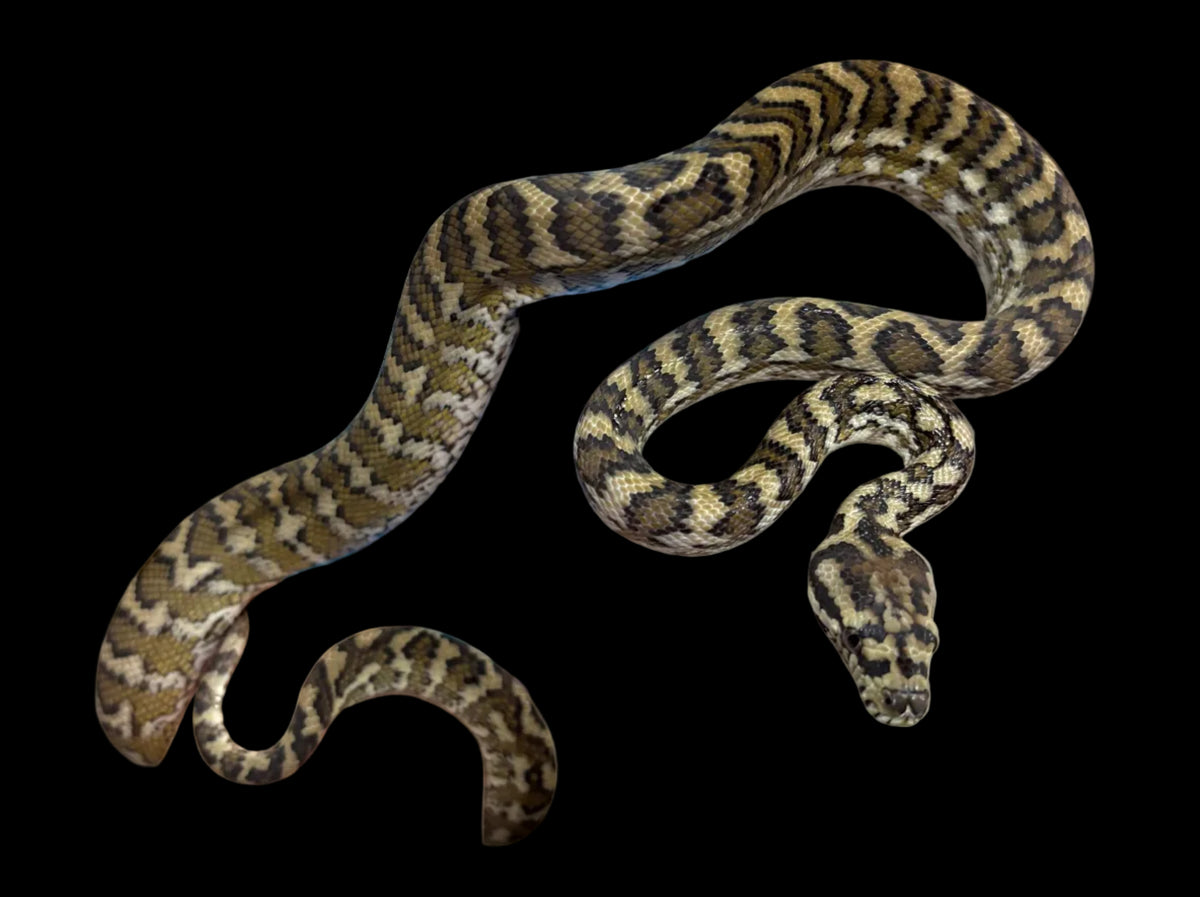
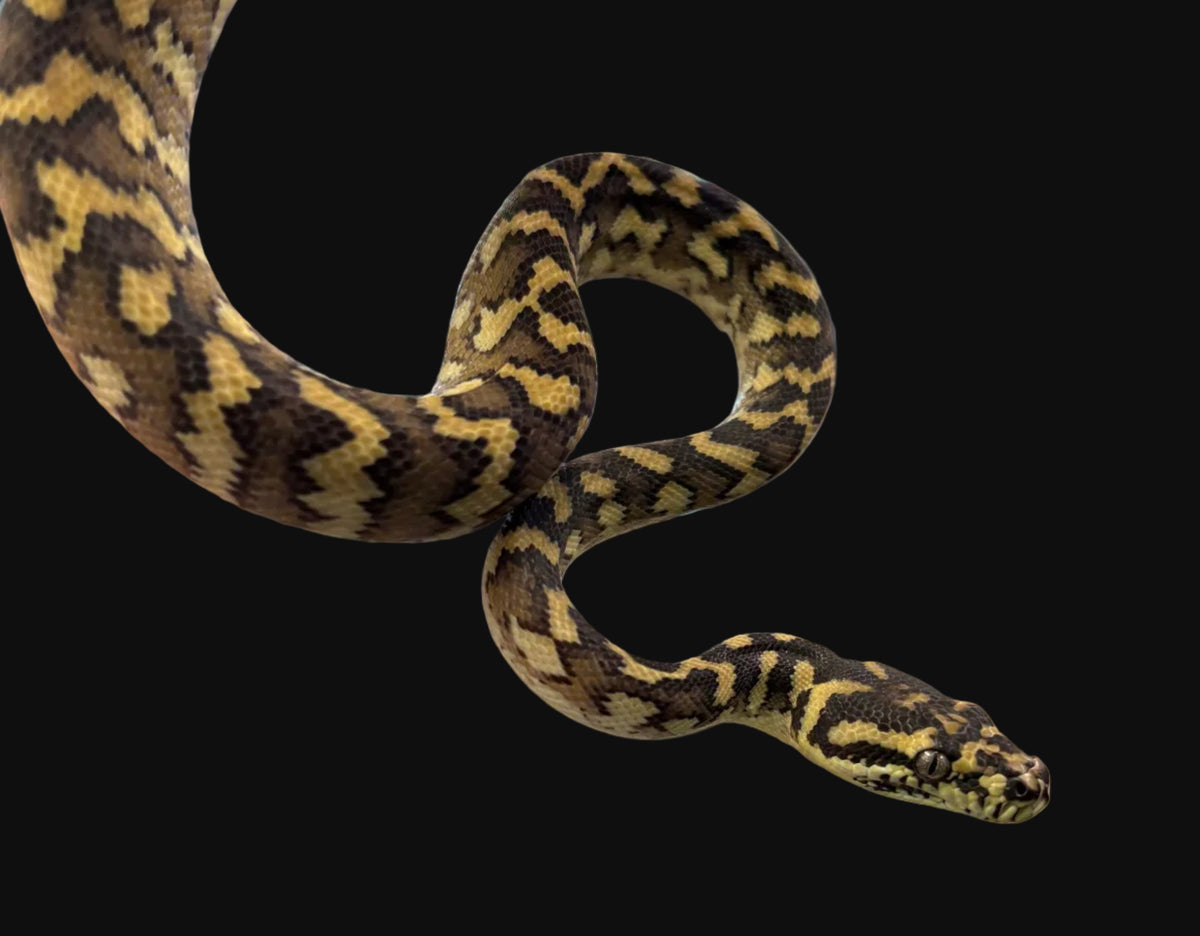
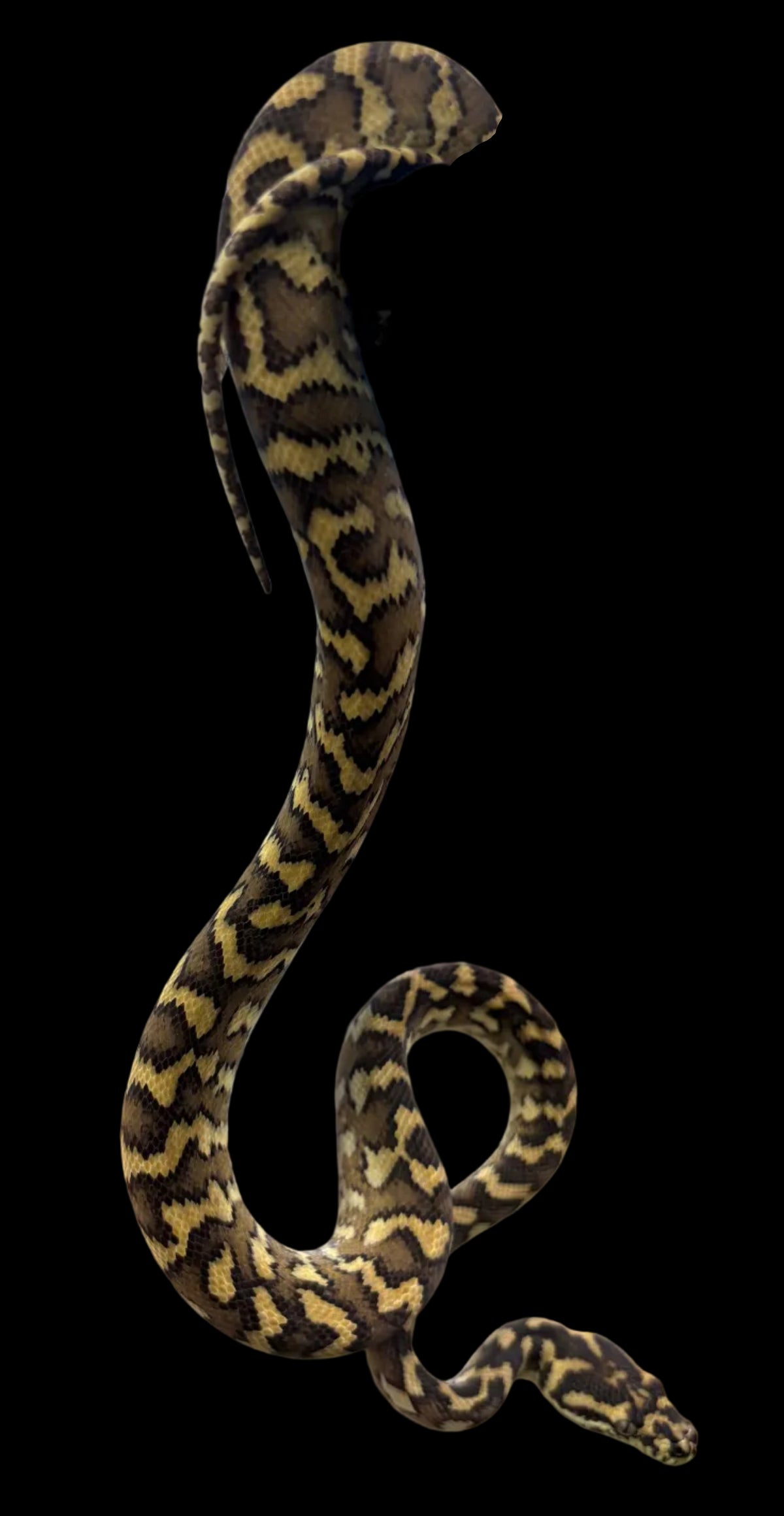
Carpet Python (Caramel het. Granite 66% het. Albino)
Morelia spilota mcdowelli
Common Names: Coastal Carpet Python
Species Overview
-
Size: Coastal carpet pythons hold the title of being the largest carpet python subspecies, though they average between 6.5–8 ft (2.0–2.5 m) and retain a sleek, arboreal build.
- Appearance: These individuals display the Caramel trait: reduced levels of melanin compared to wild type carpets, appearing as a range of bronzes and burnt creams that gain more of an orange or yellow glow as the animal ages. Hatchlings emerge with reddish or brownish tones. Markings are not impacted by the Caramel trait, and lead to a gorgeously monochromatic animal.
-
Distribution: This subspecies ranges across eastern Australia, specifically from SE Queensland to NE New South Wales.
-
Habitat (wild counterparts): A distinctly arboreal species, carpet pythons inhabit woodlands of a great range of habitats along riparian borders, notably subtropical woodland, dry woodland, and eucalypt forests.
-
Behaviour: These are mostly arboreal constrictors, adept at climbing and ambushing prey such as birds and small mammals.
Captive Care
-
Enclosure: Adults thrive in enclosures 5–6 ft long, with height for climbing. Provide sturdy branches, ledges, and multiple hides.
-
Temperature & Humidity:
-
Basking spot at 88–90°F (31–32°C).
-
Ambient range 75–80°F (24–27°C).
-
Humidity between 50–70%, adjusted slightly depending on shedding cycles.
-
-
Diet: Juveniles accept hopper mice readily, while adults do best on medium to large rats every 10–14 days.
-
Behaviour in Captivity: Captive-bred are generally hardy and good feeders. Juveniles may be defensive, but with steady husbandry, most mature into calm, predictable snakes.
-
Special Considerations: Provide a semi-arboreal, naturalistic setup with perches and climbing opportunities.
Genetics Note
- Caramel (Incomplete Dominant - Visual): Mutation that reduces the production or activity of dark melanin pigment, allowing warmer pigments to show through. One copy of this gene produces a visual trait, while two copies of the gene creates a 'Super' variant of the trait.
- Granite (Recessive - Heterozygous): A pattern morph, where the overall pattern of the animal becomes pixelated and broken. Offspring of this animal require two copies to produce a visual trait.
- Albino (Recessive - Heterozygous (66%) ): Removes all melanin production from the animal. Has a chance to have 66% of its offspring within a clutch display the albino trait if paired with another with the same genes.
Estimate shipping