

Photo Disclaimer
Description
Cat-eyed Gecko
Scientific Name: Aeluroscalabotes felinus
Common Name: Cat-eyed Gecko, Borneo Cat Gecko
Species Overview
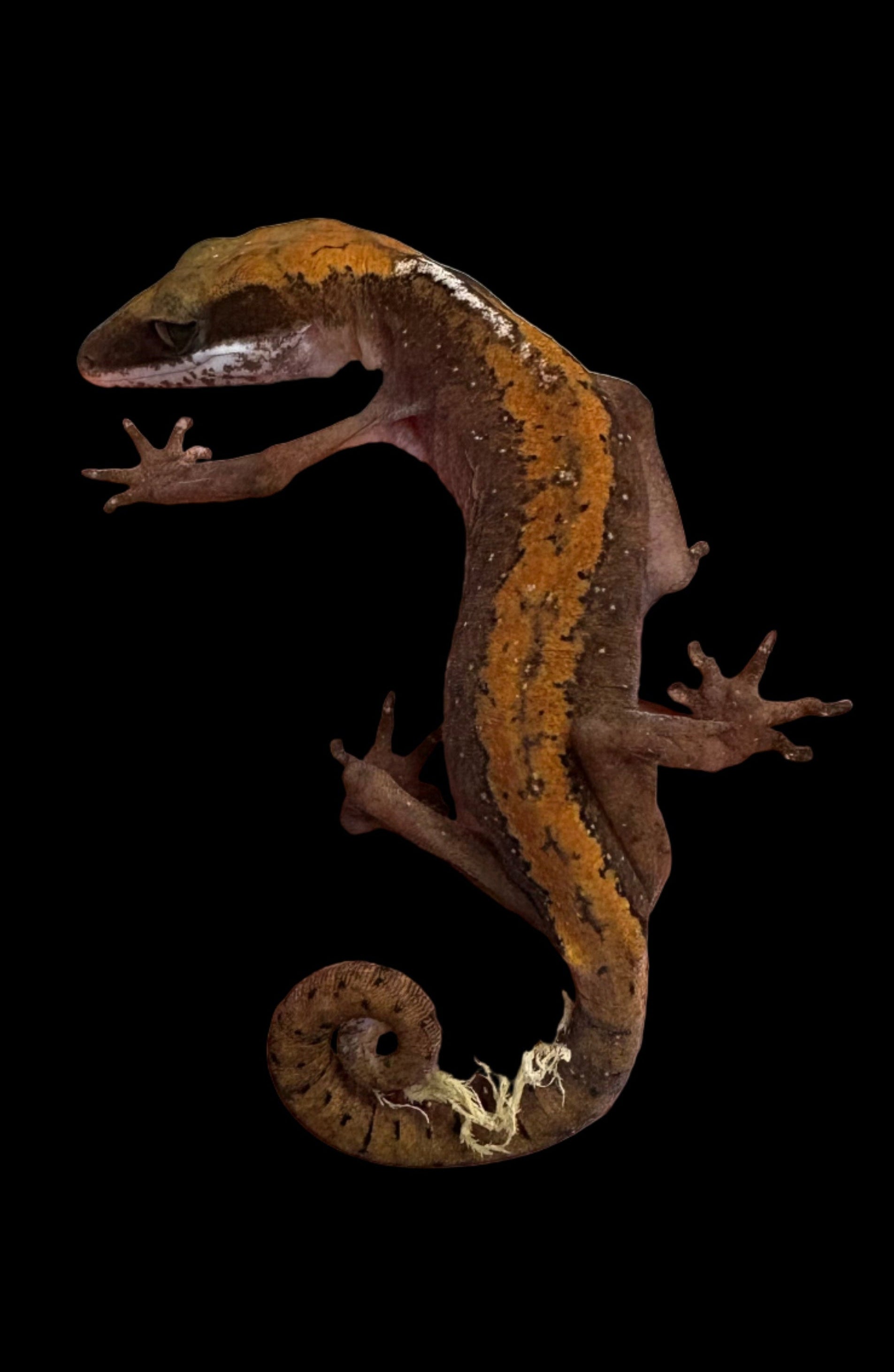
Size: Adult Cat-eyed Geckos typically reach 7–8 inches (18–20 cm) in total length, including the tail. They are slender, semi-arboreal geckos with smooth skin, fine scaling, and large, expressive eyes that resemble those of a cat.
Appearance: The Cat-eyed Gecko is a unique and elegant species known for its glossy reddish-brown to mahogany coloration, accented with lighter cream or tan striping along the head and body. Their enormous eyes—dark green with vertical pupils—give them a distinctly feline appearance. The skin is smooth and slightly translucent, and the tail is long and tapered. Unlike many geckos, they have movable eyelids, placing them in the same family as leopard and fat-tailed geckos rather than sticky-toed climbers.
Distribution: Found across Malaysia, Thailand, Indonesia, and parts of Borneo, where they inhabit lowland tropical rainforests and humid forest floors.
Habitat: In the wild, Cat-eyed Geckos are forest-dwelling and semi-arboreal, often found among leaf litter, low shrubs, and fallen branches in moist, shaded areas. They rely on high humidity and moderate temperatures year-round. In captivity, they thrive in naturalistic terrariums with dense foliage, climbing structures, and stable humidity.
Behaviour: These geckos are nocturnal and secretive but gentle and deliberate in their movements. They prefer calm environments and minimal disturbance. When startled, they may raise their tails defensively but rarely bite. Cat-eyed Geckos are known for their shy, graceful nature and are best enjoyed as display animals rather than handled pets.
Captive Care
Enclosure: Provide an enclosure of at least 18 inches × 18 inches × 24 inches (45 × 45 × 60 cm) for a single adult. Vertical space and climbing décor such as cork bark, vines, and plants are essential. A naturalistic or bioactive setup using soil, leaf litter, and moss works best to retain humidity and replicate their forest habitat.
Temperature & Humidity: Maintain daytime temperatures of 75–82°F (24–28°C) with nighttime drops to 70–74°F (21–23°C). Avoid excessive heat—temperatures above 85°F (29°C) can cause stress. Keep humidity between 70–90%, achieved through regular misting and live plants. Ensure good ventilation to prevent stagnant air.
A major component to consider is that cat geckos are sensitive to excess minerals in their water. Use reverse osmosis water for these animals.
Lighting: Provide low-level UVB lighting (2–5%) on a 12-hour day/night cycle. While nocturnal, they benefit from a consistent photoperiod and low UVB exposure for calcium metabolism and well-being.
Diet: Feed a variety of gut-loaded insects including crickets, roaches, and silkworms. Supplement occasionally with small soft-bodied worms. Dust all feeders with calcium and multivitamin supplements on a regular schedule. Juveniles should be fed daily; adults every 2–3 days.
Behaviour in Captivity: Cat-eyed Geckos are shy and prefer secure, well-planted enclosures. With consistent care and minimal stress, they become confident nocturnal hunters and active display animals. Their delicate nature makes them best suited for experienced keepers.
Special Considerations: This species is highly sensitive to dehydration and temperature extremes. Maintain stable humidity, and avoid bright lights or frequent handling. Always regulate heating with a thermostat and provide several secure hiding locations.
Taxonomy Note
The Cat-eyed Gecko (Aeluroscalabotes felinus) belongs to the family Eublepharidae, which includes the Leopard Gecko (Eublepharis macularius) and African Fat-tailed Gecko (Hemitheconyx caudicinctus). It is the only known arboreal member of this family and the sole species in its genus. This evolutionary distinction, combined with its eyelids and climbing ability, makes it one of the most unusual geckos in the world.
Genetics Note
There are currently no recognized morphs or genetic variants of Aeluroscalabotes felinus. However, natural locality variation occurs, with some populations exhibiting darker, redder, or more chocolate-toned coloration depending on region and environmental conditions. These differences are naturally occurring rather than selectively bred traits.
Estimate shipping