


Photo Disclaimer
Description
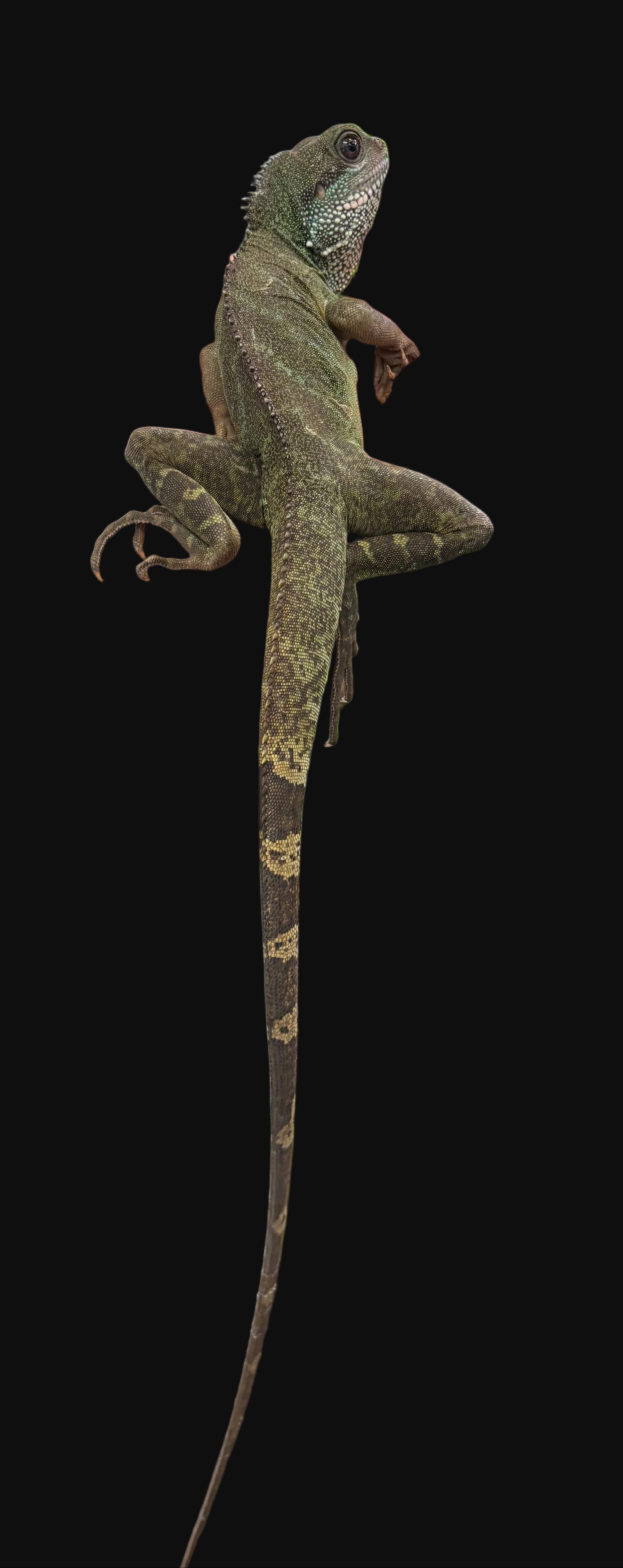
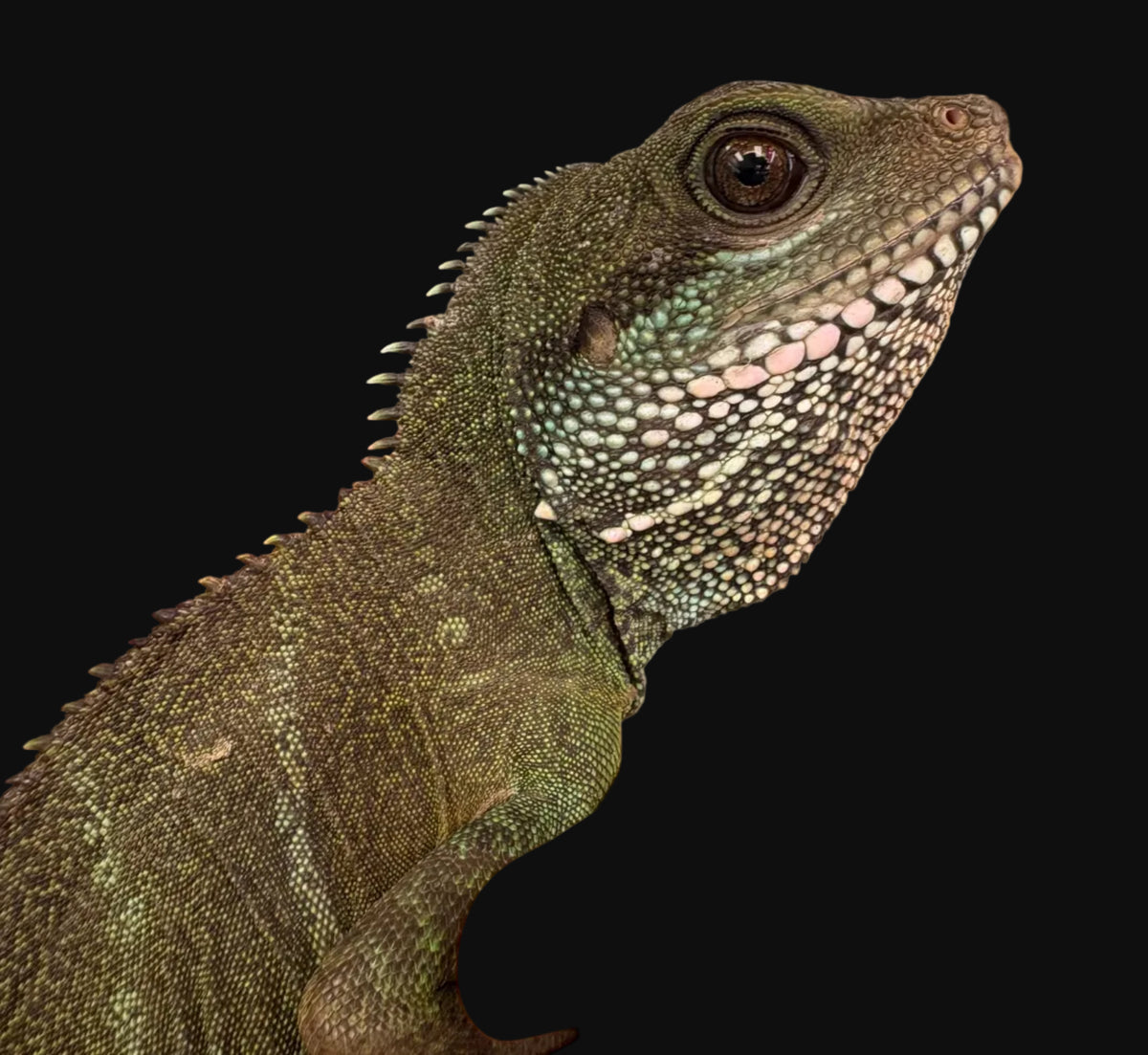
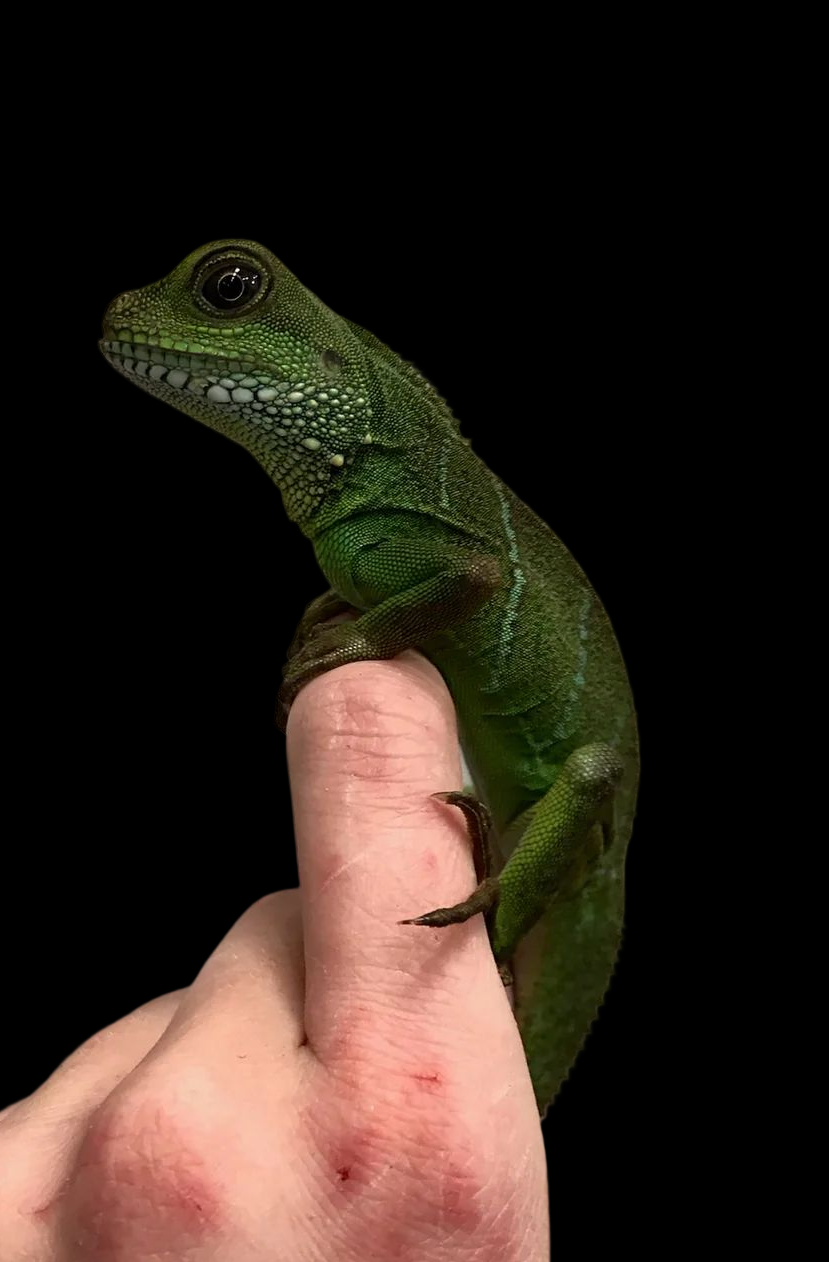
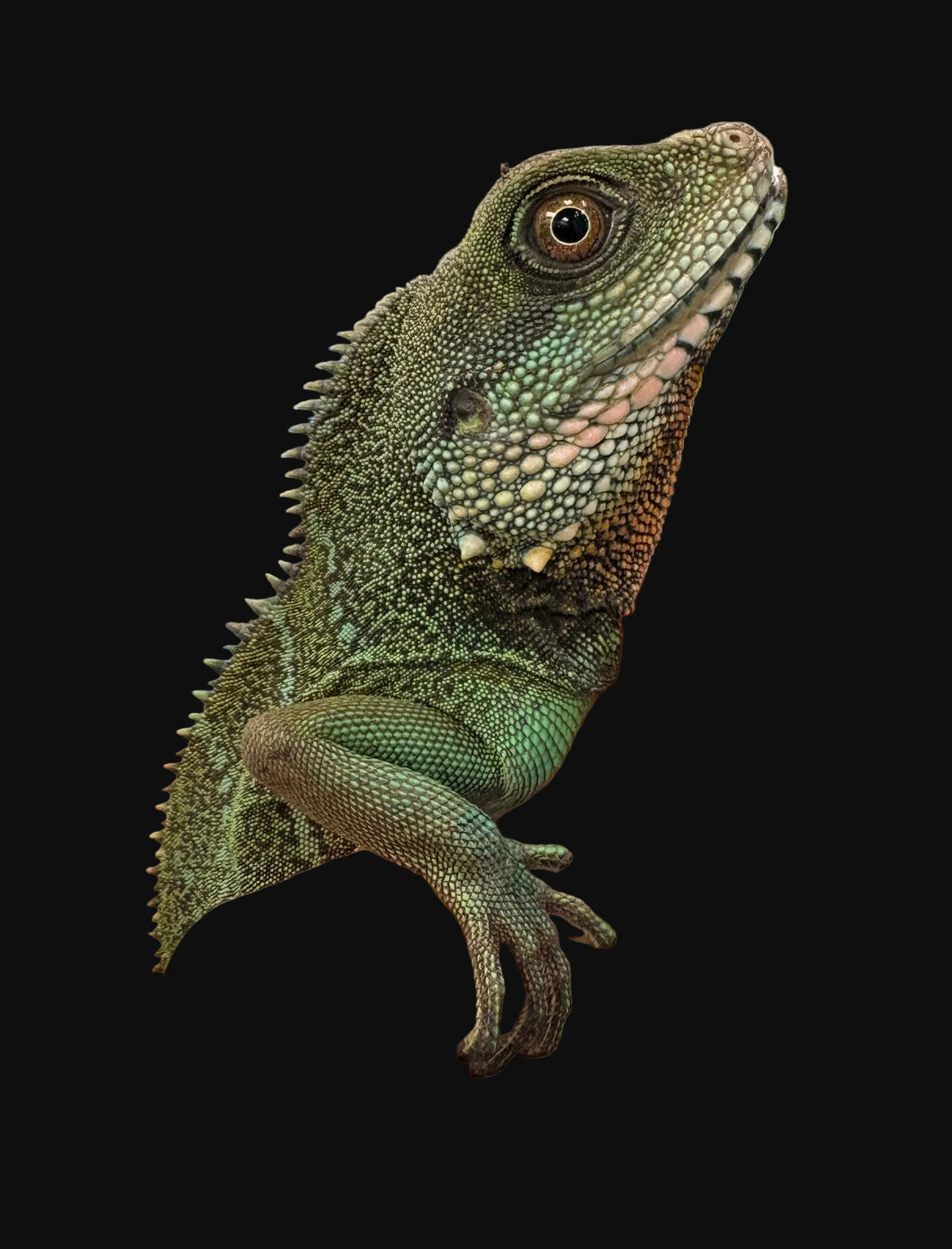
Chinese Water Dragon
Scientific Name: Physignathus cocincinus
Common Name: Chinese Water Dragon, Asian Water Dragon
Species Overview
Size: Adults typically reach 2–3 feet (60–90 cm) in total length, with males often larger and developing more robust heads and crest structures. The tail accounts for more than half of their total length.
Appearance: Chinese Water Dragons are vibrant green lizards with subtle striping along the body and a pale, often yellow or cream underside. Many individuals display pink, orange, or yellow highlights along the throat and jawline. A row of spines extends from the head down the back, more pronounced in males. Their long, muscular tails are laterally compressed, helping them swim efficiently. Eyes are large and expressive, adapted for spotting movement both in trees and near water.
Distribution: Native to Southeast Asia, including southern China, Vietnam, Laos, Thailand, and Cambodia.
Habitat: This species inhabits tropical rainforests, riverbanks, and forest edges with abundant vegetation and consistent moisture. They are semi-arboreal, often perching above water where they can dive to escape predators.
Behaviour: Chinese Water Dragons are diurnal, highly alert, and strong climbers and swimmers. They feed on insects, small vertebrates, crustaceans, and occasional plant matter. When startled, they may leap from perches into water, submerging themselves until danger passes. Males can be territorial, especially in the breeding season.
Captive Care
Enclosure: Provide a spacious enclosure at least 6 feet × 3 feet × 4 feet (1.8 × 0.9 × 1.2 m) for an adult. A large water area deep enough for soaking and swimming is essential. Include sturdy climbing branches, elevated basking platforms, and dense foliage. A naturalistic substrate such as a soil–sand mixture (dry on top with moisture retained below) supports humidity and digging behaviours.
Temperature and Humidity:
Basking area: 90–95°F (32–35°C)
Ambient temperature: 80–88°F (27–31°C)
Night temperatures: 75–80°F (24–27°C)
Humidity should be maintained between 60–80%, with regular misting and a large water feature helping stabilize moisture levels.
Lighting: Provide strong full-spectrum lighting with high UVB (10–12%) on a 12-hour cycle. UVB is essential for proper bone development and overall health. Bright lighting also encourages natural activity levels.
Diet: Offer a varied omnivorous diet including crickets, roaches, black soldier fly larvae, mealworms, silkworms, snails, and occasional pinky mice or fish. Supplement with leafy greens, shredded vegetables, and fruit in moderation. Use calcium and multivitamin supplements routinely, especially for juveniles.
Behaviour in Captivity: Chinese Water Dragons are active, intelligent, and thrive in tall enclosures with water access. They often display basking, swimming, and exploratory behaviours. Although they can tame well with gentle routine, they are sensitive to stress and may injure themselves by nose-rubbing if the enclosure is too small or lacks visual barriers.
Special Considerations: Clean water is essential, requiring filtration and frequent changes. Provide deep substrate layers and multiple hides to reduce stress. Avoid glass enclosures without adequate visual breaks, as they can lead to repeated snout trauma. Proper humidity and UVB are crucial to prevent dehydration and metabolic issues.
Taxonomy Note
The Chinese Water Dragon belongs to the family Agamidae, a diverse group of lizards known for their expressive behaviour, strong limbs, and preference for warm, sunlit environments. Physignathus cocincinus is notable for its vivid colouring, semi-aquatic lifestyle, and arboreal–terrestrial versatility.
Genetics Note
There are no recognized morphs for the Chinese Water Dragon. Natural variation includes differences in overall green intensity, throat colour highlights, and stripe pattern clarity. These variations arise from individual and regional genetic diversity rather than selective breeding.
Estimate shipping