

Photo Disclaimer
Description
Colorado River Toad
Scientific Name: Incilius alvarius
Common Name: Colorado River Toad
Species Overview
Size: One of the largest North American toads, adults typically reach 5 to 7 inches (12.5 to 18 cm), with some exceptional individuals exceeding this range. Females are generally larger and heavier-bodied than males.
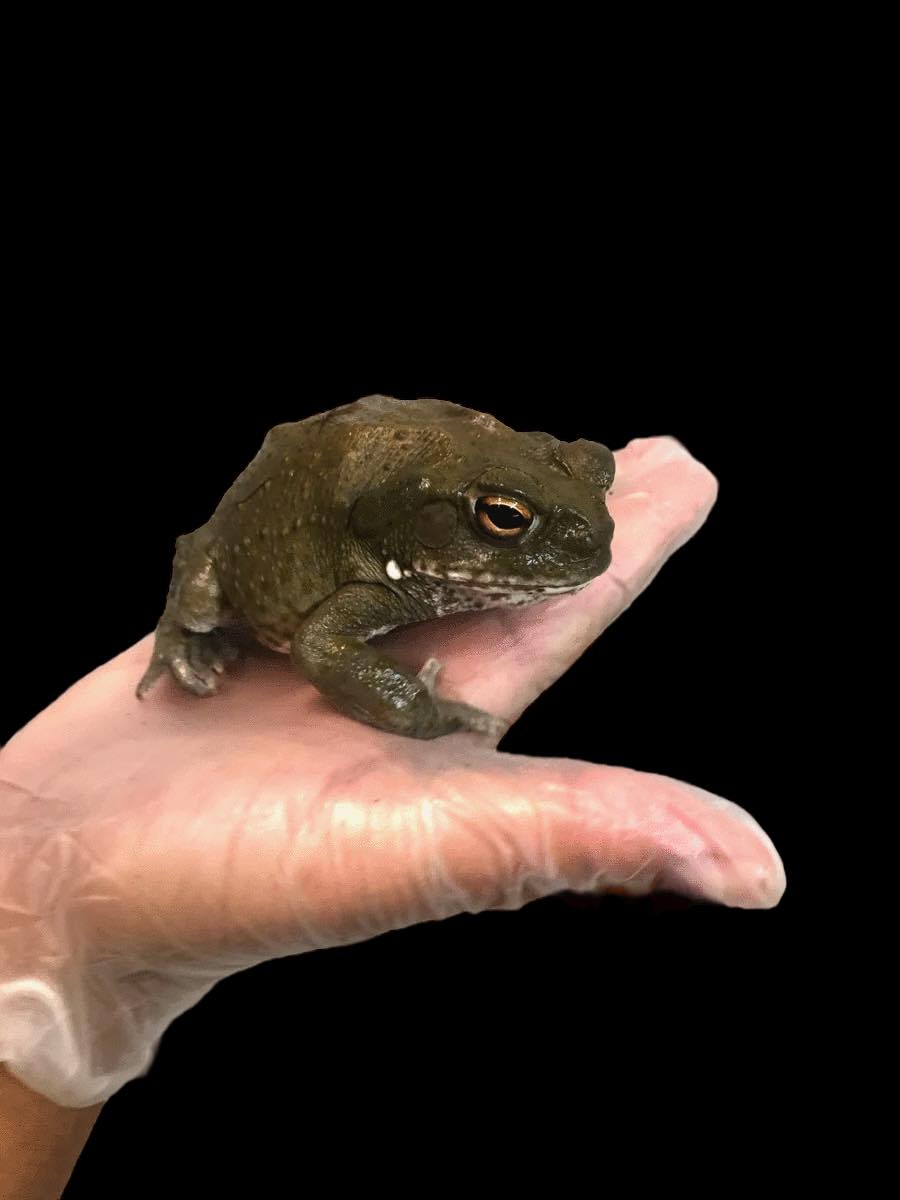
Appearance: The Colorado River Toad is a robust, heavyset species with smooth to lightly granular skin and muted colour tones ranging from olive and brown to greyish tan. The parotoid glands are extremely large and rounded, positioned behind the eyes, and capable of producing highly potent defensive secretions. Pale cream to white patches are often present around the mouth and chin. The underside is light-coloured and usually unmarked. The overall body is broad with thick limbs, and the head is wide with a blunt snout. Juveniles show darker, finer spotting which diminishes with age.
Distribution: Native to the southwestern United States and northwestern Mexico, including Arizona, New Mexico, and parts of Sonora and Sinaloa. Its range is closely tied to warm deserts, riparian corridors, and monsoon-driven seasonal wetlands.
Habitat: Wild populations occupy desert scrub, arid grasslands, mesquite flats, and riparian zones. They are highly moisture-dependent and spend much of the year underground in burrows or natural cavities, emerging during warm rains to feed and breed. In captivity, they require a spacious terrestrial enclosure with moderate humidity, deep substrate for burrowing, and reliable access to clean water.
Behaviour: Primarily nocturnal, Colorado River Toads are powerful, deliberate movers with strong feeding responses. They spend extended periods inactive underground and emerge seasonally or during humid conditions. They are solitary, territorial, and capable of secreting potent toxins when threatened. Their temperament is generally calm but defensive if disturbed.
Captive Care
Enclosure: A large, robust species requiring a minimum enclosure of 36 × 18 × 18 inches (90 × 45 × 45 cm) for a single adult. Provide deep, slightly moist soil or coconut fibre substrate suitable for burrowing. Add cork flats, logs, and hide boxes for security. Include a wide, shallow water dish large enough for soaking. Larger custom enclosures are encouraged due to their size and seasonal activity bursts.
Temperature and Humidity:
Ambient temperature: 78 to 84°F (26 to 29°C)
Warm area: 86 to 90°F (30 to 32°C)
Night temperature: 70 to 75°F (21 to 24°C)
Humidity: 40 to 60% during normal conditions, rising to 70% during misting cycles to mimic natural monsoon patterns.
Lighting: Provide low-level UVB (2 to 5%), with ample shaded zones to reduce stress. A natural day and night cycle is sufficient.
Diet: A varied insectivorous diet including crickets, roaches, large worms, black soldier fly larvae, and occasional soft-bodied invertebrates. Because they are prone to obesity, feeding should be carefully moderated. Supplement prey with calcium and vitamins. Juveniles require more frequent feedings than adults.
Behaviour in Captivity: Hardy but best suited to experienced keepers, due to their size and powerful toxins. They hide extensively during the day and become active, voracious hunters at night. Handling is strongly discouraged.
Genetics Note
No recognised morphs exist for the Colorado River Toad. Natural variation in tone, spotting, and overall shade is typical across different localities but not considered genetically distinct morphs.