


Photo Disclaimer
Description
Common Leaf-Tailed Gecko
Scientific Name: Uroplatus fimbriatus
Common Name: Common Leaf-Tailed Gecko, Leaf-Tailed Gecko
Species Overview
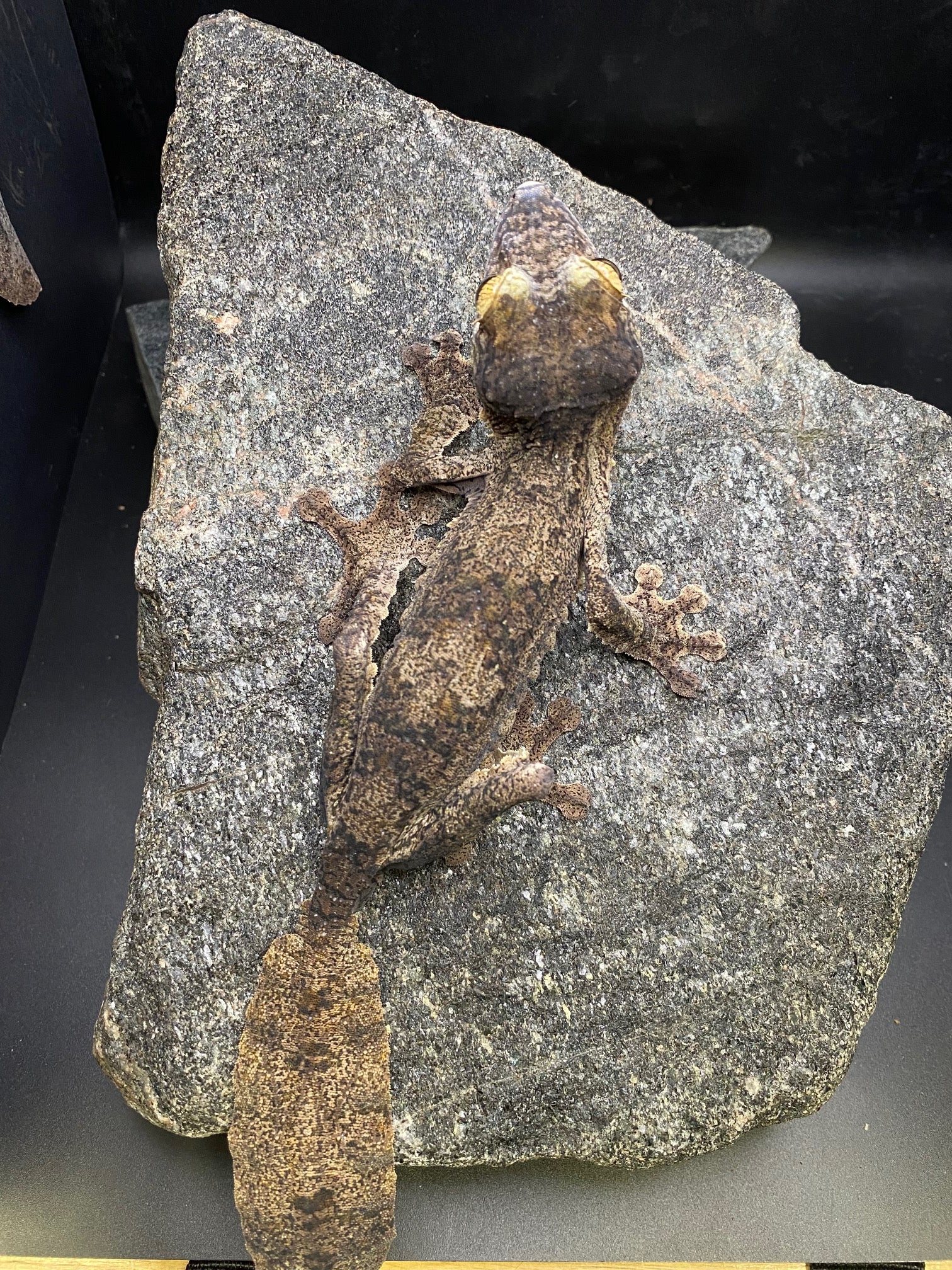
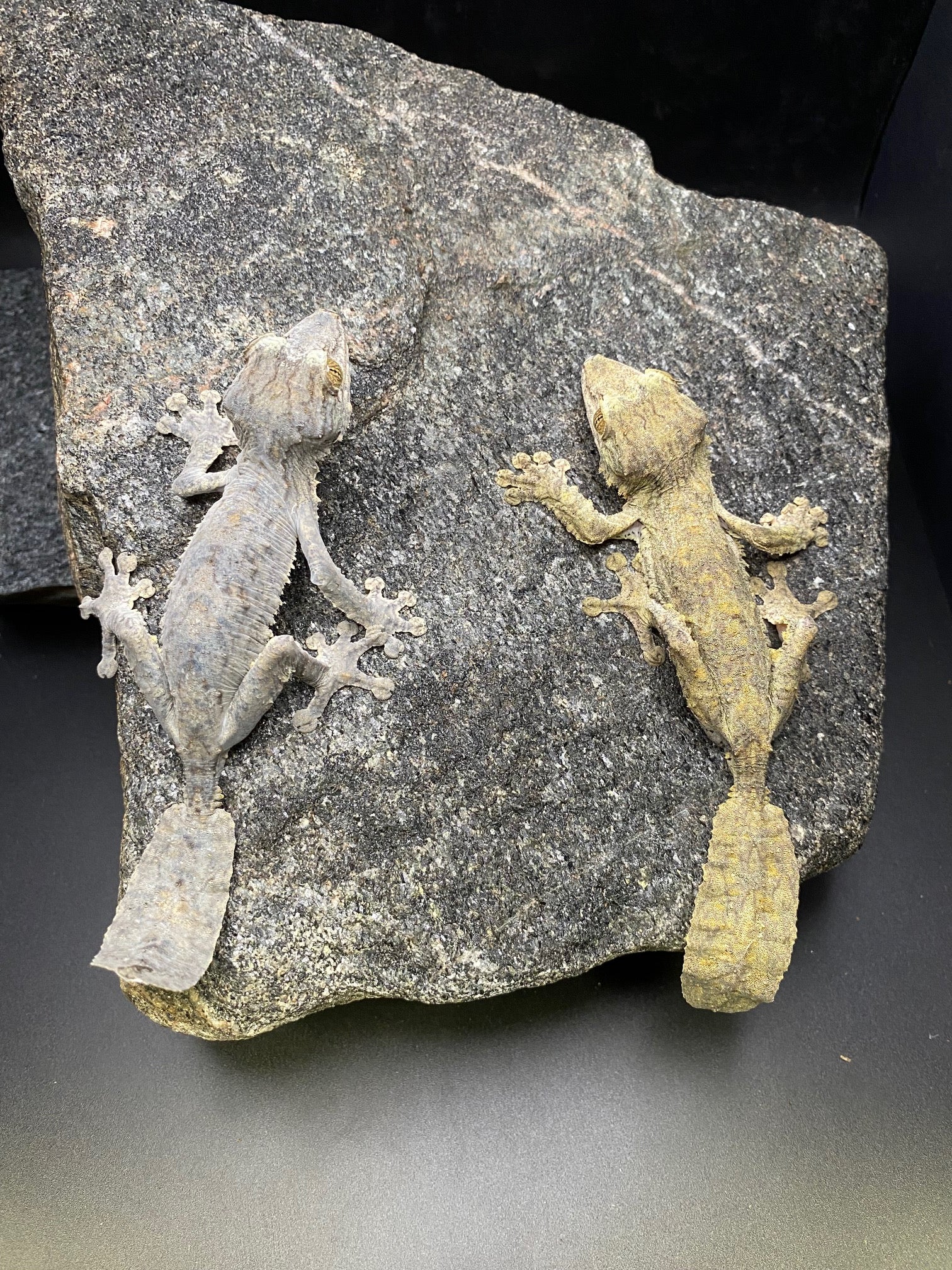
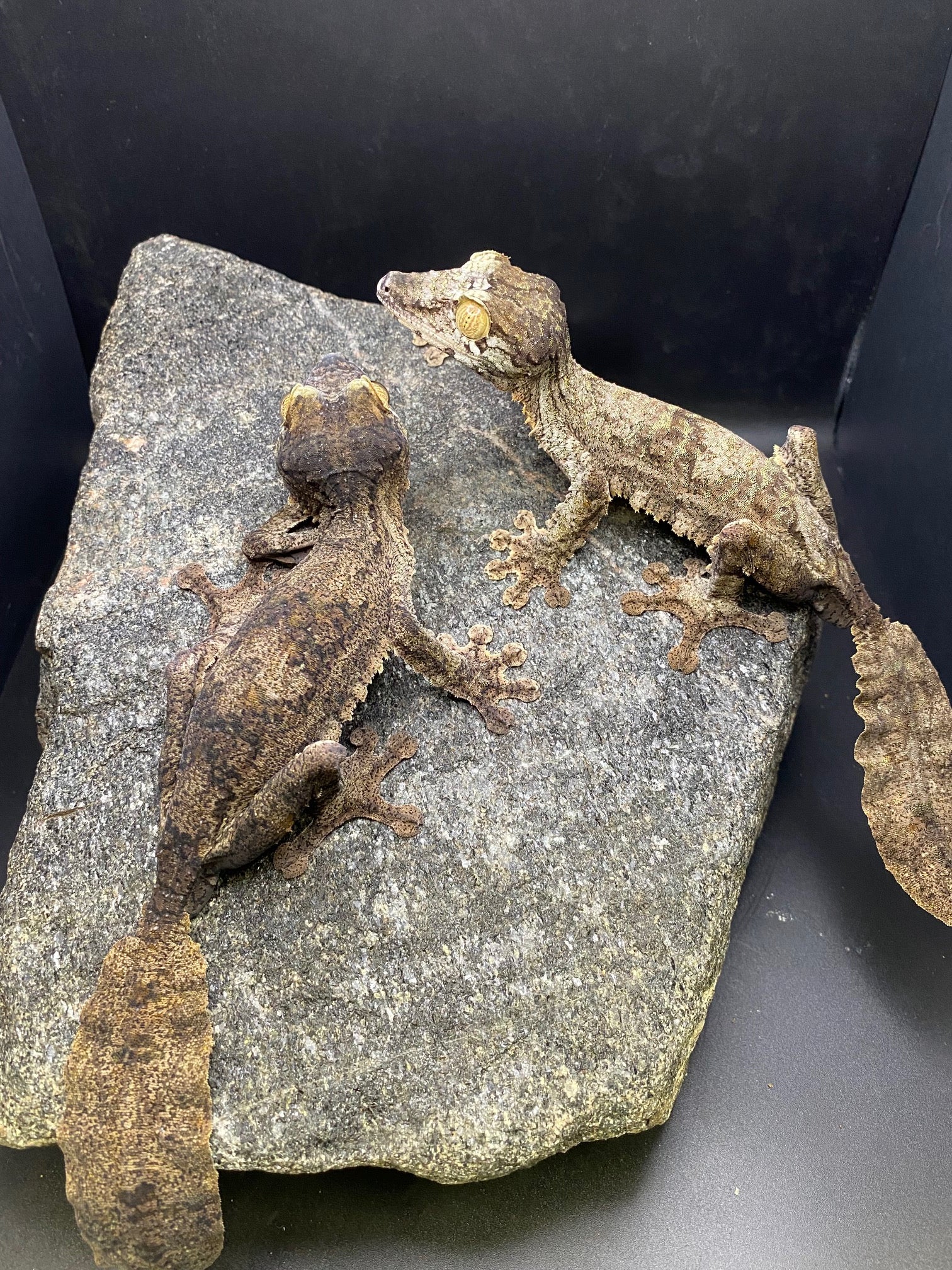
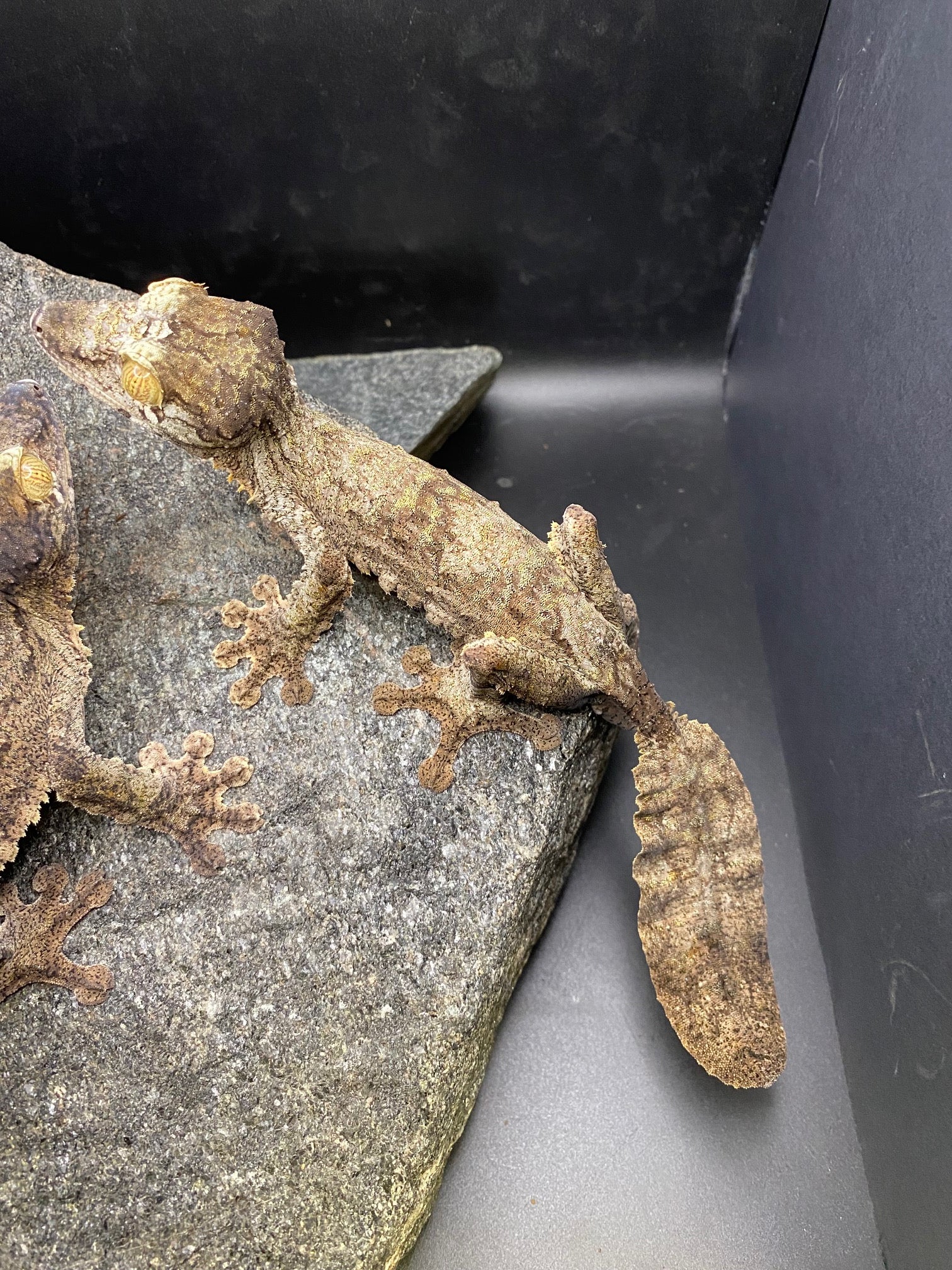
Size: Adult Common Leaf-Tailed Geckos typically reach 8–10 inches (20–25 cm) in total length, including the tail. They are slender, medium to large arboreal geckos with an elongated body and a distinctive flat, leaf-like tail used for camouflage.
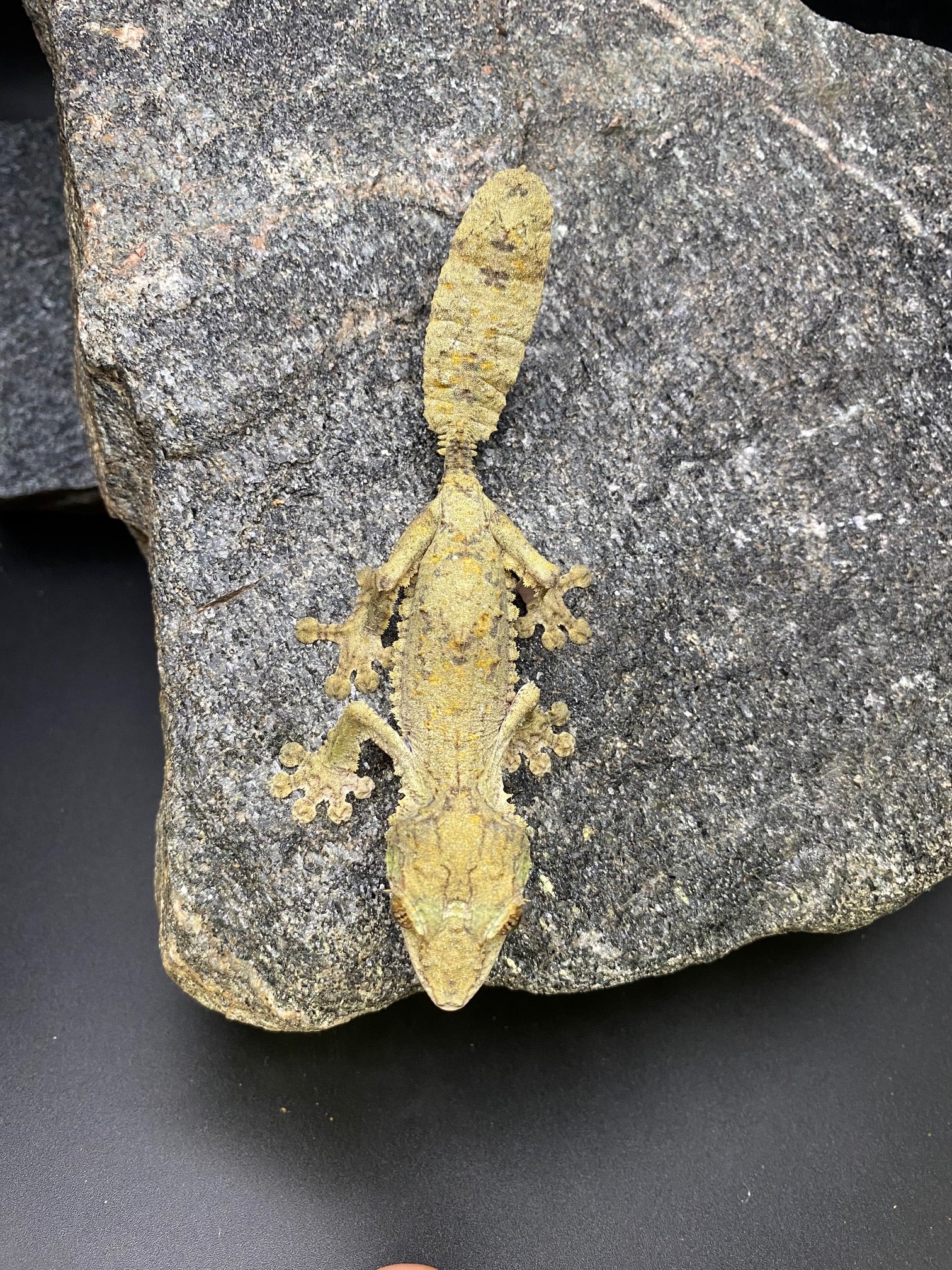
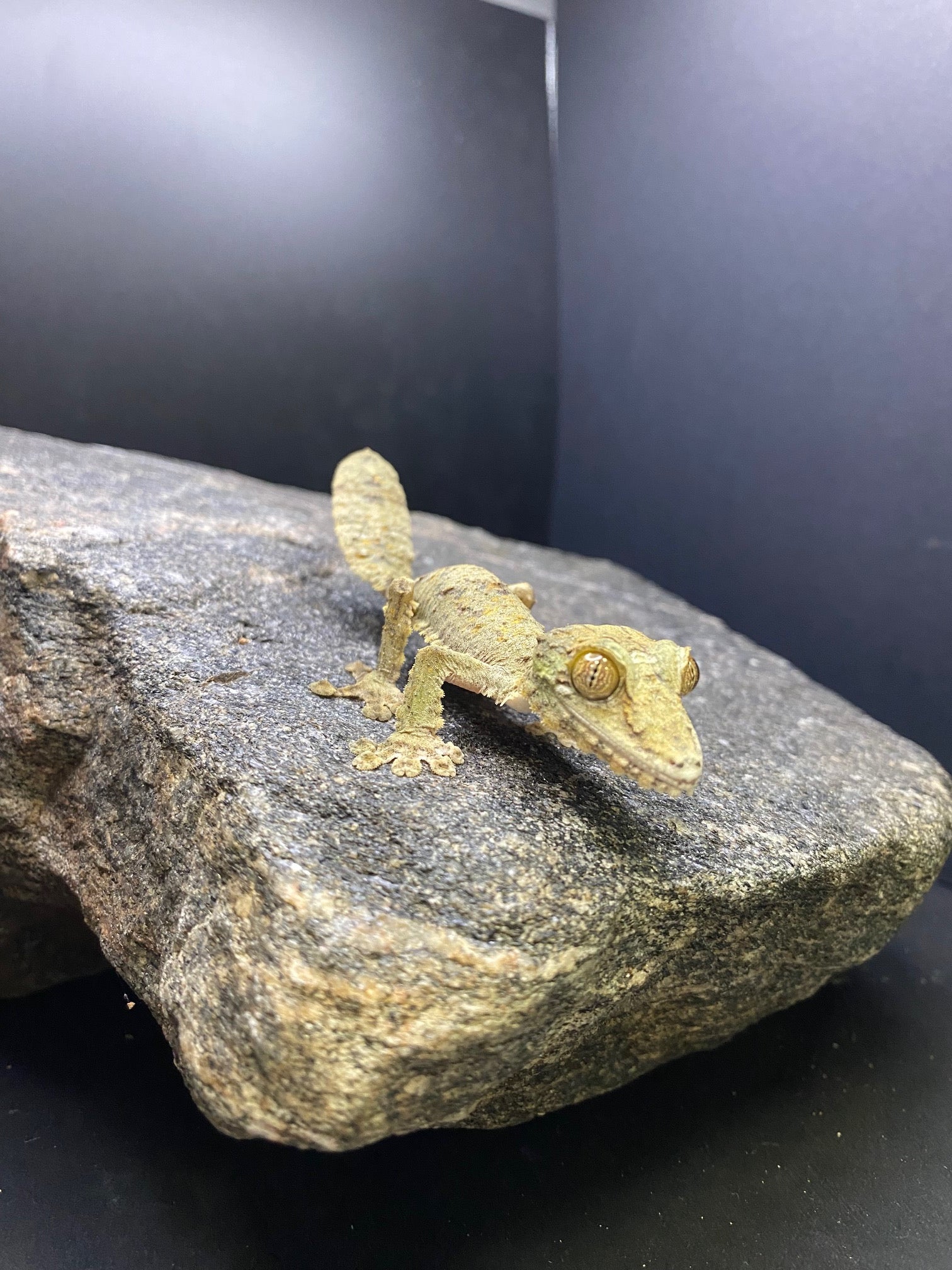
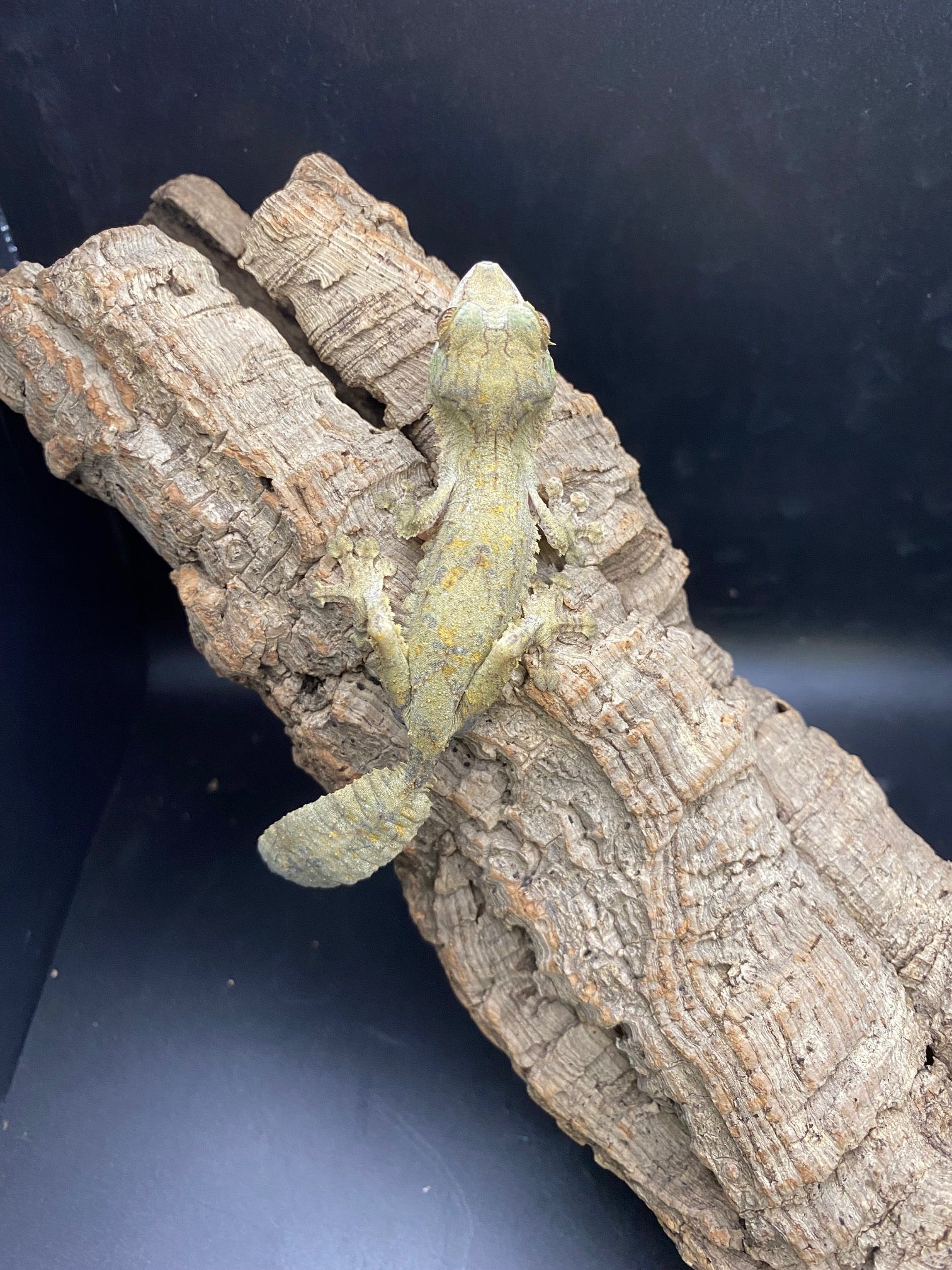
Appearance: The Uroplatus fimbriatus is instantly recognizable for its elegant, elongated form and subtle beauty. Its body colouration and markings vary per individual, consisting of mottled browns. blacks, whites and other tones, mimicking bark and wood. The tail is flattened, leaf-shaped, and often marked with fine veining that enhances its disguise among leaves and branches. The eyes are large with vertical pupils, adapted for nocturnal activity. When resting, their camouflage allows them to appear almost indistinguishable from dry wood/bark.
Distribution: It is found in eastern Madagascar and on the islands Nosy Bohara and Nosy Mangabe, particularly within humid forests and lowland rainforests.
Habitat: In the wild, Common Leaf-Tailed Geckos inhabit humid tropical forests, where they live among lush plant life and tree trunks. Their flattened shape and lined pattern allow them to blend seamlessly into their surroundings. In captivity, they thrive in tall, well-ventilated enclosures with moderate airflow, abundant climbing structures, and consistent humidity.
Behaviour: Nocturnal and arboreal, these geckos spend the day motionless, pressed against trees or branches to avoid detection. At night, they become active hunters, feeding on insects and exploring vertically. They are peaceful but delicate, relying on camouflage and stillness rather than speed or aggression. Handling should be avoided to prevent stress and potential tail loss.
Captive Care
Enclosure: Provide a vertically oriented terrarium measuring at least 18 inches × 18 inches × 36 inches (45 × 45 × 90 cm) for one adult or Larger enclosures for a compatible pair. Include smooth vertical branches, bamboo sections, and live plants such as Ficus, Pothos, or Schefflera for cover. Naturalistic or bioactive setups with strong vertical structure are ideal.
Temperature & Humidity: Maintain daytime temperatures between 74–82°F (23–28°C) with a gentle nighttime drop to 68–72°F (20–22°C). Avoid high heat, as this species is sensitive to temperatures above 85°F (29°C). Keep humidity between 70–90%, achieved through regular misting and the use of moisture-retentive substrate. Ensure good ventilation to prevent stagnant air.
Lighting: While nocturnal, Common Leaf-Tailed Geckos benefit from low-level UVB lighting (2–5%) on a 12-hour day/night cycle. UVB exposure supports calcium metabolism and helps establish a natural light rhythm. Provide shaded areas for retreat during the day.
Diet: Offer a variety of gut-loaded insects such as crickets, roaches, silkworms, and black soldier fly larvae. Feed adults every 2–3 days and juveniles more frequently. Dust insects with calcium and multivitamin supplements regularly to maintain bone health and strong coloration.
Behavior in Captivity: Common Leaf-Tailed Geckos are calm, secretive, and visually stunning display reptiles. With stable humidity, low stress, and minimal disturbance, they thrive and display natural hunting and resting behaviours. They are best observed under dim light in the evening when most active.
Special Considerations: These geckos are highly sensitive to handling and dehydration. Avoid direct contact except when necessary for enclosure maintenance or veterinary care. Ensure constant access to hydration through light misting and dripping surfaces. Overly dry or hot environments can be fatal.
Taxonomy Note
The Common Leaf-Tailed Gecko (Uroplatus fimbriatus) belongs to the family Gekkonidae and is one of several Uroplatus species endemic to Madagascar. All Uroplatus species rely heavily on camouflage and are specialized for arboreal life in humid forests.
Genetics Note
There are currently no recognized morphs or selectively bred variations of Uroplatus fimbriatus. Natural variation occurs in the intensity and spacing of the body striping, tail shape, and colour tone, influenced by locality and environmental conditions rather than selective breeding.
Estimate shipping