


Photo Disclaimer
Description
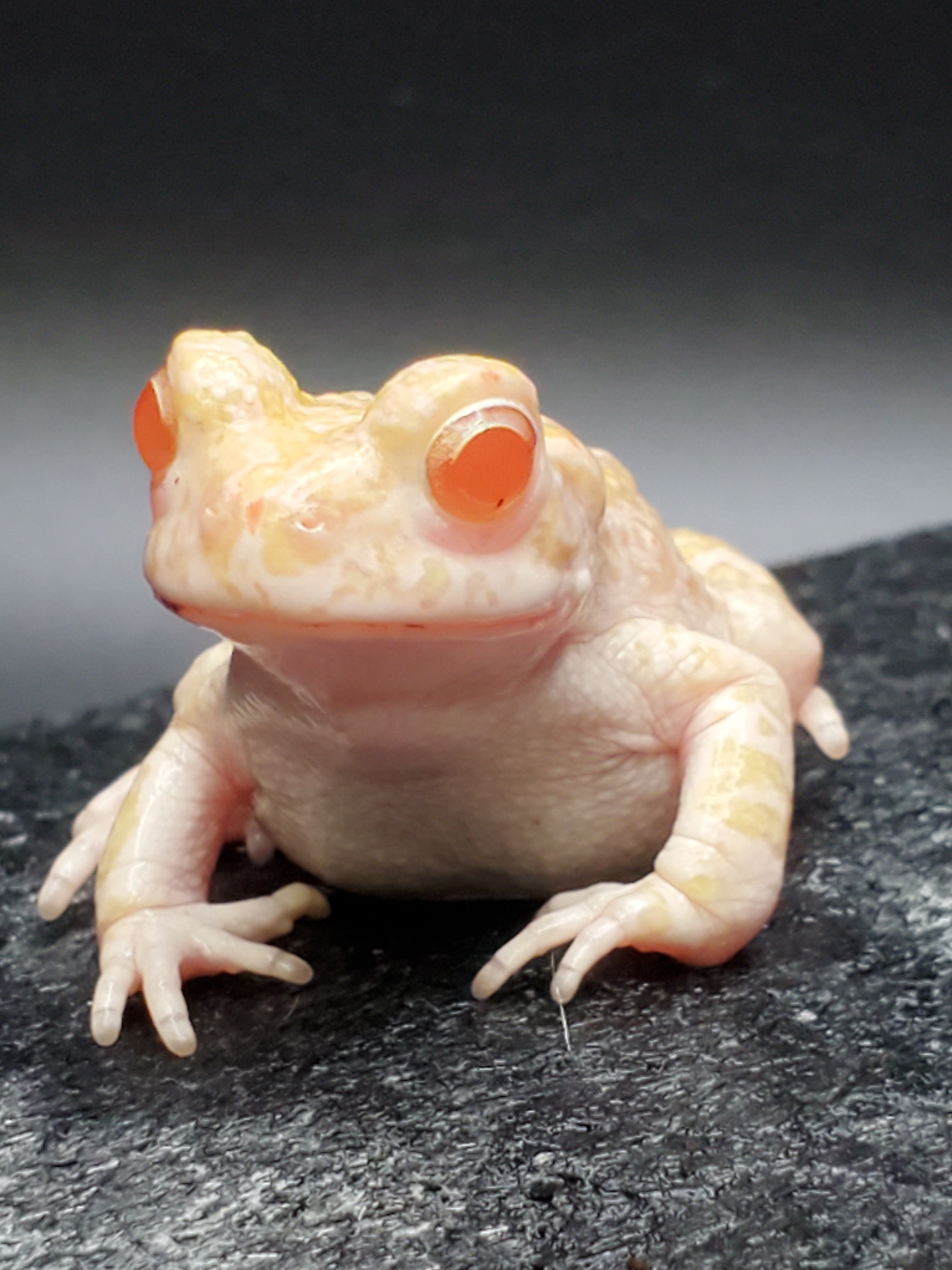
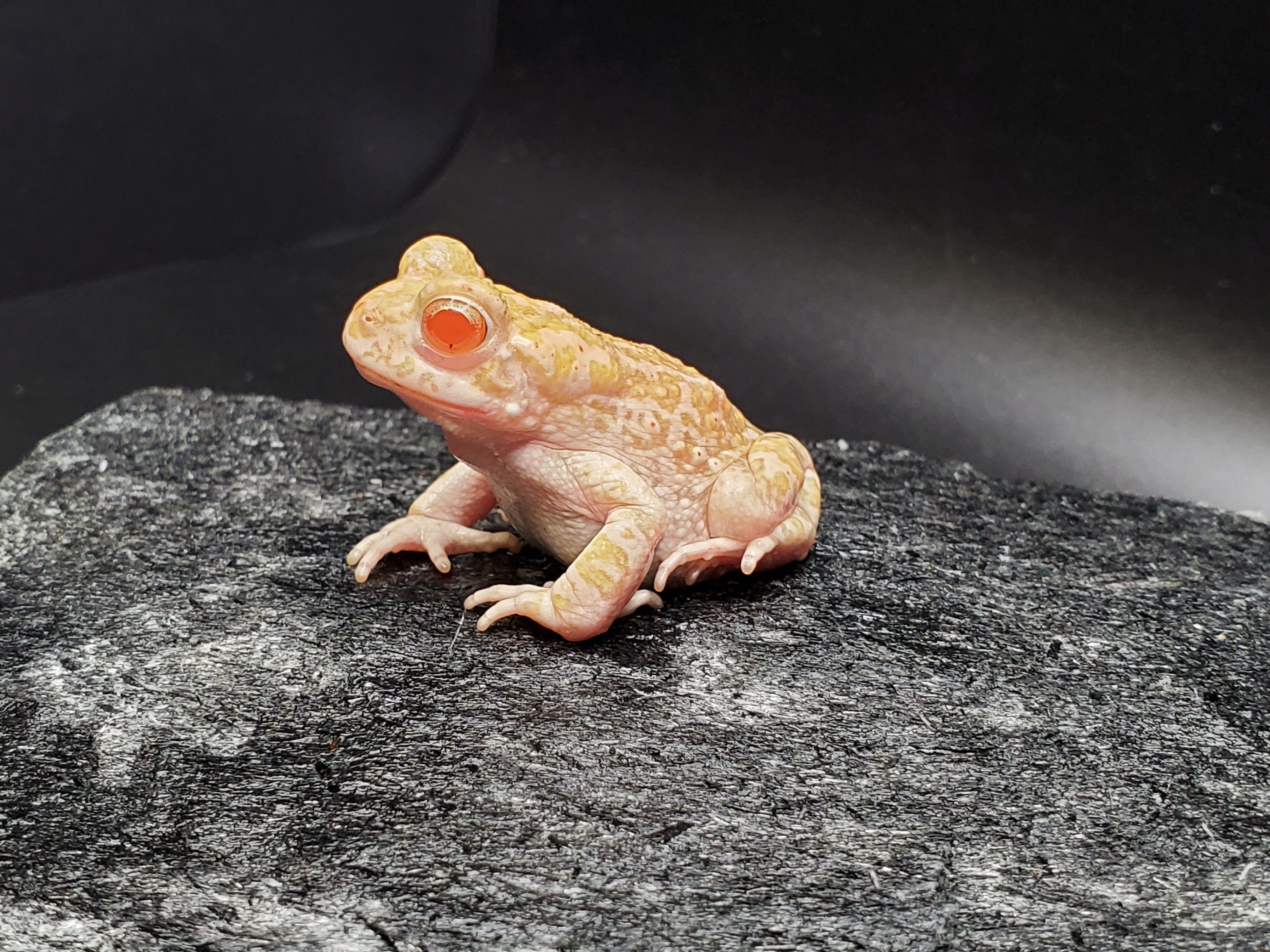
Albino European Green Toad
Scientific Name: Bufotes viridis
Common Name: Albino European Green Toad
Species Overview
Size: Adults typically reach 3 to 5 inches (7.5 to 12.5 cm), with females often slightly larger and broader than males.
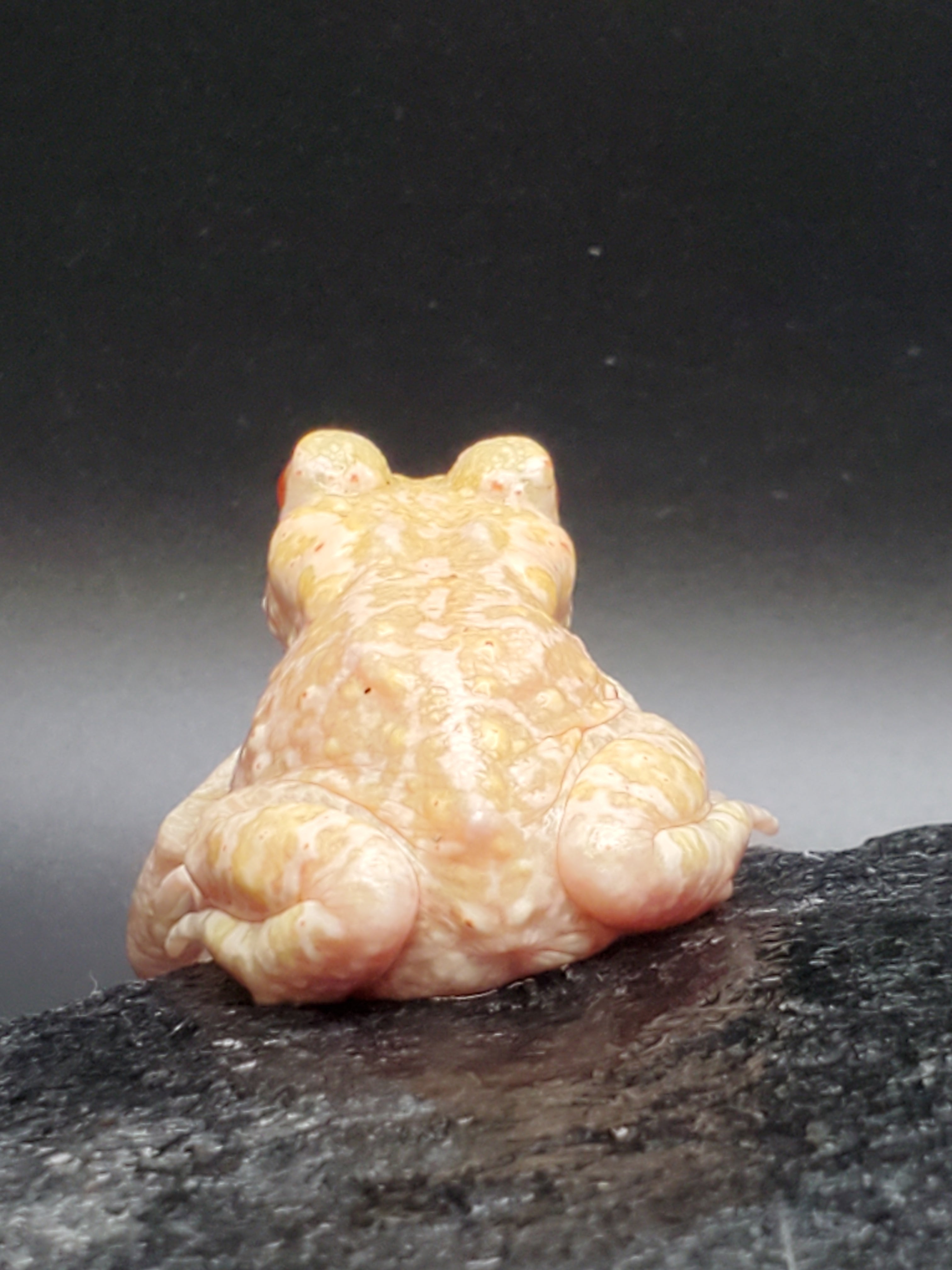
Appearance: The Albino European Green Toad displays the characteristic sturdy build of the species but lacks the dark pigmentation normally present. Instead of the typical green blotches, the pattern appears in soft yellow, peach, or pale olive tones over a cream or white base. Eyes are pink to red, a defining feature of albinism, and the skin retains the granular, slightly raised texture typical of the species. The parotoid glands are pronounced, and the underside is pale and usually unmarked. Structural features, proportions, and overall body shape remain identical to the wild form.
Distribution: The species occurs across broad regions of Europe, western Asia, and parts of the Middle East. Wild Albino individuals are extremely rare; albino lines in captivity originate from selective breeding rather than natural occurrences.
Habitat: Wild European Green Toads inhabit open grasslands, rocky areas, agricultural zones, steppes, and semi-arid regions. They tolerate a wide range of environmental conditions and breed in temporary or permanent freshwater sources. In captivity, they thrive in terrestrial enclosures with moderate humidity, deep substrate, and access to clean shallow water.
Behaviour: European Green Toads are primarily nocturnal, active and food-driven during the night while spending daylight hours concealed in burrows or tight shelters. They are generally solitary, showing mild territorial behaviour when kept in groups. Movements are deliberate, with short hops and occasional climbing attempts on textured surfaces.
Captive Care
Enclosure: A single adult can be housed in a 24 × 18 × 18 inches (60 × 45 × 45 cm) enclosure. Provide a deep, slightly moist soil or coconut fibre substrate mixed with leaf litter to encourage natural burrowing. Add cork flats, logs, rocks, and dense plant cover to offer secure retreats. Include a shallow water dish large enough for soaking but easy to exit. For multiple toads, upgrading to 36 × 18 × 18 inches (90 × 45 × 45 cm) is recommended to reduce stress and territorial interactions.
Temperature and Humidity:
Ambient temperature: 72 to 78°F (22 to 26°C)
Warm area: 80 to 84°F (27 to 29°C)
Night temperature: 65 to 70°F (18 to 21°C)
Humidity: 40 to 60%, with light misting as needed. Provide partial drying through the day to prevent overly damp conditions.
Lighting: Low-level UVB (2 to 5%) is beneficial, even for albino individuals, as long as it is gentle and well diffused. A natural day and night cycle should be provided, keeping bright light exposure minimal to accommodate light sensitivity associated with albinism.
Diet: Offer a varied insectivorous diet of crickets, roaches, worms, black soldier fly larvae, and occasional soft-bodied invertebrates. Dust prey with calcium and multivitamin supplements, with juveniles receiving more frequent feedings than adults.
Behaviour in Captivity: Albino European Green Toads behave similarly to wild-type individuals, though they may be more light-sensitive. They become active and bold feeders after dark and enjoy burrowing. Handling should be avoided except when necessary due to their sensitive skin.
Genetics Note
Albino (recessive): The albino trait removes melanin, resulting in cream or white base colouring, reduced pattern contrast, and pink to red eyes. This is a recessive gene, meaning both parents must carry the allele for offspring to express it. No additional morphs are formally recognised within the species, although natural variation in pattern shape and intensity is common.
Estimate shipping