

Photo Disclaimer
Description
Magnificent Tree Frog
Scientific Name: Litoria splendida
Common Name: Magnificent Tree Frog, Splendid Tree Frog
Species Overview
Size: Adults typically reach 3.5 to 4.5 inches (9 to 11.5 cm), with females slightly larger.
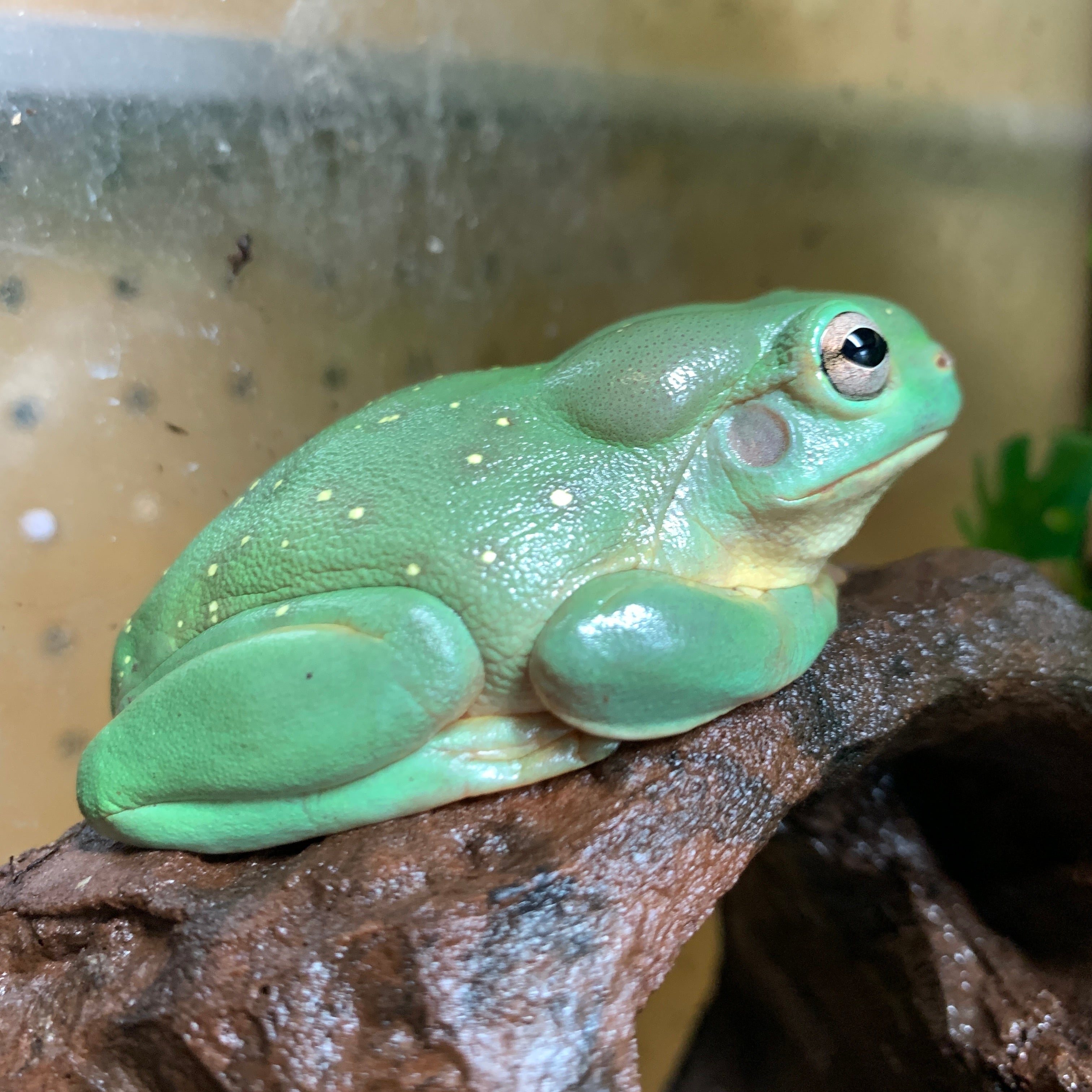
Appearance: The Magnificent Tree Frog is a large, striking Australian species known for its deep green to turquoise dorsum and a contrasting pale underside. One of its defining features is the large, prominent parotoid glands above the shoulders, larger than those of most related species. Many individuals display small white or cream spots along the sides and limbs. The skin texture is smooth on the back and slightly granular along the flanks. Eyes are golden with horizontal pupils, and the limbs are strong with large toe pads for excellent climbing.
Distribution: Endemic to northern Australia, particularly the Kimberley region of Western Australia.
Habitat: Wild individuals inhabit rocky escarpments, woodland edges, and areas surrounding seasonal water sources. They commonly shelter in rock crevices, caves, and moist retreats during the day, emerging at night to feed.
Behaviour: Primarily nocturnal and bold, Magnificent Tree Frogs are strong climbers and confident feeders. They are generally calm but may produce loud calls during breeding season. Like other Litoria species, they may tolerate slightly drier periods by retreating into humid shelters.
Captive Care
Enclosure: A single adult or small group thrives in an 18 × 18 × 24 inches (45 × 45 × 60 cm) enclosure, though this large species also benefits from a 24 × 18 × 24 inches (60 × 45 × 60 cm) setup for additional space. Provide sturdy vertical climbing structures such as thick branches, rock backgrounds, cork tubes, and dense foliage. Use a moisture-retentive but well-drained substrate such as coco fibre, soil blends, or sphagnum mixes. Include a large shallow water basin for soaking.
Temperature and Humidity:
Ambient temperature: 75 to 82°F (24 to 28°C)
Warm area: 84 to 86°F (29 to 30°C)
Night temperature: 70 to 74°F (21 to 23°C)
Humidity: 50 to 70%, with higher humidity during evening misting. Provide strong ventilation to avoid stagnant air.
Lighting: Provide low to moderate UVB (2 to 5%) with bright, diffused lighting to support natural behaviour and healthy skin.
Diet: Offer medium to large insects such as crickets, roaches, silkworms, black soldier fly larvae, hornworms, and occasional waxworms. Adults may accept very occasional pinkie mice, though this should be rare. Supplement all prey with calcium and multivitamins.
Behaviour in Captivity: Magnificent Tree Frogs are hardy, calm, and well suited to captivity. They become active at night, climbing, exploring, and feeding readily. They tolerate moderate handling better than many frogs but still should be handled minimally due to sensitive skin and toxin-secreting glands.
Special Considerations:
• When handling is necessary, use wet, powder-free gloves to protect their skin and avoid stimulating gland secretions.
• Provide secure, sturdy décor—this is a heavy-bodied frog.
• Maintain good airflow to prevent respiratory issues.
• Use only dechlorinated water for misting and soaking.
• Avoid oversaturated substrate; this species prefers moderate humidity with dry resting zones.
• Their parotoid gland secretions may irritate human skin—wash thoroughly after any contact.
Taxonomy Note
Litoria splendida belongs to the family Pelodryadidae, a group that includes Australia’s well-known tree frogs such as the White’s Tree Frog (Litoria caerulea). The Magnificent Tree Frog is most closely related to these species but is distinguished by its larger parotoid glands and more localized distribution in the Kimberley region.
Genetics Note
There are no recognised morphs for Litoria splendida. Natural variation occurs in dorsal colour vibrancy, spotting, and gland size, but none represent defined genetic morphs.