


Photo Disclaimer
Description
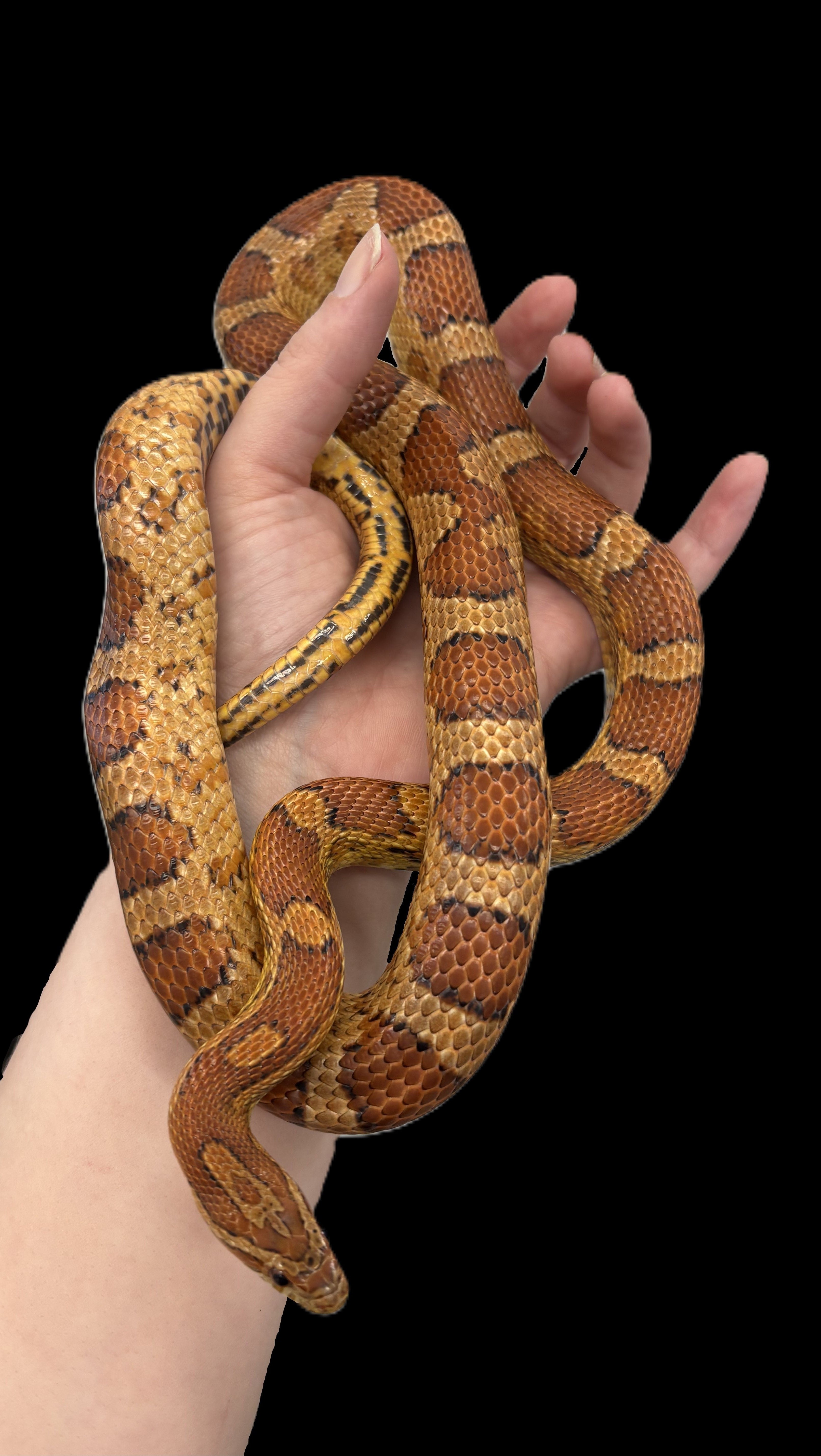
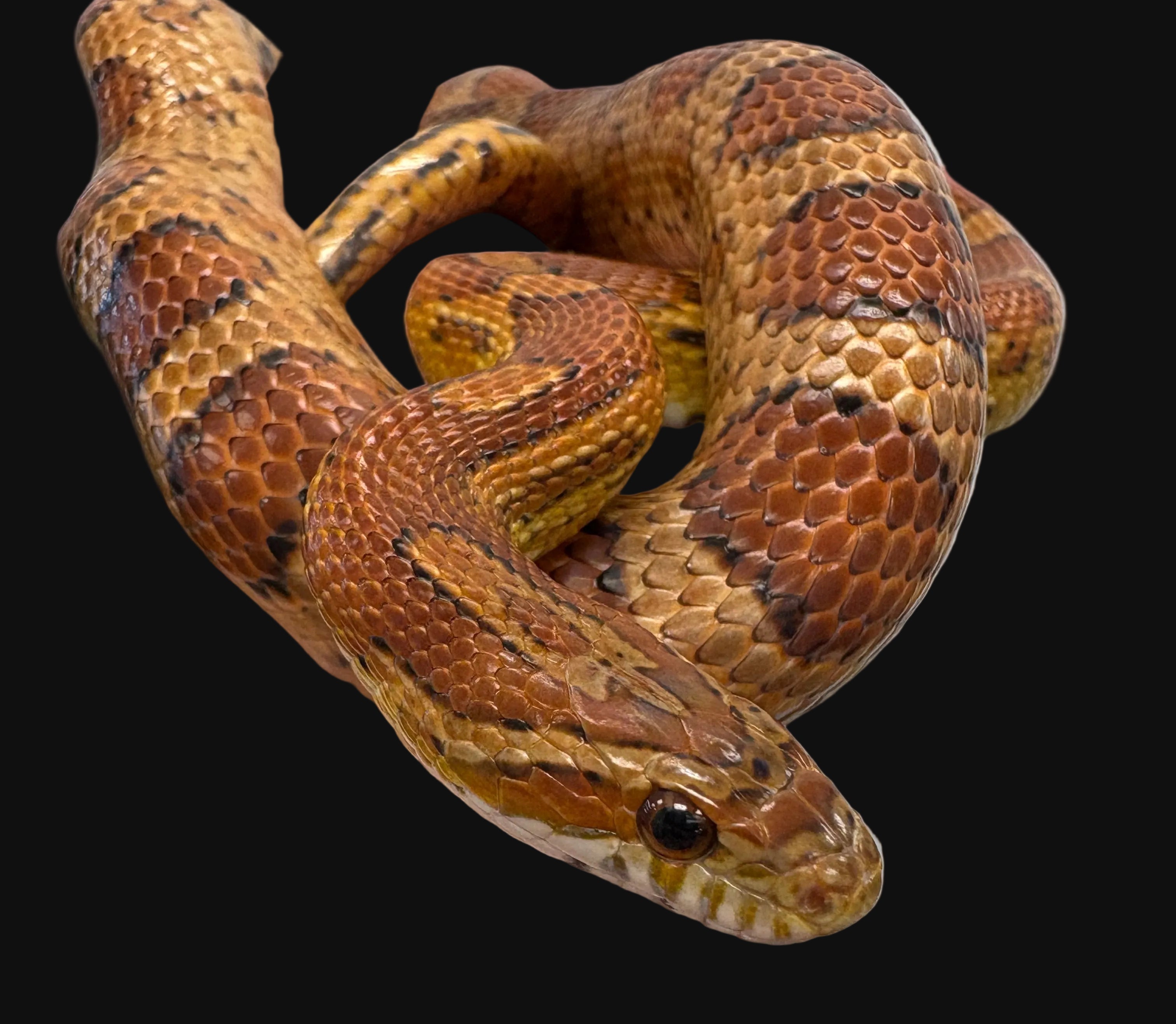
Corn Snake (Normal 100% het. Anery 66% het. Amel)
Scientific Name: Pantherophis guttatus
Common Name: Corn Snake
Species Overview
Size: Adults typically reach 3–5 feet (0.9–1.5 m) in length, with a slender build and smooth, glossy scales.
Appearance: The Normal het. Anery 66% het. Amel Corn Snake is a genetically diverse individual that may appear visually similar to a normal or slightly color-shifted Corn Snake, yet it carries an exceptional combination of recessive traits. This Corn Snake typically displays warm orange, tan, or red tones with clearly defined saddle markings. The Amelanistic, and Anerythristic hets add significant potential for producing a variety of visual outcomes—including albino or greyscale offspring—when bred to compatible partners. This combination represents an impressive genetic toolkit, uniting some of the most desirable morph lines in the species.
Distribution: A captive-bred combination of the Corn Snake (P. guttatus), which is native to the southeastern United States.
Habitat: In the wild, Corn Snakes inhabit mixed woodlands, pine forests, grasslands, and farmlands. In captivity, they thrive in naturalistic enclosures that mimic forest floor conditions with secure hides, climbing structure, and ground cover.
Behaviour: Calm, inquisitive, and highly manageable. Corn Snakes are primarily crepuscular, showing the most activity at dawn and dusk. Their steady temperament and strong feeding response make them one of the most dependable species in herpetoculture.
Captive Care
Enclosure: Adults thrive in a naturalistic 40-gallon terrarium (36” × 18” × 18”) or larger. A bioactive or soil-based substrate layered with leaf litter allows for burrowing and exploration. Provide multiple hides, cork bark, branches, and foliage for environmental enrichment.
Temperature & Humidity: Maintain a temperature gradient of 75–82°F (24–28°C) with a basking area around 86–88°F (30–31°C). Nighttime drops to 70°F (21°C) are beneficial. Keep humidity between 40–60%, with a lightly moistened hide during shedding periods.
Diet: Offer frozen-thawed rodents every 7–10 days for juveniles and every 10–14 days for adults. Prey size should be about 1.25× the width of the snake’s mid-body.
Behaviour in Captivity: Easy to handle and quick to adapt. Anery Corn Snakes tend to be calm and confident once accustomed to handling, making them excellent for both beginner and experienced keepers.
Special Considerations: Ensure the enclosure is secure — Corn Snakes are agile and persistent escape artists. Naturalistic environments not only enhance coloration but also promote natural exploratory behavior and physical health.
Genetics Note
het. Anerythristic (Recessive Carrier)
Removes all red and orange pigmentation, producing a grayscale appearance of black, white, and gray tones. The name derives from “anerythros,” meaning “without red.” This morph’s reduced color palette highlights natural patterning and contrast, often increasing in depth as the snake matures.
het. Amelanistic (Recessive Carrier)
Removes black pigmentation, revealing bright red, orange, and white tones.
Genetic Combination Summary
The Normal 100% het. Anery 66% het. Amel holds two hidden recessive traits:
-
het. Anerythristic (100% chance) = Removes red pigmentation, producing a grayscale coloration
-
het. Amelanistic (66% chance) = Heterozygous carrier of the Amel gene
Visually, this morph presents as a classic Corn Snake but carries the potential to produce striking Anery or Amel offspring when bred with compatible partners.