


Photo Disclaimer
Description
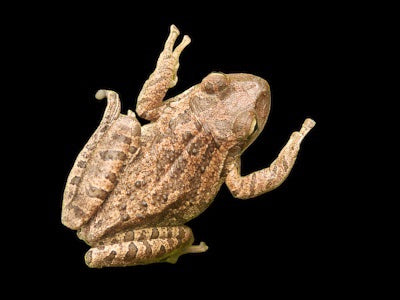
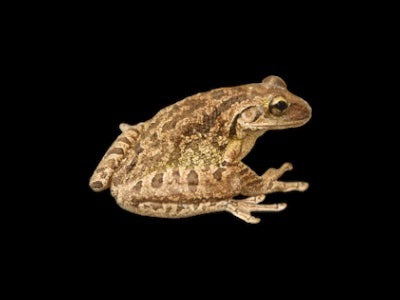
Cuban Tree Frog
Scientific Name: Osteopilus septentrionalis
Common Name: Cuban Tree Frog
Species Overview
Size: Adults typically reach 3 to 5.5 inches (7.5 to 14 cm), with females usually at the upper end of the range.
Appearance: The Cuban Tree Frog is a large, robust arboreal species with highly variable colouration—ranging from grey, tan, and brown to green or mottled combinations. Skin texture varies from smooth to warty, and individuals may change colour based on humidity, temperature, and stress. They are easily identified by their massive toe pads and prominent eyes with golden irises. Juveniles often have a distinct green hue, while adults may develop mottling or irregular blotches.
Distribution: Native to Cuba, the Cayman Islands, and the Bahamas. Introduced populations exist in Florida, where the species has become invasive.
Habitat: Wild individuals inhabit forests, mangroves, swamps, agricultural land, and even urban environments. They readily occupy human structures and hide in crevices, tree cavities, and vegetation near water.
Behaviour: Primarily nocturnal, Cuban Tree Frogs are powerful climbers and active foragers. They produce a loud, rasping call during breeding. They are adaptable, opportunistic, and known for their strong survival instincts. When threatened, they may secrete a mild skin toxin that can irritate human eyes and mucous membranes.
Captive Care
Enclosure: A single adult or small group thrives in an 18 × 18 × 24 inches (45 × 45 × 60 cm) enclosure, while larger groups benefit from a 24 × 18 × 24 inches (60 × 45 × 60 cm) setup. Provide sturdy vertical climbing structures such as thick branches, cork tubes, and dense foliage. Because of their weight and strength, décor should be stable and well anchored. Use a moisture-retentive substrate such as coco fibre, soil blends, or sphagnum mixes to maintain humidity without oversaturation. Include a large shallow water basin.
Temperature and Humidity:
Ambient temperature: 75 to 82°F (24 to 28°C)
Warm area: 84 to 86°F (29 to 30°C)
Night temperature: 70 to 74°F (21 to 23°C)
Humidity: 60 to 80%, with regular misting and strong ventilation.
Lighting: Provide low to moderate UVB (2 to 5%) with bright, diffused lighting. Avoid excessive heat buildup.
Diet: Offer medium to large insects such as crickets, roaches, silkworms, black soldier fly larvae, hornworms, and occasional pinkie mice for adults (sparingly). Supplement all prey with calcium and multivitamins.
Behaviour in Captivity: Cuban Tree Frogs are hardy and adapt readily to captive conditions. They are active at night, bold feeders, and strong climbers. Handling should be avoided due to the mild skin secretions and their sensitive skin.
Special Considerations:
• Use wet, powder-free gloves or a soft, damp net if handling is unavoidable; avoid touching eyes afterward.
• Wash hands thoroughly after any contact to prevent irritation from skin secretions.
• Provide sturdy décor—they are heavy and can dislodge weak branches.
• Ensure excellent ventilation to prevent stagnant humidity.
• Use only dechlorinated water for misting and soaking.
• Secure all enclosure openings—this species is strong, agile, and adept at squeezing through gaps.
Taxonomy Note
Osteopilus septentrionalis belongs to the family Hylidae and is one of the largest tree frogs in the Caribbean. The genus Osteopilus includes large, muscular frogs distinguished by their broad heads and powerful limbs. Their adaptability has contributed to invasive success in parts of Florida.
Genetics Note
There are no recognised morphs for Osteopilus septentrionalis. Natural variation includes differences in colour tone, pattern intensity, and skin texture, but these do not represent defined genetic morphs.