


Photo Disclaimer
Description
Elongated Tortoise
Scientific Name: Indotestudo elongata
Common Name: Elongated Tortoise, Yellow Tortoise
Species Overview
Size: Males typically reach 12 to 14 inches (30 to 36 cm), while females grow slightly larger at 14 to 16 inches (36 to 41 cm).
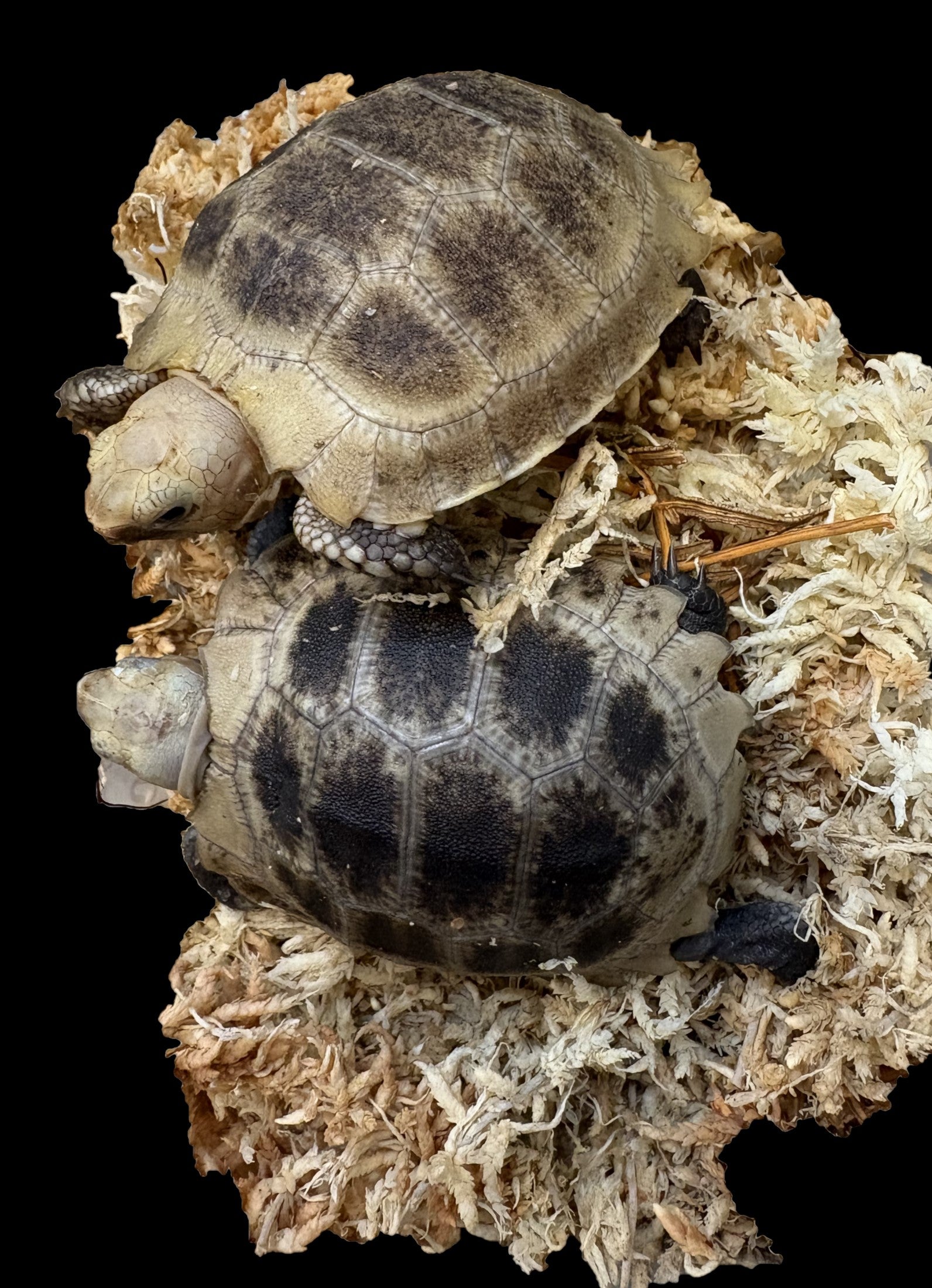
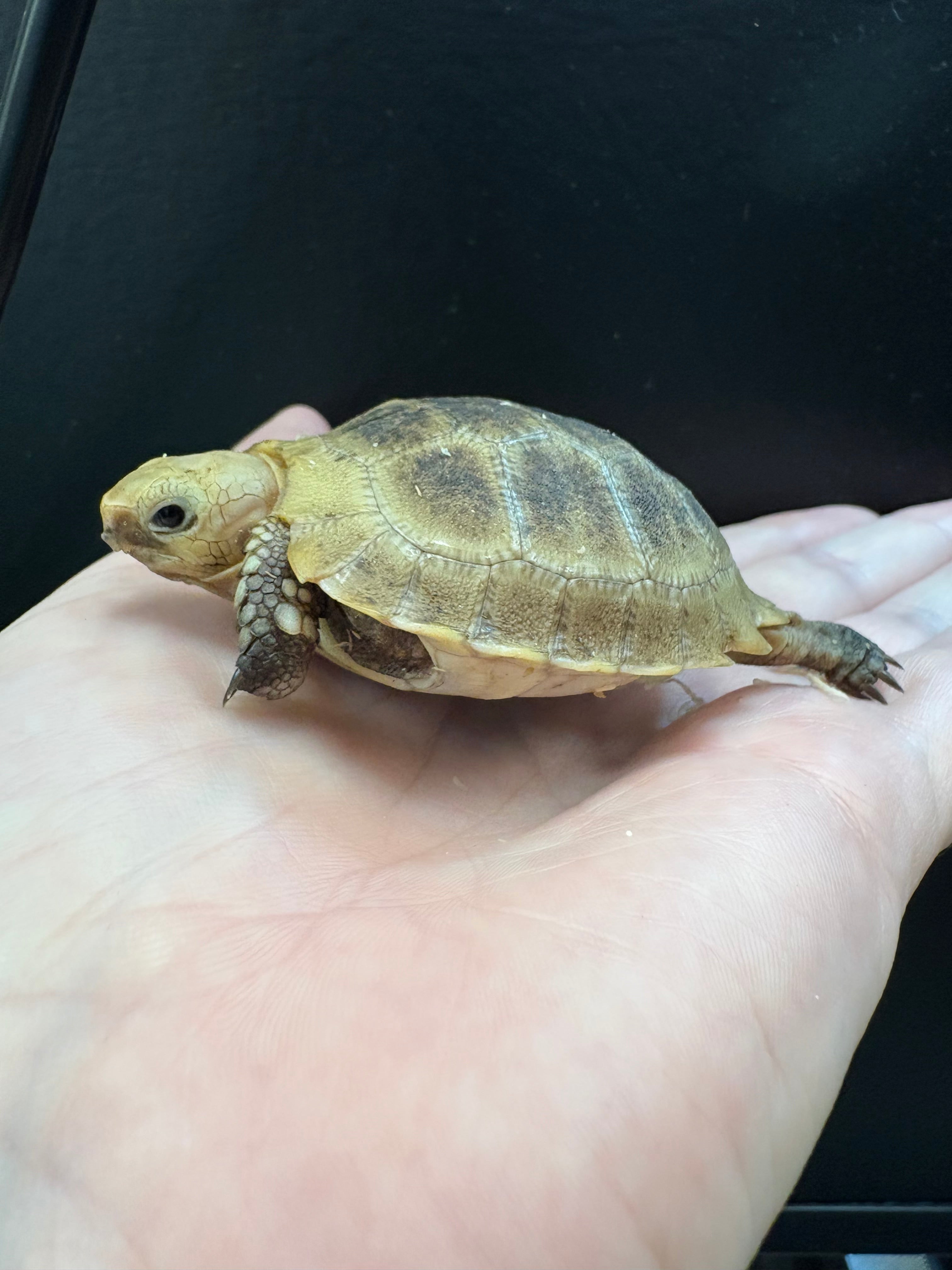
Appearance: The Elongated Tortoise is named for its long, somewhat rectangular carapace, which ranges from pale yellow to tan with darker brown or black patches on each scute. The shell is less domed than many tortoise species and appears stretched in shape. The head is pale yellow, often marked with a distinctive dark patch on top. The legs are sturdy, with subtle scaling. Males feature longer tails and a more concave plastron, while females are broader-bodied.
Distribution: Found across South and Southeast Asia, including India, Nepal, Myanmar, Thailand, Laos, Cambodia, and Vietnam.
Habitat: This species inhabits tropical and subtropical forests, forest edges, bamboo thickets, and humid lowland environments. They favour shaded, leaf-littered areas with moderate humidity. In captivity, they require a warm, humid environment with ample cover and deep substrate for natural behaviour.
Behaviour: Elongated Tortoises are crepuscular to diurnal and spend much of their time exploring shaded areas, resting under vegetation, and foraging among leaf litter. They are alert, gentle, and generally more active during humid conditions. They can be shy if kept in overly open or brightly lit enclosures.
Captive Care
Enclosure: Provide an enclosure with a minimum footprint of 6 × 3 feet (180 × 90 cm) for an adult, with larger setups strongly preferred. Use a deep, moisture-retentive substrate such as soil mixed with leaf litter. Include logs, bark hides, thick plant cover, and shaded retreats. Outdoor housing is beneficial in warm, humid climates.
Temperature and Humidity:
Ambient daytime: 78 to 85°F (26 to 29°C)
Basking area: 90 to 95°F (32 to 35°C)
Night temperature: 70 to 75°F (21 to 24°C)
Humidity: 60 to 80%, with moist microhabitats in the substrate and under hides.
Lighting: Provide full-spectrum lighting with 10–12% UVB to support healthy shell growth and metabolism. Ensure the enclosure includes a clear basking area as well as shaded retreats.
Diet: Offer a varied herbivorous diet including leafy greens, edible weeds, flowers, vegetables, and occasional fruits. Small amounts of animal matter may be consumed in the wild, but the captive diet should remain heavily plant-based with high fibre and moderate moisture content.
Behaviour in Captivity: When provided a humid, shaded, naturalistic environment, Elongated Tortoises thrive. They enjoy exploring leaf litter, burrowing lightly, and foraging throughout the day. They may become shy or stressed in dry or brightly exposed enclosures.
Special Considerations
• Sensitive to dry conditions; maintain consistent humidity.
• Provide heavily shaded areas and plentiful hiding spots.
• Avoid overly bright or open enclosures.
• Outdoor housing is beneficial when temperature and humidity allow.
Taxonomy Note
The Elongated Tortoise belongs to the genus Indotestudo, which includes several Asian forest tortoise species. Its long carapace and pale coloration distinguish it from other regional tortoises.
Genetics Note
There are no recognised morphs for the Elongated Tortoise. Differences in shell tone, dark patterning, and head markings reflect natural individual and locality variation rather than selective breeding.
Estimate shipping