


Photo Disclaimer
Description
European Pond Turtle
Scientific Name: Emys orbicularis
Common Name: European Pond Turtle
Species Overview
Size: Males typically reach 5 to 7 inches (13 to 18 cm), while females grow larger at 7 to 10 inches (18 to 25 cm).
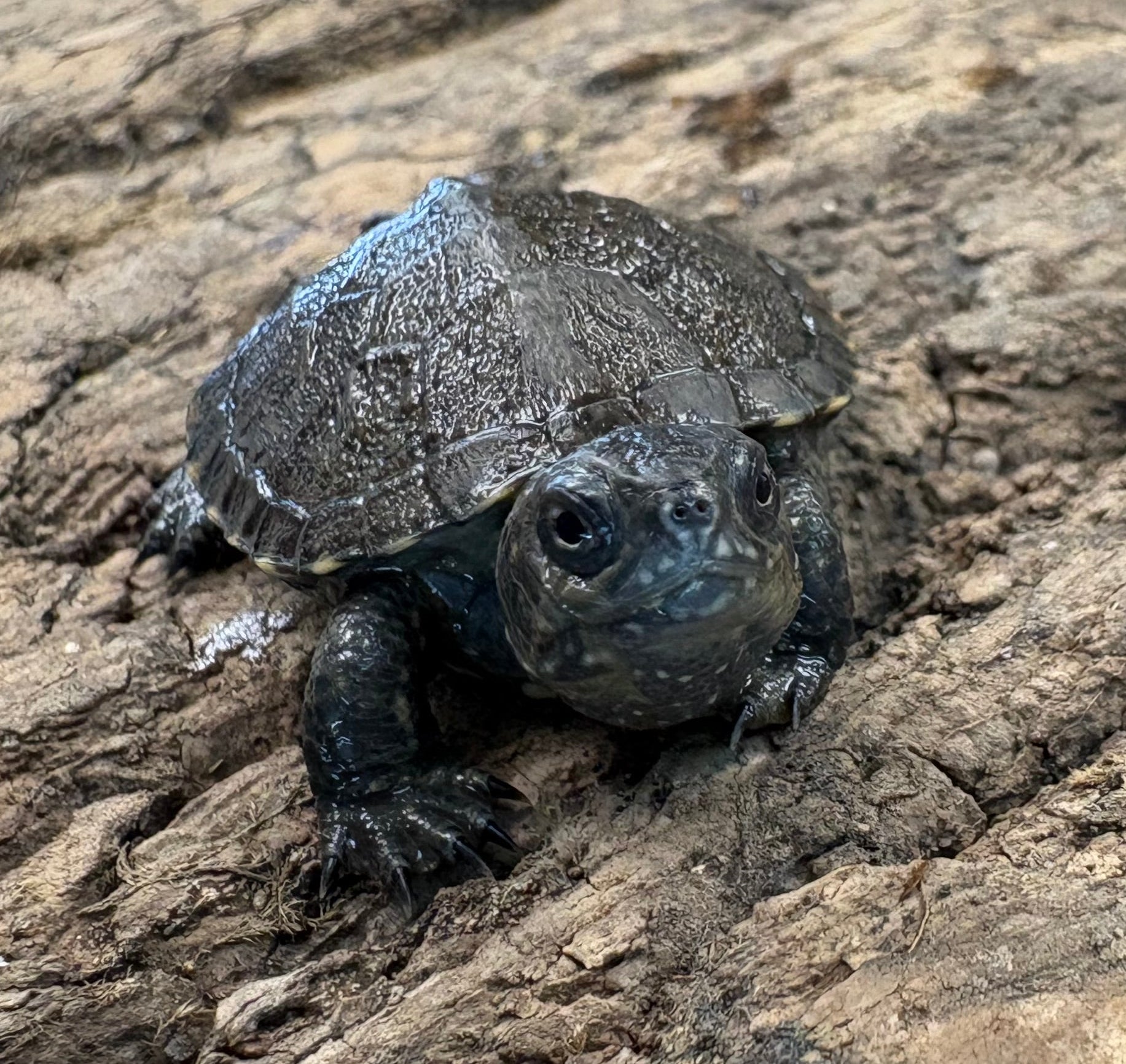
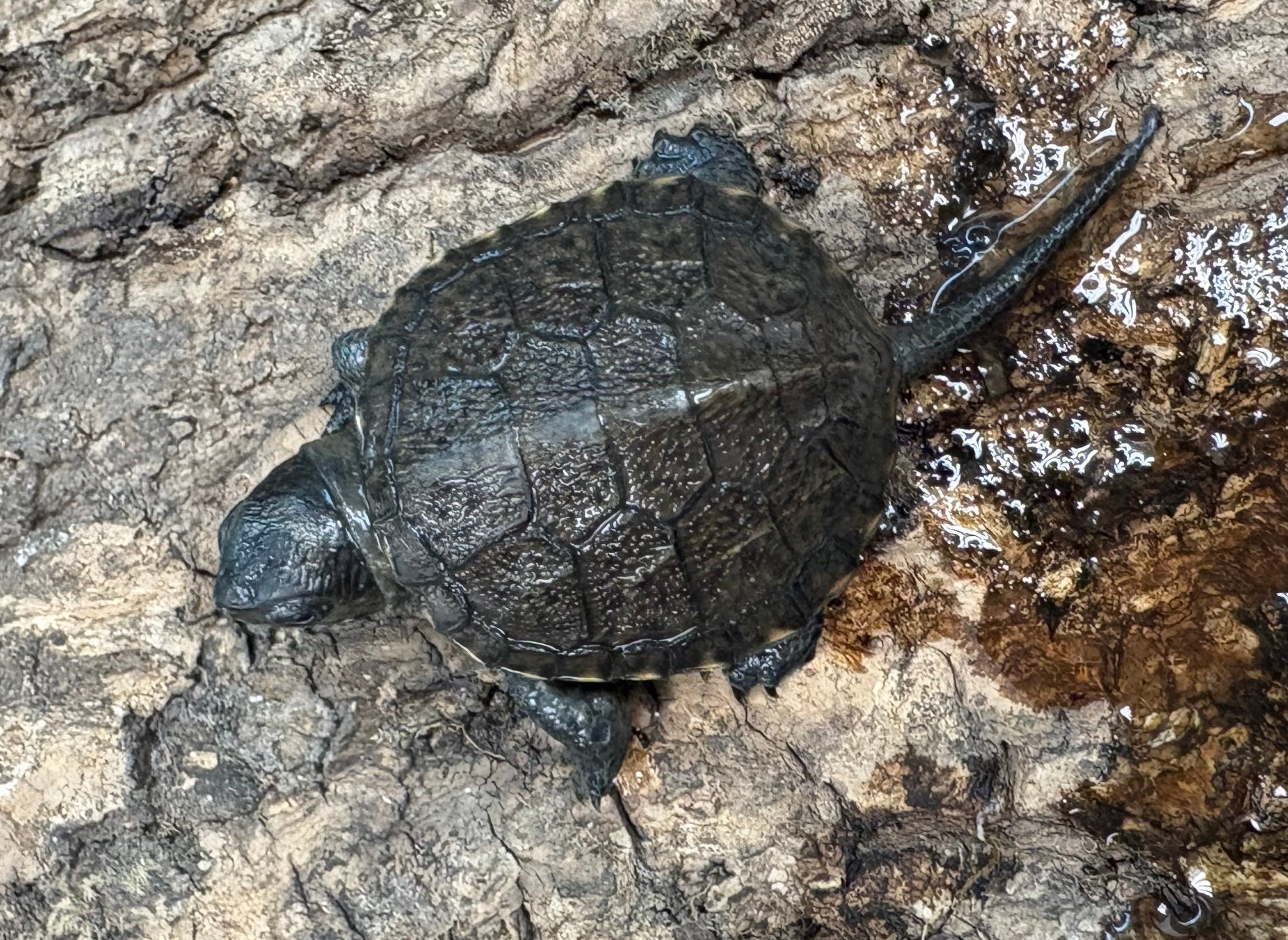
Appearance: The European Pond Turtle has a dark brown to nearly black carapace marked with fine yellow speckling or streaks across the shell, head, and limbs. The carapace is slightly domed with smooth scutes, and the plastron ranges from pale yellow to brown with irregular dark blotches. Males have longer, thicker tails and slightly flatter shells, while females have broader bodies and shorter tails. Colour intensity varies significantly across their wide geographic range.
Distribution: Found across much of Europe, western Asia, and parts of North Africa. Their range extends from the Iberian Peninsula across central Europe and into the Middle East.
Habitat: This species inhabits slow-moving freshwater bodies such as ponds, marshes, canals, lakes, and quiet river margins. They prefer areas with abundant aquatic vegetation and sunny basking opportunities. In captivity, they require an aquatic enclosure with clean water, strong filtration, and accessible basking platforms.
Behaviour: European Pond Turtles are diurnal, shy but alert, and strong swimmers. They spend time basking, foraging, and exploring both shallow and deeper water zones. They may become more confident over time but remain sensitive to sudden movement and excessive disturbance.
Captive Care
Enclosure: Provide an aquatic enclosure with a minimum footprint of 48 × 24 inches (120 × 60 cm) for one adult, with deeper water strongly preferred. Include submerged structures, aquatic plants (real or artificial), a sturdy basking platform, and areas of visual cover. Filtration must be robust due to their active nature and moderate waste production.
Temperature and Humidity:
Water temperature: 72 to 78°F (22 to 26°C)
Basking area: 90 to 95°F (32 to 35°C)
Ambient air temperature: 75 to 82°F (24 to 28°C)
Lighting: Provide full-spectrum lighting with 10–12% UVB to support bone density, shell development, and healthy metabolism. Ensure a clear, accessible basking area as well as shaded aquatic sections.
Diet: Offer a varied omnivorous diet including insects, worms, small fish, aquatic invertebrates, commercial turtle pellets, leafy aquatic plants, and dark leafy greens. Juveniles require more protein, while adults shift toward a more plant-rich diet.
Behaviour in Captivity: European Pond Turtles are active swimmers and enthusiastic feeders. They adapt well when given strong filtration, ample water depth, and consistent basking options. They may remain cautious but become more confident with routine care.
Special Considerations
• Provide deep, clean water with strong filtration.
• Offer multiple basking and haul-out points.
• Juveniles require higher protein intake than adults.
• Beneficial to provide aquatic vegetation for shelter and enrichment.
Taxonomy Note
Emys orbicularis is the sole species within its genus and is divided into numerous regional subspecies distinguished by shell colour, pattern, and distribution across Europe and western Asia.
Genetics Note
There are no recognised morphs for the European Pond Turtle. Variation in shell colour, yellow speckling, and overall brightness is tied to