

Photo Disclaimer
Description
New Guinea Frilled Dragon (Chlamydosaurus kingii)
Scientific Name: Chlamydosaurus kingii
Common Name: New Guinea Frilled Dragon, Frill-necked Lizard
Species Overview
Size: Adults typically reach 24 to 36 inches (60 to 90 cm) in total length, with the tail making up a significant portion.
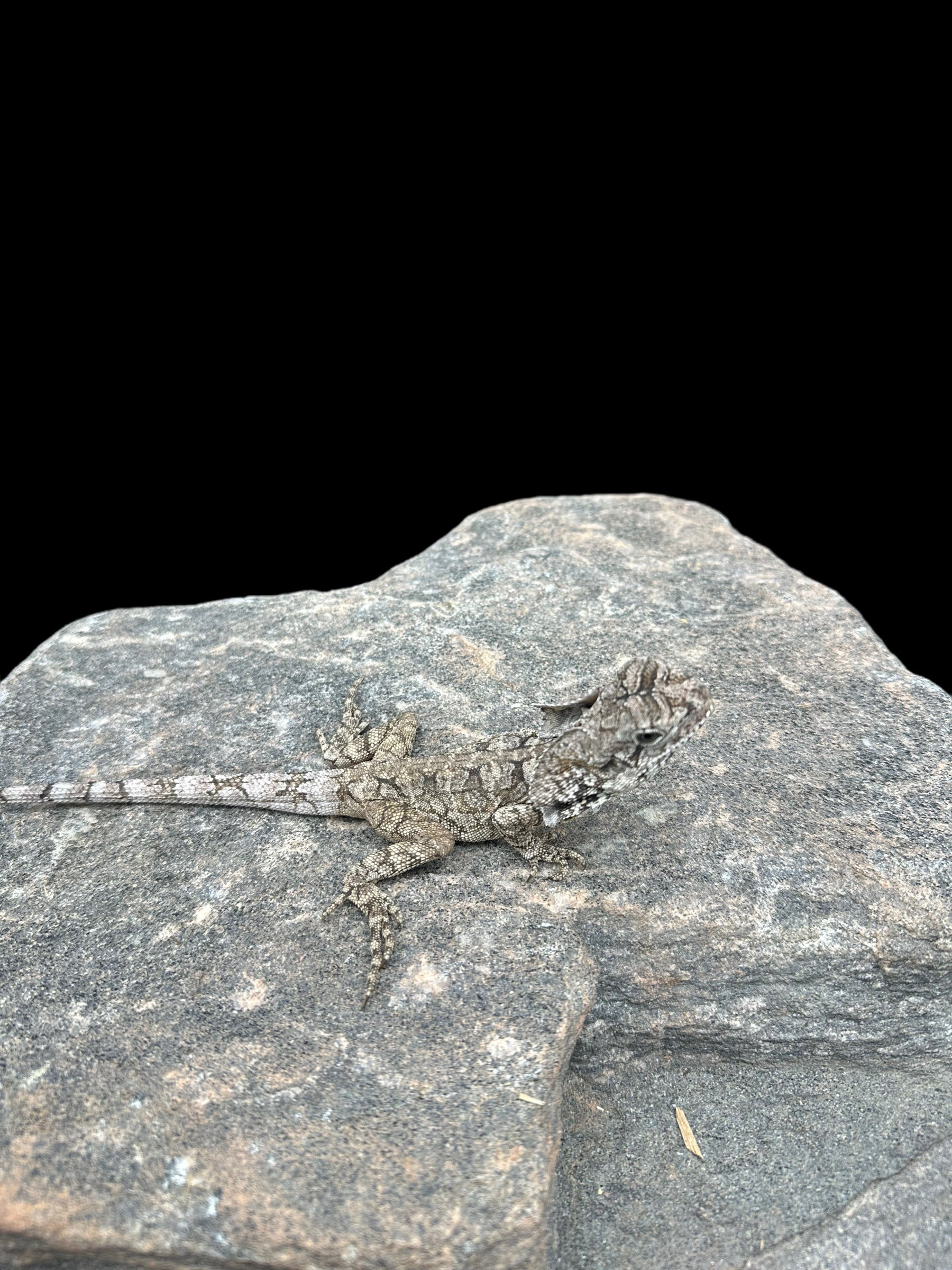
Appearance: The New Guinea Frilled Dragon is famous for its dramatic expandable frill, a large circular membrane supported by elongated hyoid bones. When threatened or displaying, the frill opens to reveal bright orange, red, or yellow markings that contrast strongly with the rest of the body. Their colouration ranges from grey to brown with mottling, helping them blend into tree bark. They have long limbs, a slender body, and a powerful tail designed for balance during climbing.
Distribution: Found throughout southern New Guinea and parts of nearby Indonesian islands.
Habitat: This species inhabits tropical forests, woodland edges, and savanna-like regions with scattered trees. They spend most of their time perched vertically on tree trunks, using elevated positions to scout for prey and sense danger.
Behaviour: New Guinea Frilled Dragons are diurnal, arboreal, and highly alert. They are capable of rapid bipedal running and dramatic defensive displays involving their frill, hissing, and gaping. Their diet includes insects, spiders, small vertebrates, and occasionally plant matter. When undisturbed, they remain perfectly still, relying on camouflage.
Captive Care
Enclosure: Provide a tall, arboreal enclosure at least 4 × 2 × 4 feet (120 × 60 × 120 cm) for an adult, with additional height strongly benefitting this species. Include thick branches, vertical tree trunks, cork rounds, hanging plants, and elevated basking platforms. A naturalistic forest-style setup supports their perching instincts and activity levels.
Temperature and Humidity:
Basking area: 100 to 110°F (38 to 43°C)
Ambient daytime temperature: 82 to 88°F (28 to 31°C)
Cool side: 75 to 80°F (24 to 27°C)
Night temperatures: 70 to 75°F (21 to 24°C)
Humidity should remain between 60 and 80 percent with misting and adequate ventilation.
Lighting: Provide strong full-spectrum lighting with high-output UVB (10 to 12 percent). Ensure a bright, elevated basking zone.
Diet: Offer a varied carnivorous diet including roaches, crickets, black soldier fly larvae, silkworms, hornworms, snails, and occasional small vertebrates. Juveniles require frequent feedings, while adults can be fed every 1–2 days. Supplement with calcium and multivitamins as appropriate.
Behaviour in Captivity: New Guinea Frilled Dragons are lively, inquisitive display animals that thrive in tall, structured environments. They may tolerate limited handling but generally prefer minimal disturbance. When comfortable, they perch vertically, display vibrant frill colours, and run swiftly when startled.
Special Considerations:
• Vertical space is essential—this species perches high and scans for prey.
• Avoid overly dry conditions; moderate humidity supports shedding and hydration.
• Provide stable, thick branches capable of supporting sudden bipedal bursts.
• Use secure lids and tall barriers due to their speed and climbing ability.
• Stress can cause frill irritation—calm, stable environments are best.
Taxonomy Note
The New Guinea Frilled Dragon is part of the genus Chlamydosaurus, famed for its frill display and bipedal locomotion. Although related to the Australian form (Chlamydosaurus kingii kingii), the New Guinea population exhibits differences in colour tone, behaviour, and environment.
Genetics Note
No morphs are recognized for this species. Natural variation includes differences in frill colour intensity, mottling patterns, and body shade based on locality and individual traits.