



Photo Disclaimer
Description
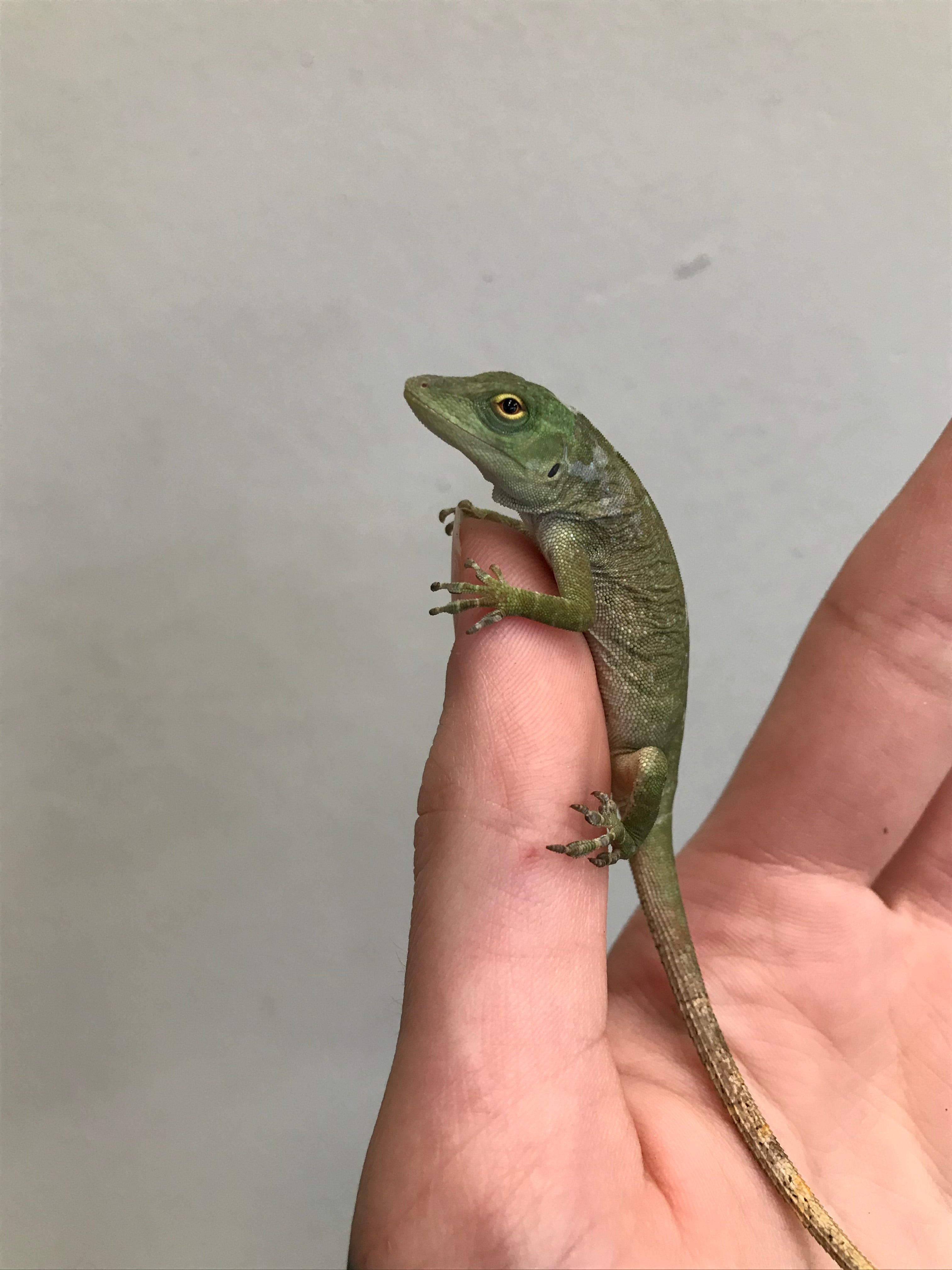
Giant Green Anole (Norops biporcatus)
Scientific Name: Norops biporcatus
Common Name: Giant Green Anole, Green Giant Anole
Species Overview
Size: Adults typically reach 10–14 inches (25–35 cm) in total length, making this the largest true green anole species. Much of their length comes from the long, slender tail.
Appearance: Norops biporcatus is a striking, emerald-green anole with a sleek body and elongated head. Colouration may shift subtly toward brown or yellow depending on temperature, stress, or environment. Males possess a large, vibrant dewlap ranging from yellow-orange to reddish, bordered by lighter tones. Females have smaller dewlaps and overall softer coloration. Some individuals show faint dorsal lines or minimal lateral speckling. Their limbs are long and agile, well adapted for fast, arboreal movement.
Distribution: Found throughout Central America, including Mexico, Guatemala, Honduras, Nicaragua, Costa Rica, and Panama.
Habitat: This species inhabits humid tropical rainforests, forest edges, plantations, and lush vegetated regions. They dwell primarily in shrubs, vines, and low to mid-level branches, basking in filtered sunlight and retreating into foliage when threatened.
Behaviour: Giant Green Anoles are diurnal, territorial, and highly alert. Males perform classic anole displays including head-bobbing, dewlap extension, body inflation, and lateral flattening. They feed on insects, spiders, and other small invertebrates. Their movements are fast and agile, relying on climbing ability and camouflage to avoid predators.
Captive Care
Enclosure: Provide a vertically oriented enclosure at least 24 inches × 18 inches × 36 inches (60 × 45 × 90 cm) for a single animal or well-managed pair. Include abundant vines, thin branches, cork bark, and dense foliage for concealment. Vertical climbing space is essential.
Temperature and Humidity:
Basking area: 90–95°F (32–35°C)
Ambient temperature: 75–85°F (24–29°C)
Night temperatures: 70–75°F (21–24°C)
Humidity should remain 60–80%, supported by daily misting and strong ventilation. Provide microhabitats ranging from humid pockets to slightly drier basking areas.
Lighting: Provide bright full-spectrum lighting with moderate UVB (5–10%). High-quality lighting encourages natural basking behaviour and supports calcium metabolism.
Diet: Offer varied insects such as crickets, roach nymphs, black soldier fly larvae, fruit flies, small mealworms, silkworms, and occasional waxworms. Juveniles should be fed daily; adults every 1–2 days. Dust feeders with calcium routinely and multivitamins weekly.
Behaviour in Captivity: This species is highly active and visually oriented. They thrive in tall enclosures with complex climbing structure and numerous hiding spots. While they rarely tolerate frequent handling, they become confident display animals when given space and stable conditions.
Special Considerations:
• Avoid overcrowding, as males are strongly territorial.
• Provide varied branch thickness for secure climbing.
• Keep humidity stable to prevent dehydration and shedding issues.
• Ensure the enclosure is escape-proof — they are fast and agile.
Taxonomy Note
The Giant Green Anole belongs to the family Dactyloidae. Norops biporcatus is the largest green anole species and is highly adapted for canopy and mid-level arboreal life in Central American forests.
Genetics Note
There are no recognized morphs for Norops biporcatus. Natural variation includes differences in green saturation, dewlap colour range (yellow to reddish tones), and subtle dorsal or lateral patterning. These traits reflect natural genetic diversity rather than selective breeding.