


Photo Disclaimer
Description
Giant Spiny Chameleon (Furcifer verrucosus)
Scientific Name: Furcifer verrucosus
Common Name: Giant Spiny Chameleon, Warty Chameleon
Species Overview
Size: Adults typically reach 17–22 inches (43–56 cm) in total length, with males being larger and more ornamented than females.
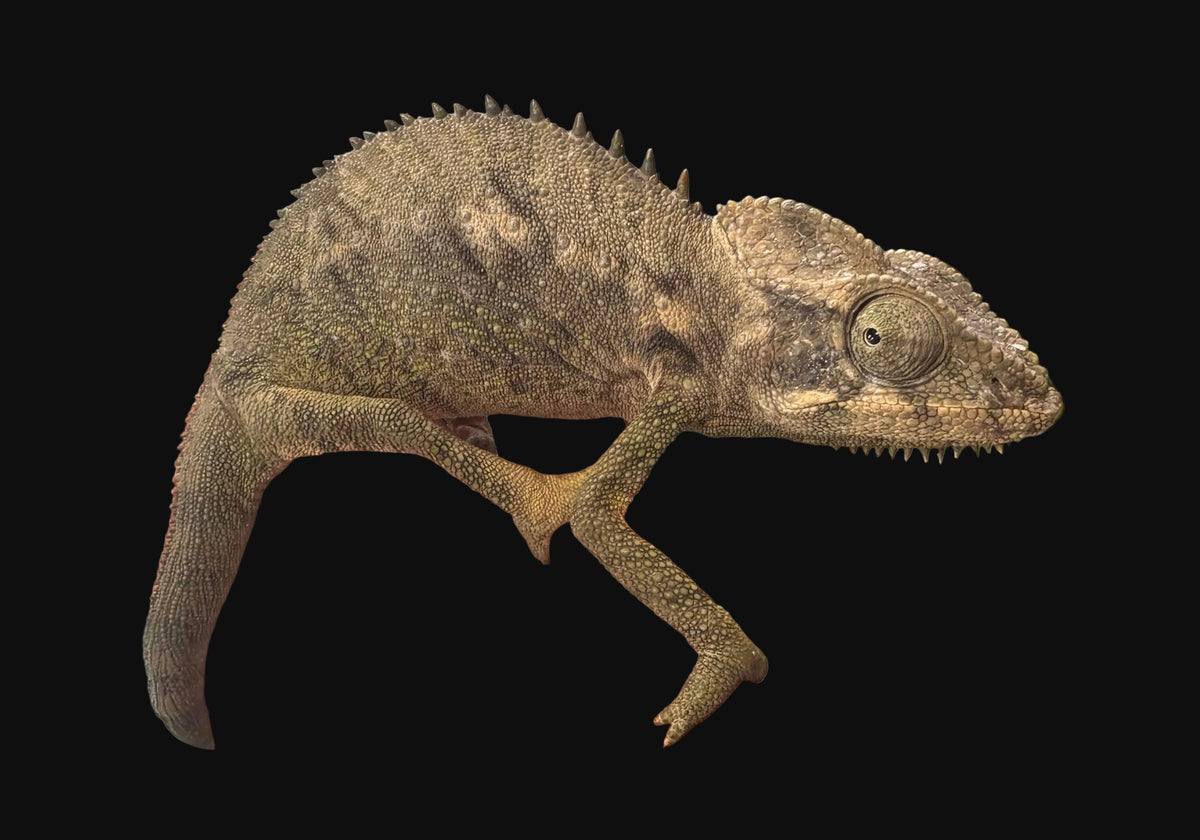
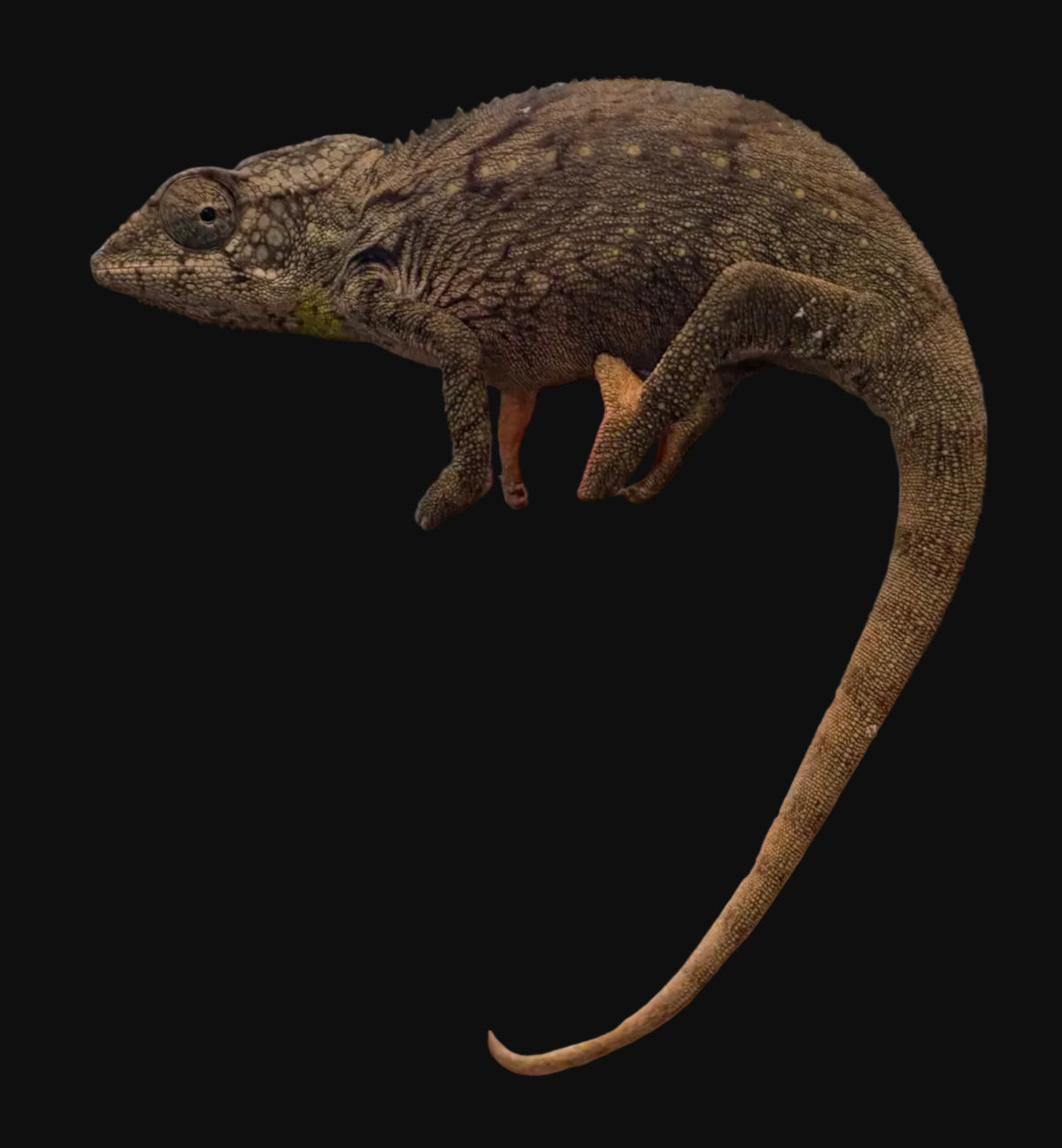
Appearance: The Giant Spiny Chameleon is robust and heavily armoured in appearance, with pronounced lateral spines and a tall, serrated dorsal ridge. Their colouration ranges from earthy browns and greys to muted greens, sometimes with mottling or faint barring. Males exhibit a taller casque, larger body mass, and a more dramatic crest, while females display softer tones and smoother contours. Their size and heavily textured features make them one of the most imposing chameleon species.
Distribution: Endemic to Madagascar, particularly in the western and southwestern dry forest regions.
Habitat: This species inhabits dry deciduous forests, thorn scrub, and semi-arid landscapes. They utilise scattered shrubs and trees for perching, basking, and shelter, thriving in areas with abundant sunlight and natural airflow.
Behaviour: Giant Spiny Chameleons are diurnal, solitary, and territorial. They move slowly and deliberately but can quickly become defensive, inflating their bodies, hissing, and showing bold displays. They primarily consume insects, though larger adults may opportunistically take small vertebrates.
Captive Care
Enclosure: Provide a vertically oriented enclosure at least 36 inches × 24 inches × 26 inches (90 × 60 × 66 cm) for an adult. Furnish the space with sturdy branches, thick vines, cork bark, and dense foliage. Because this species benefits from strong airflow, a screened or partially screened setup is ideal. Ensure multiple basking and shaded perches.
Temperature and Humidity:
Basking area: 90–100°F (32–38°C)
Ambient temperature: 75–85°F (24–29°C)
Night temperatures: 70–75°F (21–24°C)
Maintain humidity at 50–70%, with morning and evening misting. Allow the enclosure to dry significantly during the day to replicate natural semi-arid conditions.
Lighting: Provide strong full-spectrum lighting with moderate UVB (5–10%). A bright basking zone is essential for metabolic function and natural behaviours.
Diet: Offer a varied insectivorous diet including roaches, crickets, black soldier fly larvae, silkworms, hornworms, and occasional waxworms. Adults may be offered small vertebrates sparingly, though this is optional. Dust food items with calcium routinely and use multivitamins weekly. Feed juveniles daily and adults every 1–2 days.
Behaviour in Captivity: Giant Spiny Chameleons can be bold and defensive. They thrive in spacious setups with dense vegetation and stable environmental conditions. When comfortable, they display natural basking, lateral displays, and active hunting behaviours. Handling should be kept to a minimum.
Special Considerations:
• This species prefers a drier environment than rainforest chameleons.
• Provide strong branches that can support their heavier body weight.
• Males are highly territorial and must be housed individually.
• Ensure excellent ventilation to prevent respiratory issues.
Taxonomy Note
The Giant Spiny Chameleon is a member of the family Chamaeleonidae and the genus Furcifer, known for large-bodied, display-oriented Malagasy species. Furcifer verrucosus is one of the largest and most distinctive chameleons in Madagascar’s dry forest ecosystems.
Genetics Note
There are no recognized morphs for the Giant Spiny Chameleon. Natural genetic diversity includes differences in crest height, lateral spine size, and earth-tone body colours. These variations arise naturally among individuals and across regional populations.
Estimate shipping