


Photo Disclaimer
Description
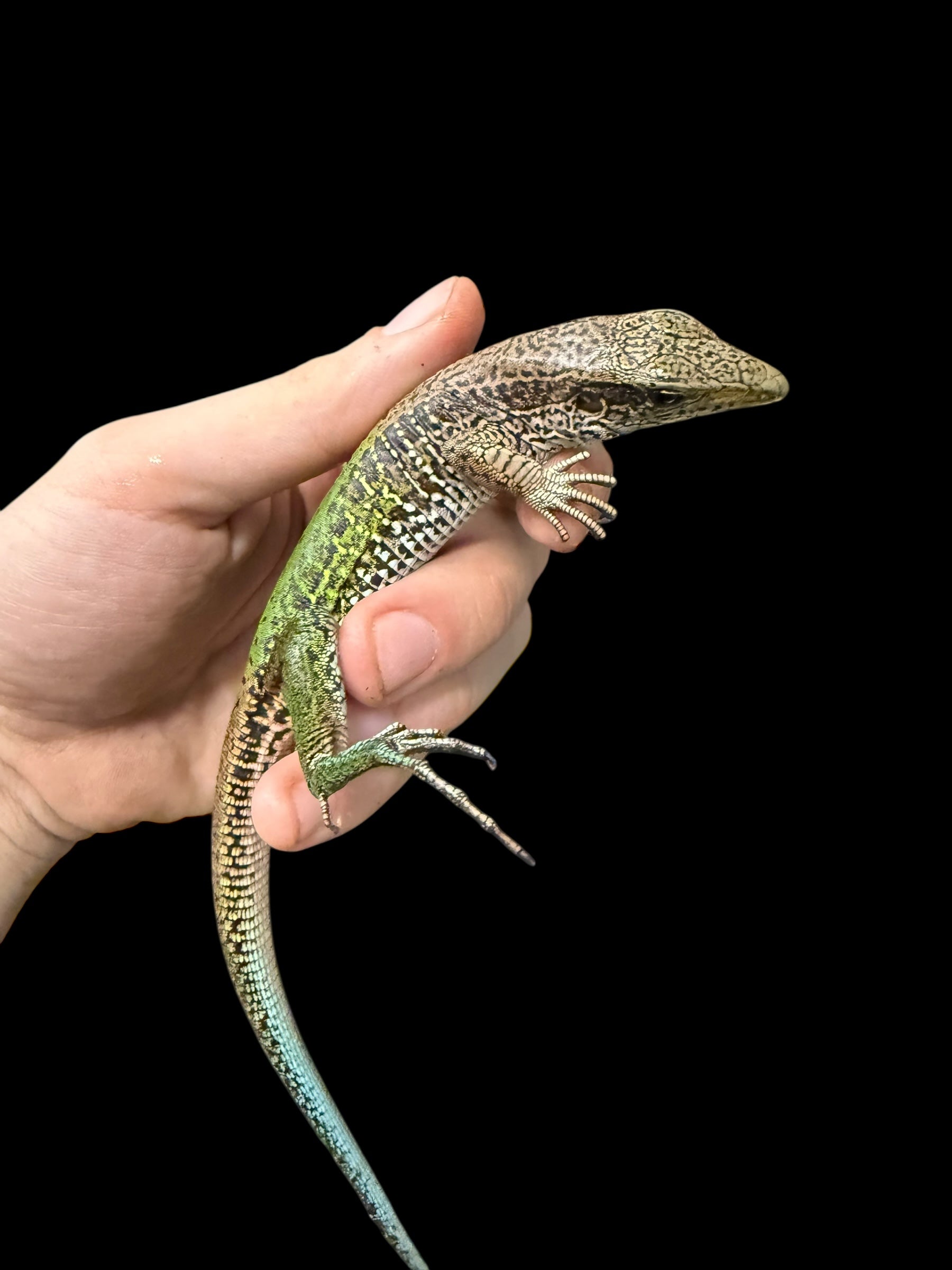
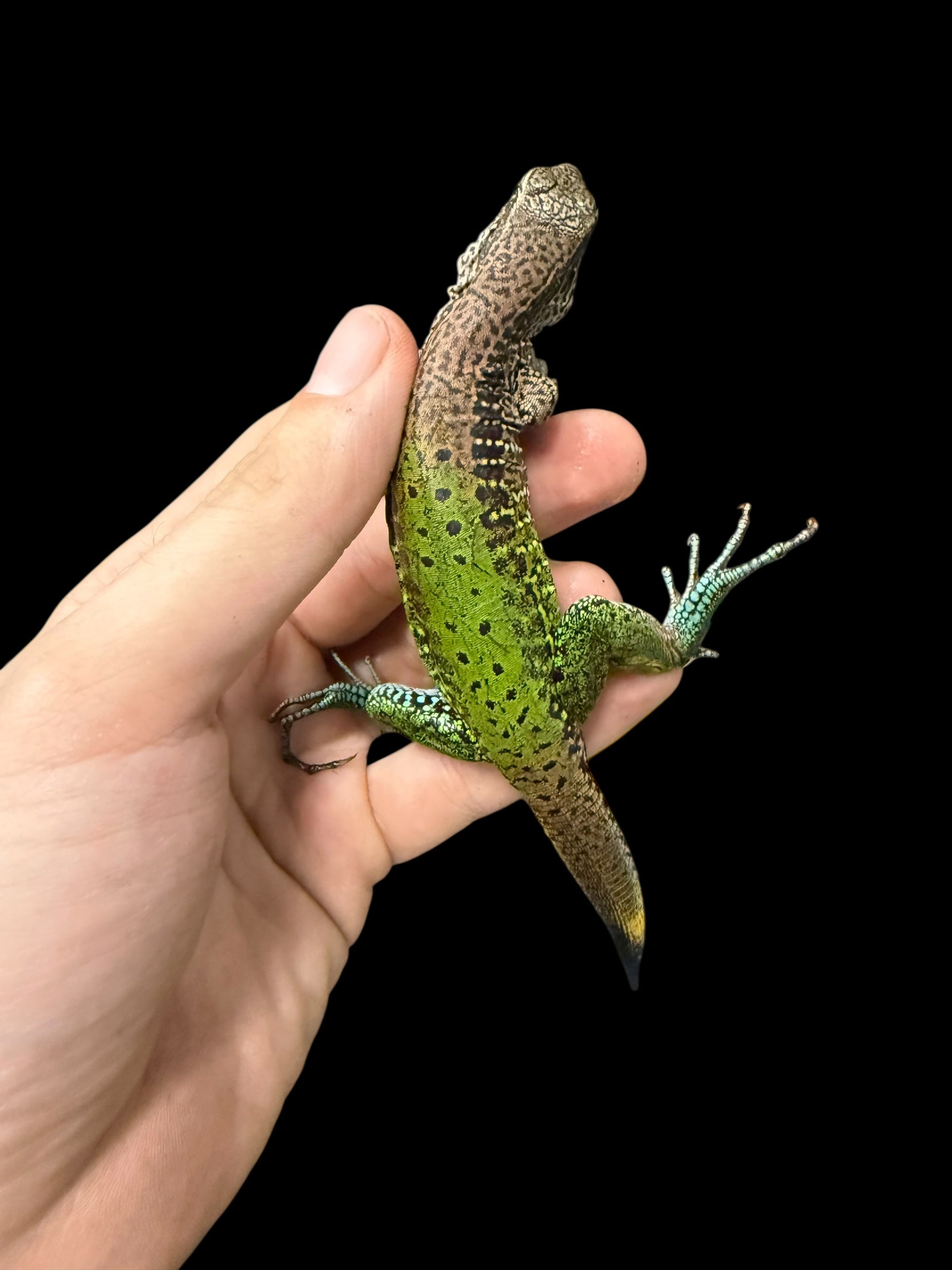
Green Ameiva (Ameiva ameiva)
Scientific Name: Ameiva ameiva
Common Name: Green Ameiva, Giant Ameiva, Amazon Racerunner
Species Overview
Size: Adults typically reach 12–18 inches (30–45 cm) in total length, with males being larger and more brightly coloured than females.
Appearance: The Green Ameiva is a sleek, athletic lizard with a streamlined body, long tail, and powerful limbs. Colouration varies widely but often includes bright green on the head and shoulders, fading into brown, bronze, or turquoise along the body. Many individuals exhibit black speckling, lateral striping, or intricate white spots along the flanks. Males may show vivid emerald tones or blue highlights, particularly during breeding season. Their scales are smooth and shiny, contributing to their glossy, polished appearance.
Distribution: Widely distributed across Central and South America, including Brazil, Colombia, Venezuela, Ecuador, Peru, the Guianas, Panama, and Trinidad. They occupy an extensive range of tropical and subtropical environments.
Habitat: Green Ameivas inhabit tropical rainforests, forest edges, savannas, plantations, riverbanks, and open sunny clearings. They prefer areas with thick ground cover and direct access to sunlight for basking.
Behaviour: This species is diurnal, extremely fast, and ground-oriented. Green Ameivas are active foragers that hunt insects, spiders, small vertebrates, eggs, and occasionally fruit. They are alert and rely on speed and darting movement to evade threats. They bask frequently and make use of burrows, leaf litter, or dense vegetation for refuge.
Captive Care
Enclosure: Provide a terrestrial enclosure at least 36 inches × 18 inches × 18 inches (90 × 45 × 45 cm) for an adult, though larger is strongly preferred due to their activity level. Include deep substrate for digging, such as soil–sand mixes that are dry on top but mildly moist deeper down. Add logs, cork bark, leaf litter, and sturdy hides. Offer open floor space for running as well as raised basking sites.
Temperature and Humidity:
Basking area: 100–110°F (38–43°C)
Ambient temperature: 80–90°F (27–32°C)
Night temperatures: 70–75°F (21–24°C)
Humidity should remain 50–70%, with daily misting that allows the enclosure to dry partially between cycles.
Lighting: Provide bright full-spectrum lighting with high UVB (10–12%). Strong illumination encourages natural basking and active behaviour.
Diet: Offer a varied omnivorous diet including roaches, crickets, black soldier fly larvae, mealworms, earthworms, pinky mice (occasional), eggs, fruit pieces, and soft vegetables. Juveniles require daily feeding; adults can be fed every 1–2 days. Dust food with calcium regularly and provide multivitamins weekly.
Behaviour in Captivity: Green Ameivas are energetic, curious, and always on the move. They are best considered display animals, as they rarely tolerate handling and may become stressed or skittish when restrained. With enough space and environmental enrichment, they exhibit natural hunting, basking, and exploratory behaviours.
Special Considerations:
• They require large enclosures to accommodate high activity levels.
• Ensure tight-fitting lids — they are strong and fast escape artists.
• Provide both open running space and densely vegetated hiding zones.
• Avoid excessive handling to reduce stress.
Taxonomy Note
The Green Ameiva belongs to the family Teiidae, a group of fast, intelligent, and highly active lizards that includes tegus and racerunners. Ameiva ameiva is one of the most widespread and recognizable members of the genus.
Genetics Note
There are no recognized morphs for the Green Ameiva. Natural variation includes differences in green saturation, presence or absence of turquoise tones, degree of flank speckling, and pattern clarity. These reflect natural locality-based and individual genetic diversity rather than selective breeding.