


Photo Disclaimer
Description
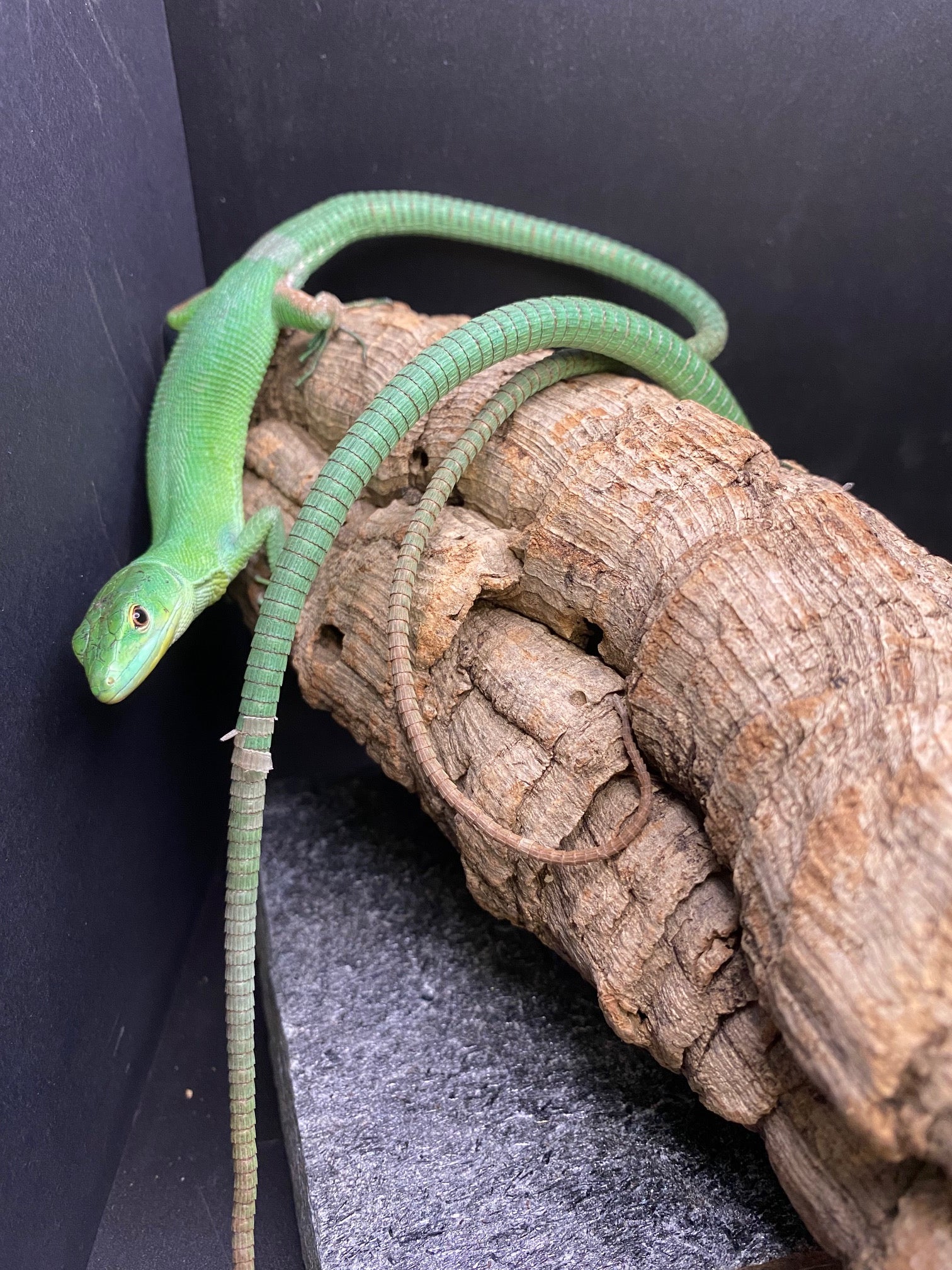
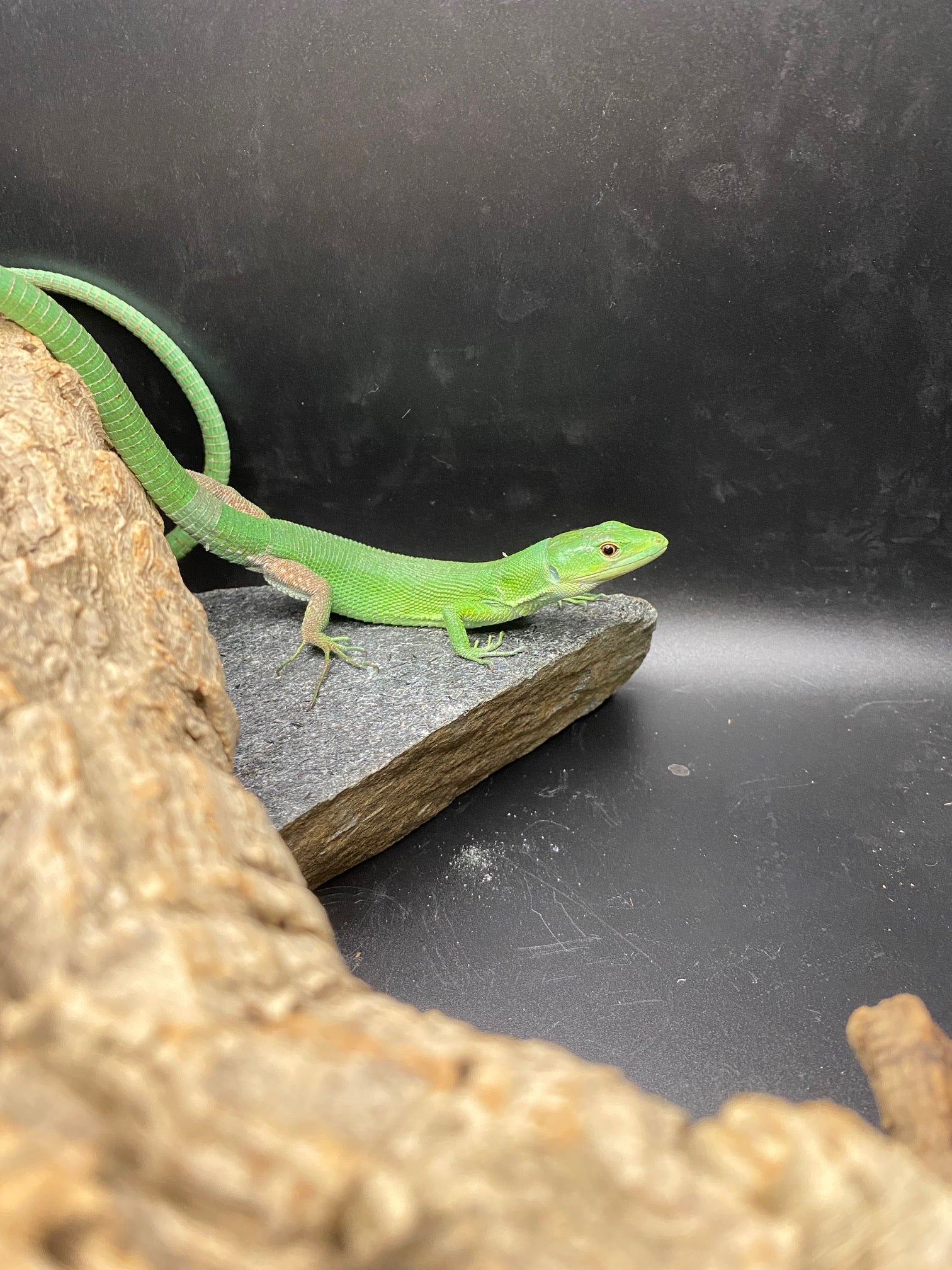
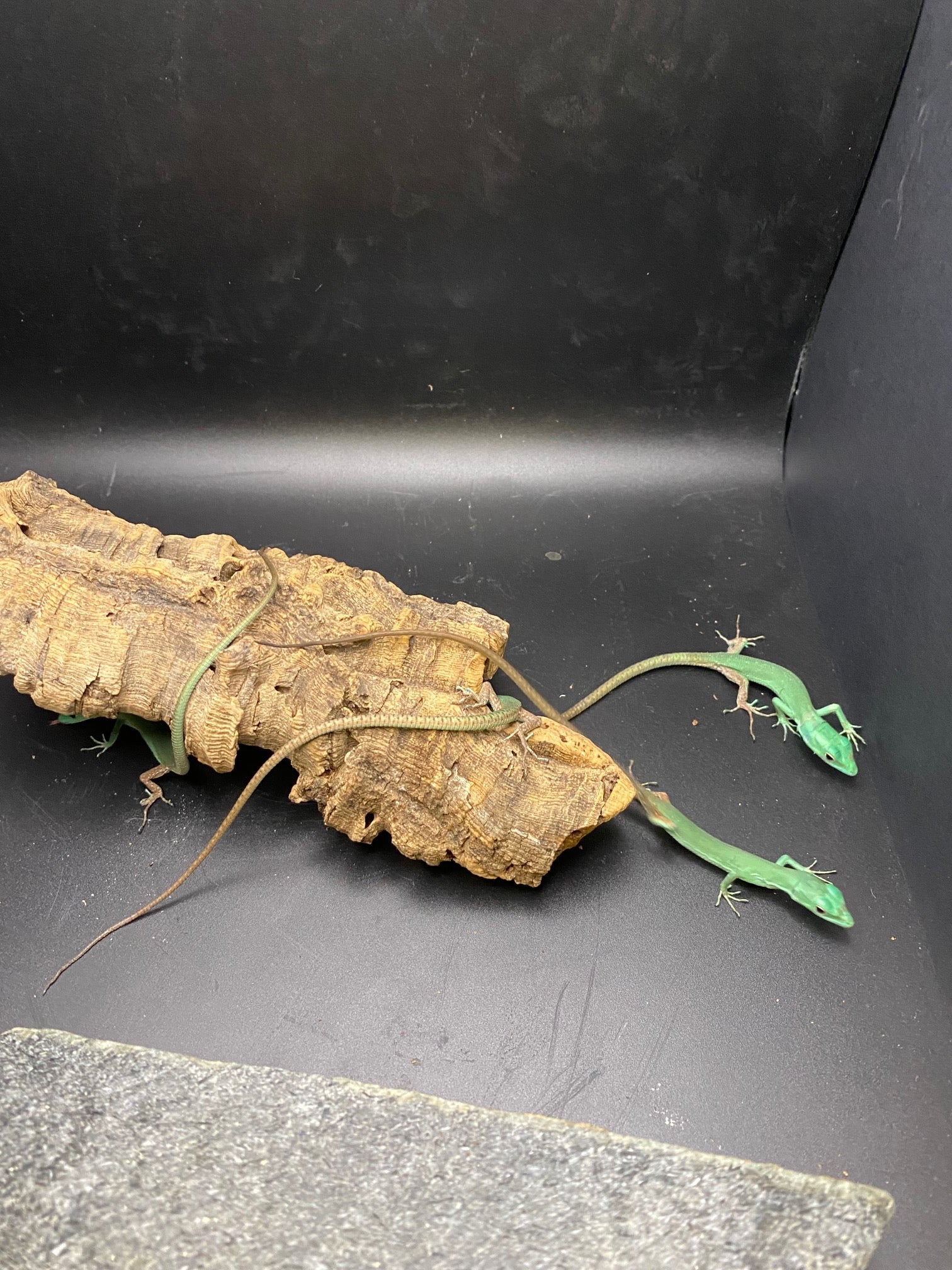
Green Keel Bellied Lizard (Gastropholis prasina)
Scientific Name: Gastropholis prasina
Common Name: Green Keel Bellied Lizard, Prasina Keel Lizard
Species Overview
Size: Adults typically reach 12–16 inches (30–40 cm) in total length, with a slender, elongated body and a tail that makes up more than half of their length.
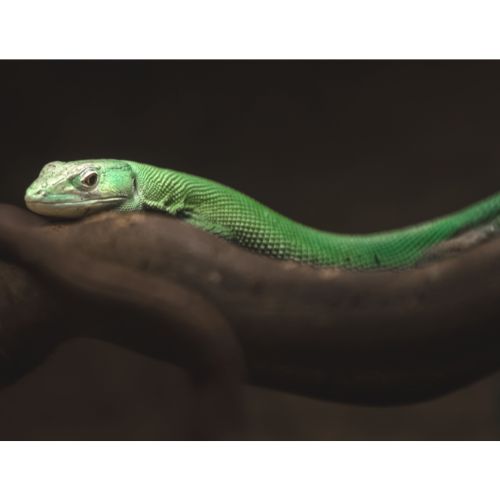
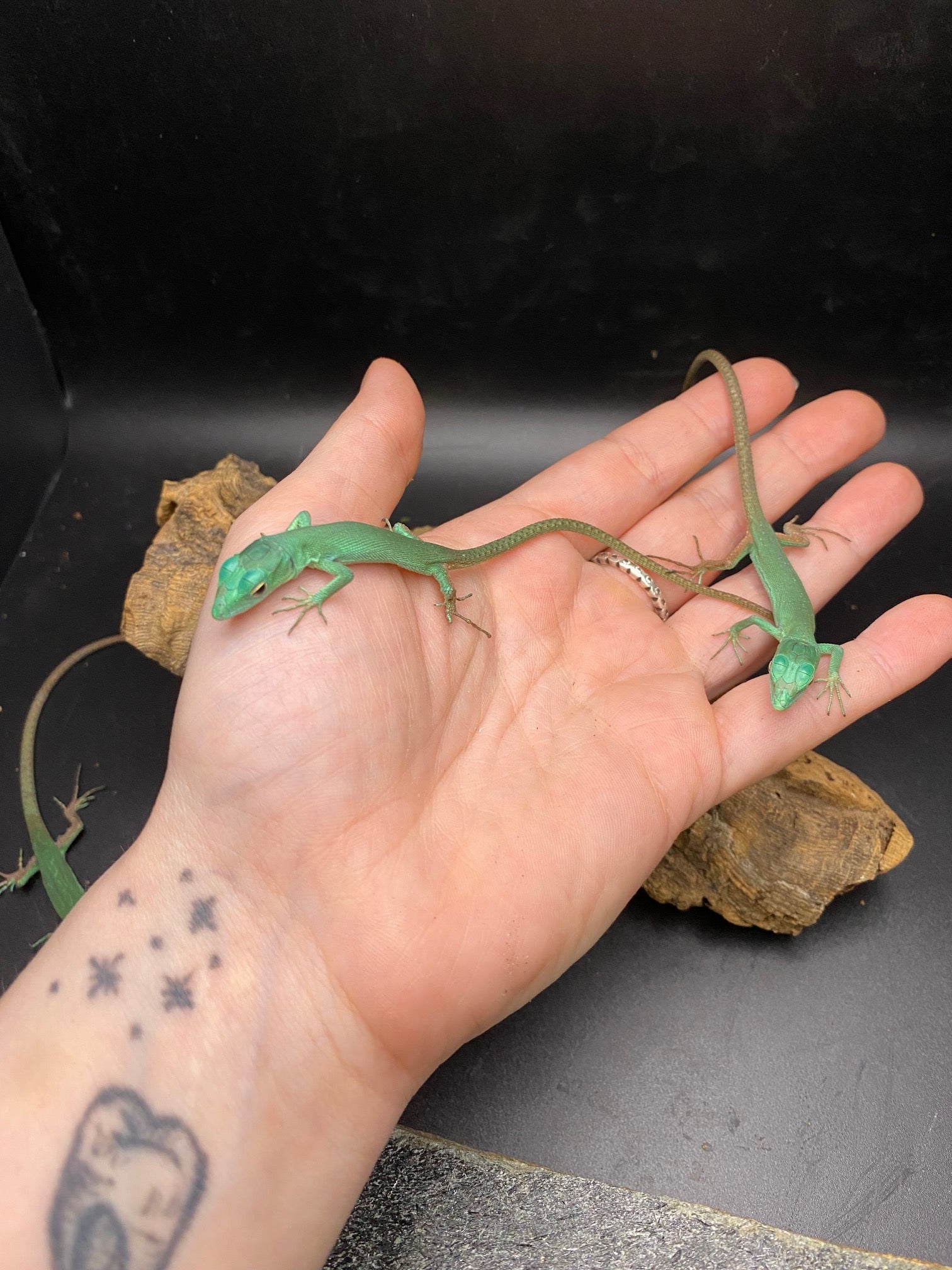
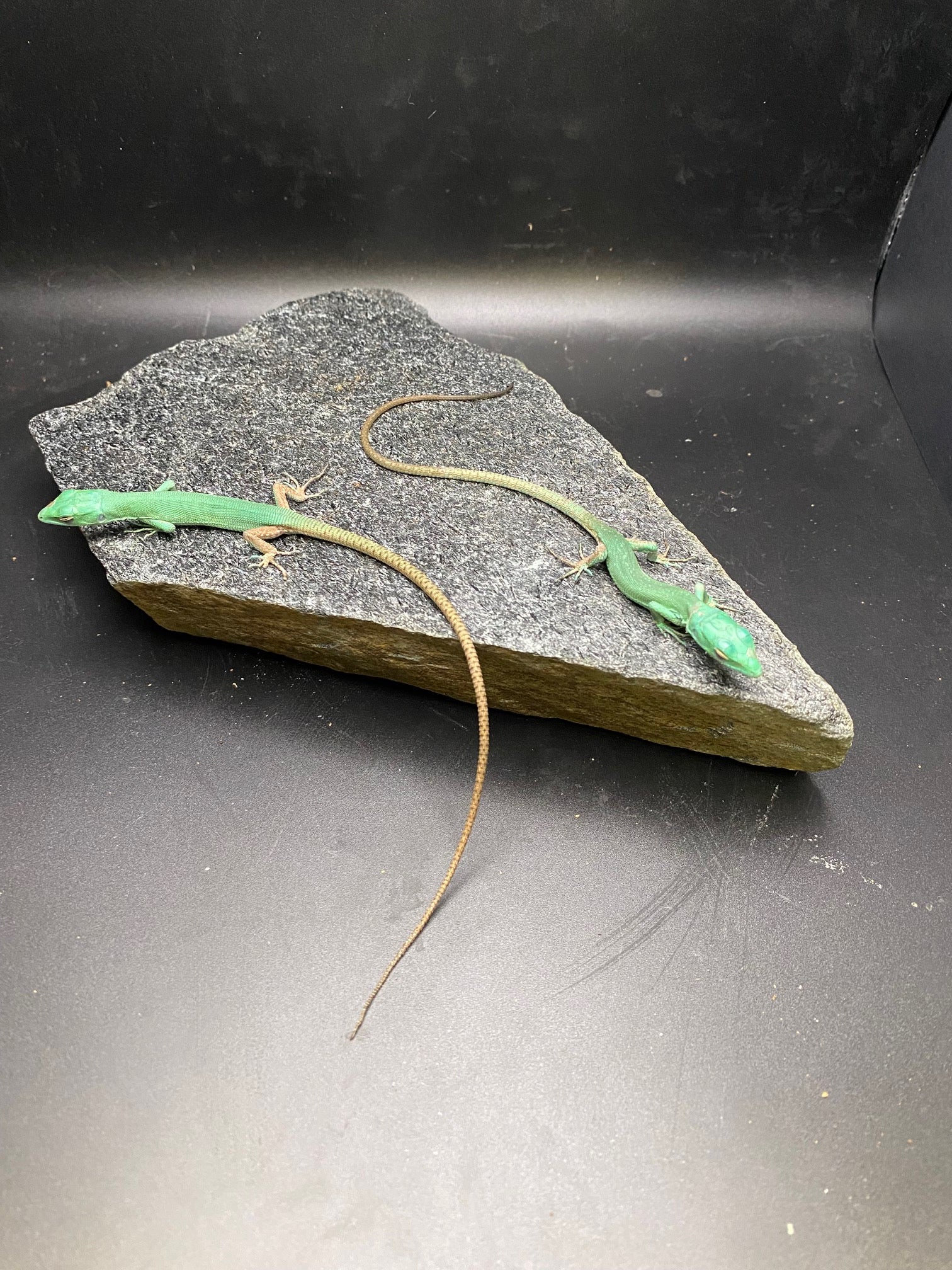
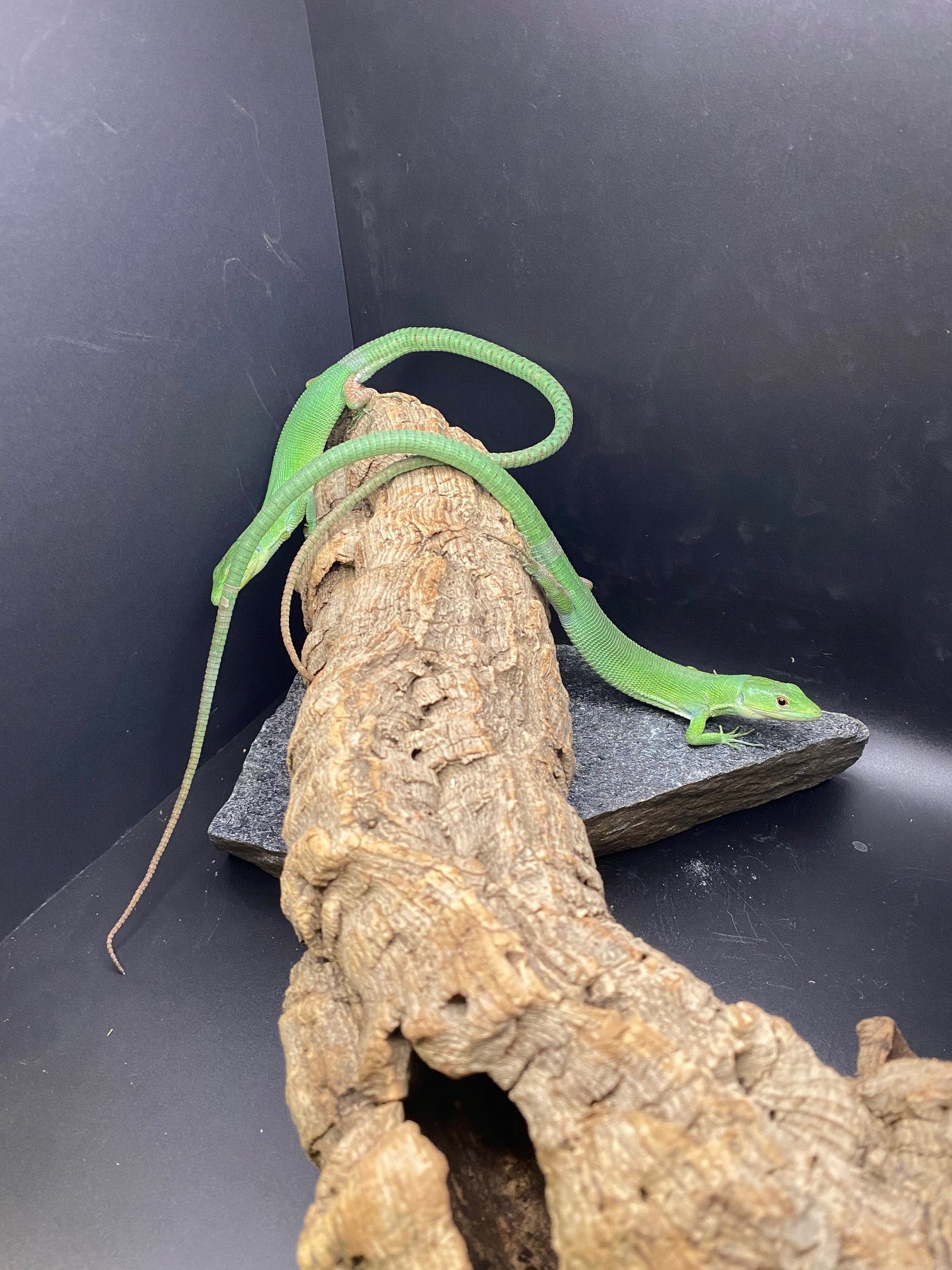
Appearance: The Green Keel Bellied Lizard is a bright emerald-green arboreal species with distinctly keeled ventral scales, giving the belly a ridged texture. The dorsal scales are smooth and glossy, perfect for blending into foliage. Their head is angular and alert, with large eyes adapted for spotting movement. Juveniles may appear slightly duller but gain stronger coloration as they mature.
Distribution: Native to coastal East Africa, primarily Kenya and Tanzania.
Habitat: This species thrives in humid, arboreal environments such as coastal forests, secondary woodlands, and dense brush. They spend most of their time elevated among branches, vines, and leafy cover.
Behaviour: Green Keel Bellied Lizards are diurnal, agile, and highly alert. They excel at climbing and sprinting, using their long toes and tail for balance. Their diet consists mainly of insects, with occasional small vertebrates or soft fruits. They are territorial and rely on visual signaling and quick escape responses. They display their vivid deep red tongue at potential threats when upset, and have a strong bite.
Captive Care
Enclosure: Provide a vertically oriented enclosure measuring at least 36 inches × 24 inches × 24 inches (90 × 60 × 60 cm). Include sturdy climbing branches, bamboo, cork bark, horizontal and vertical perches, dense live plants, and multiple hiding locations. This species needs abundant foliage to feel secure.
Temperature and Humidity:
Basking area: 95–100°F (35–38°C)
Ambient temperature: 78–85°F (25–29°C)
Night temperatures: 70–75°F (21–24°C)
Humidity should remain between 60–80% through regular misting and a balance of airflow and planted microclimates.
Lighting: Use strong full-spectrum lighting with high UVB output. Bright lighting supports calcium metabolism, natural basking, and vivid colouration.
Diet: Provide a varied insectivore diet including crickets, roaches, black soldier fly larvae, hornworms, silkworms, and mealworms. Adults may take the occasional pinky mouse offered sparingly. Dust insects with calcium frequently and provide multivitamins weekly.
Behaviour in Captivity: This species is active, fast, and visually oriented. They are best kept as display animals, as they rarely tolerate handling. In a lush, structured enclosure, they display natural behaviours such as vertical climbing, rapid sprinting, perching, and tongue flicking.
Special Considerations:
• Requires dense plant cover and climbing structure to reduce stress.
• Highly agile; a well secured enclosure is essential.
• Avoid excessive handling.
• Maintain humidity without sacrificing airflow.
Taxonomy Note
Gastropholis prasina belongs to the Lacertidae family and is one of the most arboreal species within the group. Their elongated body form, grasping tail, and vivid coloration reflect specialisation for life in thick vegetation.
Genetics Note
There are no recognized morphs for the Green Keel Bellied Lizard. Natural variation includes depth of green coloration, subtle locality patterning, and keel prominence. These reflect wild-type diversity rather than selective captive breeding.
Estimate shipping