


Photo Disclaimer
Description
Greer's Kingsnake
Scientific Name: Lampropeltis greeri
Common Name: Durango Mountain Kingsnake, Greer’s Kingsnake
Species Overview
Size: Adults typically reach 2.5–4 feet (0.8–1.2 m) in length with slender proportions.
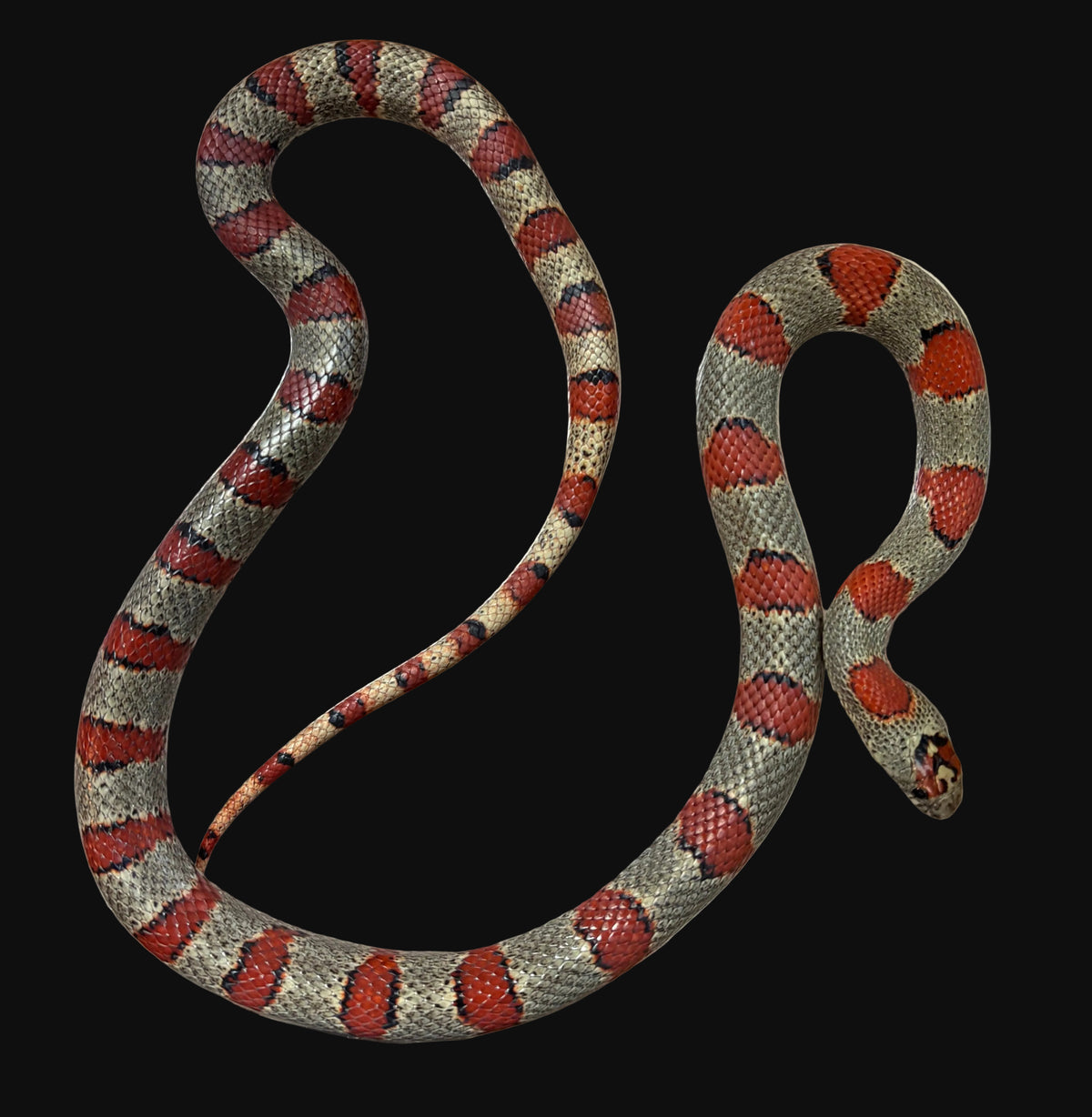
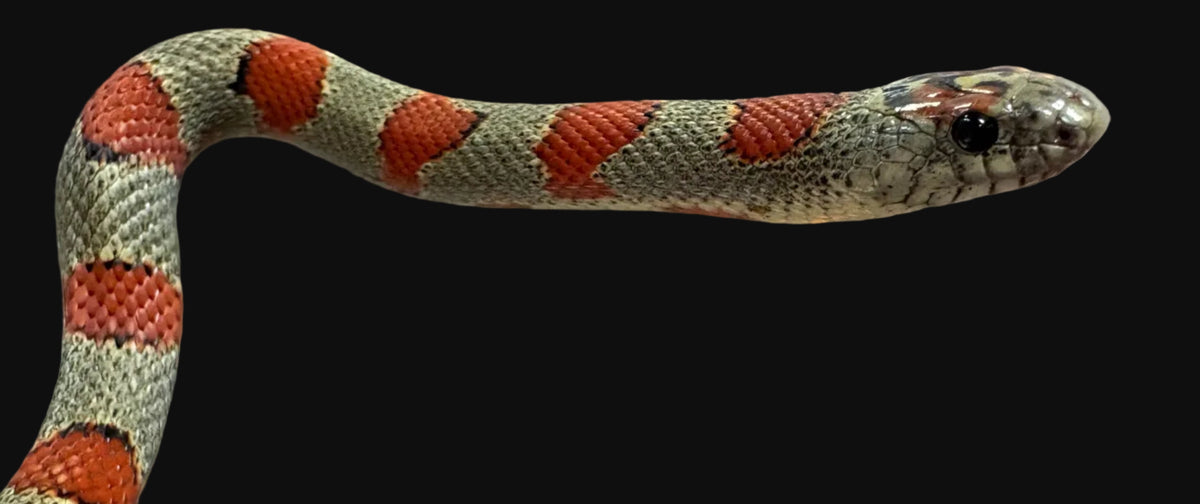
Appearance: The Greer's kingsnake is a member of what was once the Lampropeltis mexicana subspecies complex that have now been split into three distinct species. This animal has a grey to brown-grey body with red bands bordered by black. The belly has a mosaic of black and red checkering.
Lampropeltis greeri can be distinguished from other species by the transition from head to neck being less distinct than in L. mexicana and L. leonis, less protuberant eyes, the base head colour matching that of the body, and the presence of black markings on top of the head, along with a lack of variation in the species as a whole and no ontogenetic colour change.
There is always the possibility that this individual may be a hybrid between Lampropeltis mexicana and Lampropeltis greeri. The identification of this animal is based purely on anatomical markers due to lack of pedigree.
Distribution: Native to Mexico, primarily located within Durango, Nayarit, and eastward to Zacatecas, Aguascalientes, and Jalisco.
Habitat: Greer's kingsnakes inhabit rocky slopes, pine and juniper forests, and arid mountain canyons throughout their range. In captivity, they thrive in naturalistic terrariums with soft substrate, sites to bask, and secure hiding areas.
Behaviour: This species is primarily diurnal and highly secretive, often sheltering beneath rocks or logs during the heat of the day. It is a capable climber and swift mover. Greer's kingsnakes are generally calm and easy to handle, though they may initially musk when disturbed. With gentle care, they become curious and tolerant captives that rarely show defensive behaviour.
Captive Care
Enclosure: A 3-foot × 18-inch × 18-inch enclosure is suitable for adults, though larger enclosures promote more natural behaviour. Include rock ledges, cork bark, and branches for climbing. A loose, dry substrate such as aspen or a soil mix allows for burrowing.
Temperature & Humidity: Maintain a daytime gradient of 75–84°F (24–29°C) with a basking spot around 88°F (31°C). Nighttime temperatures can safely drop to 65–70°F (18–21°C). Keep humidity between 35–50%, with a slightly more humid hide provided for shedding.
Diet: Offer frozen-thawed pinkies or fuzzies every 5–7 days for juveniles and appropriately sized rodents every 10–14 days for adults. They are consistent feeders once acclimated, though some may benefit from scenting early in life.
Behaviour in Captivity: Greer's kingsnakes are alert, inquisitive, and generally calm. They tolerate handling well and adapt readily to routine care. They are excellent display animals, showing both activity and striking coloration without aggressive tendencies.
Special Considerations: This species benefits from seasonal cooling or brumation to promote long-term health and successful breeding. Provide secure enclosure lids, as kingsnakes are adept escape artists.
Genetics Note
There is always the possibility that this individual may be a hybrid between Lampropeltis mexicana and Lampropeltis greeri, but the identification of this animal is based purely on anatomical markers due to lack of pedigree.
Species Summary
The Greer's kingsnake (Lampropeltis greeri) is a vibrant, hardy, and gentle species beloved by collectors and naturalists alike. With its red, black, and grey banding and calm demeanour, it exemplifies the beauty and adaptability of North American kingsnakes. Its natural variation, moderate size, and striking appearance make it an exceptional species for keepers seeking a visually iconic and manageable display animal.
Estimate shipping