

Photo Disclaimer
Description
Helmeted Chameleon (Trioceros hoehnelii)
Scientific Name: Trioceros hoehnelii
Common Name: Helmeted Chameleon, Höhnel’s Chameleon
Species Overview
Size: Adults typically reach 7–10 inches (18–25 cm) in total length, with males sometimes slightly larger and displaying more pronounced cranial ornamentation.
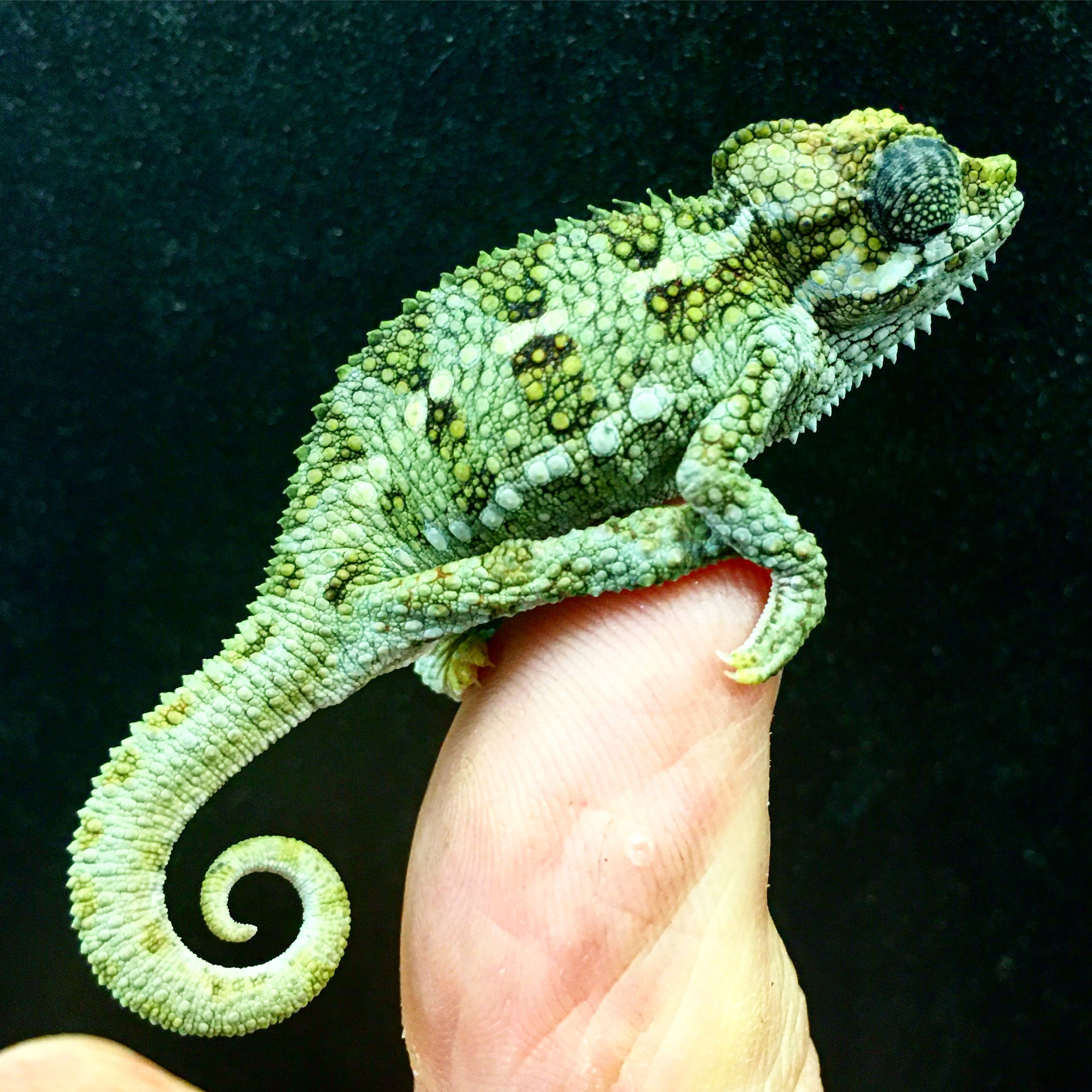
Appearance: The Helmeted Chameleon is named for its distinctive casque, which forms a tall, helmet-like crest atop the head. Colouration varies widely and may shift between green, brown, yellow, or mottled patterns depending on mood and environmental conditions. Males often exhibit brighter highlights and more sharply defined facial ridges. Their bodies are compact, with stout limbs, a prehensile tail, and granular scales that provide a textured appearance.
Distribution: Native to East Africa, particularly the montane regions of Kenya and Uganda.
Habitat: This species inhabits cool, moist high-elevation forests, often between 5,000 and 10,000 feet (1,500–3,000 m). They are typically found in dense shrubs, forest edges, bamboo thickets, and shaded understory zones where temperatures remain moderate.
Behaviour: Helmeted Chameleons are diurnal and solitary. They move slowly and rely heavily on camouflage to avoid predators. They feed primarily on insects, captured using their long projectile tongues. As a montane species, they are adapted to cooler temperatures and can become stressed by excessive heat.
Captive Care
Enclosure: Provide a vertically oriented enclosure measuring at least 24 inches × 24 inches × 36 inches (60 × 60 × 90 cm) for a single adult. Furnish the space with dense live plants, thin branches, vines, and cork pieces to create shaded pathways and secure perching sites. Good ventilation is essential, as this species thrives in cool, fresh-air environments without stagnant humidity.
Temperature & Humidity:
Basking area: 80–85°F (27–29°C)
Ambient temperature: 70–75°F (21–24°C)
Night temperatures: 55–65°F (13–18°C)
Humidity should remain between 60–80%, achieved through daily misting and use of live foliage. This species benefits from cool nights and must not be exposed to high daytime heat.
Lighting: Provide full-spectrum lighting with moderate UVB output. Ensure the enclosure offers both bright basking zones and shaded microclimates to prevent overheating. UVB access is essential for calcium metabolism and overall health.
Diet: Offer a varied insect diet including crickets, roaches, black soldier fly larvae, silkworms, and occasional small hornworms. Dust feeders with calcium regularly and provide multivitamins weekly. Use a dripper or frequent misting to stimulate natural drinking behaviour.
Behaviour in Captivity: The Helmeted Chameleon is a shy, cool-loving species best suited as a display animal rather than for handling. They flourish in calm, quiet environments with dense foliage. When properly housed, they display natural behaviours such as colour shifting, slow stalking movements, and calm perching. Heat stress or excessive handling can lead to health issues.
Special Considerations:
• Very sensitive to high temperatures; avoid overheating at all costs.
• Requires strong ventilation and cool nighttime drops.
• Provide dense plant cover to stabilise humidity and give visual security.
• Best suited for keepers familiar with the needs of montane chameleons.
Taxonomy Note
Trioceros hoehnelii belongs to the Trioceros genus, a group of African chameleons known for their horn structures, angular heads, and adaptations to cooler mountain climates. The Helmeted Chameleon is one of the most distinctive montane species due to its tall casque and variable colour patterns.
Genetics Note
There are no recognised morphs for the Helmeted Chameleon. Natural variation appears in casque height, colour vibrancy, mottling patterns, and overall body tone. These differences reflect normal genetic and geographical diversity rather than selective breeding.
Estimate shipping