



Photo Disclaimer
Description
Hermann’s Tortoise
Scientific Name: Testudo hermanni
Common Name: Hermann’s Tortoise
Species Overview
Size: Males typically reach 5 to 7 inches (13 to 18 cm), while females grow larger at 7 to 10 inches (18 to 25 cm), depending on locality.
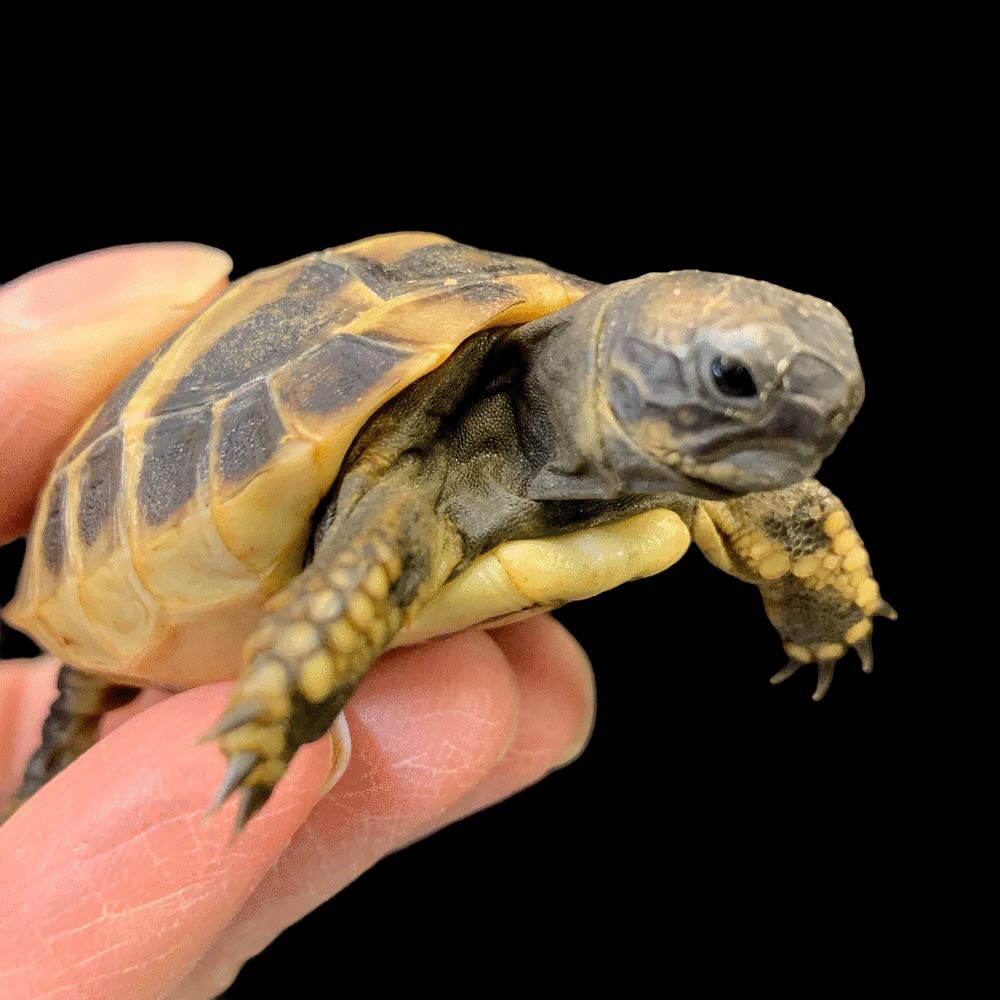
Appearance: Hermann’s Tortoises are small to medium-sized tortoises with a high-domed carapace ranging from yellow to golden brown, marked with bold black patches. The plastron features two solid black bands running lengthwise in many individuals, especially those of the Western form. The head is typically dark with lighter mottling, and the tail ends in a distinct horny spur or “tail spike.” Males have longer, thicker tails and a concave plastron, while females are rounder and broader.
Distribution: Native to southern Europe, including Italy, France, Spain, the Balkans, and surrounding Mediterranean regions. The species contains two primary forms:
• Western Hermann’s (Testudo hermanni hermanni) – smaller, brighter yellow, sharper contrast
• Eastern Hermann’s (Testudo hermanni boettgeri) – larger, less contrasting, more common in captivity
Habitat: In the wild, this species inhabits Mediterranean scrublands, dry forests, rocky hillsides, and grasslands. They prefer warm, sunny environments with access to shade, leaf litter, and burrows. In captivity, they require a dry, warm enclosure with deep substrate and ample hiding spots.
Behaviour: Hermann’s Tortoises are active grazers that explore throughout the day, especially during warm, mild weather. They are hardy, curious, and well-adapted to outdoor housing during appropriate seasons. They rely on dry conditions and stable warmth to maintain activity.
Captive Care
Enclosure: Provide a minimum indoor footprint of 4 × 2 feet (120 × 60 cm) for one adult, though larger outdoor pens are strongly preferred when climate allows. Use a dry soil–sand substrate mix that remains dry on the surface but deep enough for digging. Include hides, rocks, logs, and shaded retreats.
Temperature and Humidity:
Ambient daytime: 80 to 88°F (27 to 31°C)
Basking area: 95 to 100°F (35 to 38°C)
Night temperature: 65 to 72°F (18 to 22°C)
Humidity: Generally low, around 30 to 50%, with slightly more humid pockets in deep hides.
Lighting: Provide full-spectrum lighting with 10–12% UVB for healthy bone and shell development. A clear basking zone is required, alongside shaded areas for cooling.
Diet: Offer a high-fibre, low-protein herbivorous diet including edible weeds, grasses, clover, dandelion, hibiscus leaves, and dark leafy greens. Flowers such as hibiscus or rose petals can be added. Avoid fruits and moisture-heavy vegetables.
Behaviour in Captivity: Hermann’s Tortoises thrive in naturalistic, dry setups with room to roam. They enjoy grazing, digging, and exploring. When kept too cool or humid, they may become lethargic or prone to respiratory issues.
Special Considerations
• Outdoor housing is ideal in warm seasons.
• Humidity should remain low; excess moisture can lead to health concerns.
• Provide deep substrate to allow natural digging behaviour.
• Avoid fruits or soft foods.
Taxonomy Note
There are two primary locality groups: the Western Hermann’s (smaller, brighter, more contrasted) and the Eastern Hermann’s (larger, more muted in colour). These forms differ noticeably in size, pattern, and availability.
Canadian Availability Note
Nearly all Hermann’s Tortoises available in Canada belong to the larger Eastern locality (Testudo hermanni boettgeri).
The smaller Western Hermann’s—often requested by hobbyists—are extremely rare and generally unavailable in Canada.
Genetics Note
There are no recognised morphs for Hermann’s Tortoises. Differences in colour, shell pattern, and size reflect natural locality and subspecies variation rather than selective breeding.