

Photo Disclaimer
Description
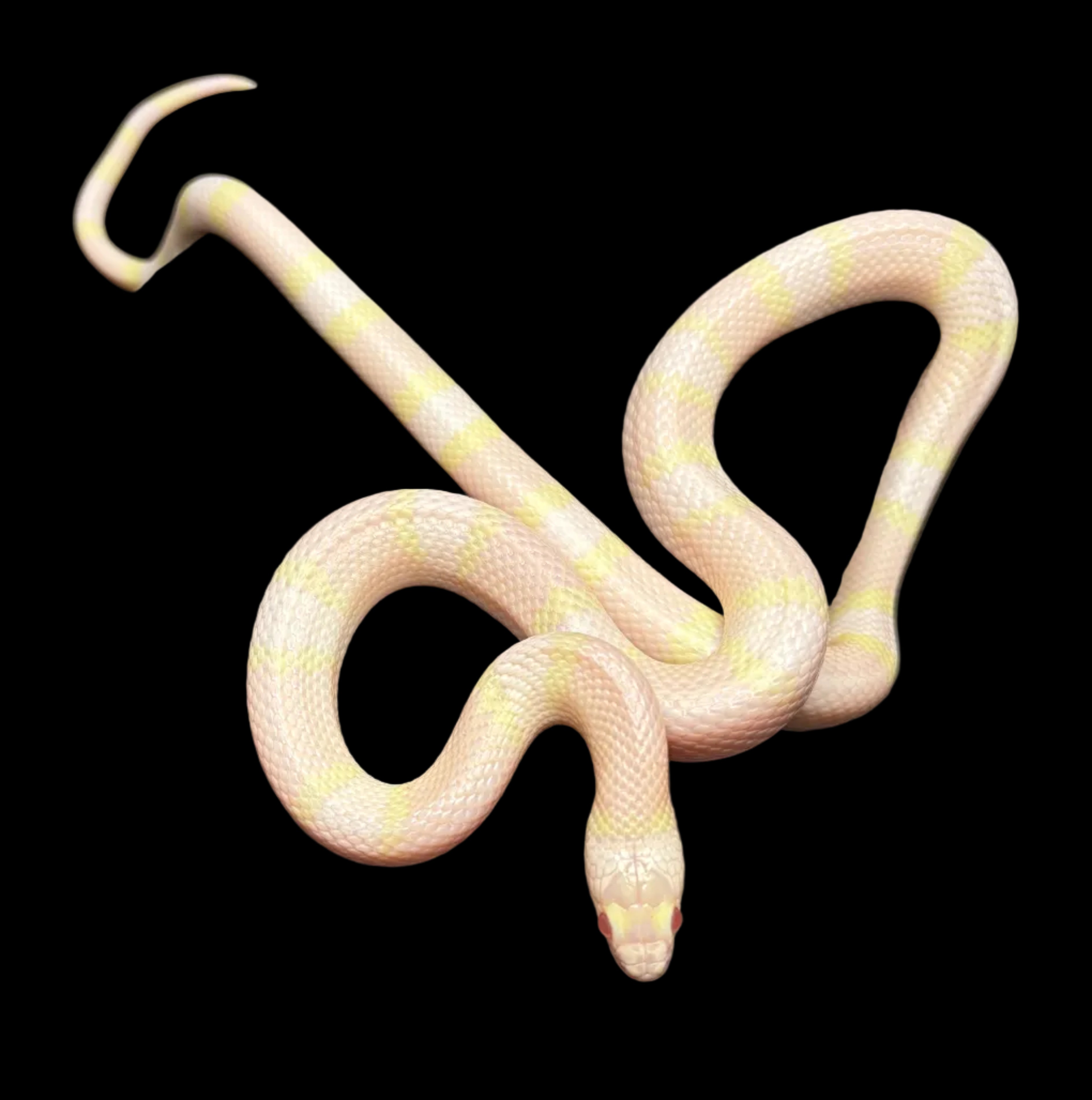
Honduran Milksnake (Snow)
Scientific Name: Lampropeltis triangulum hondurensis
Common Name: Honduran Milksnake
Species Overview
Size: Adults typically reach 4–6 feet (1.2–1.8 m) in length, with a thick, muscular build and smooth, glossy scales.
Appearance: The Snow Honduran Milksnake is a soft-toned, pastel morph that combines the Albino and Anerythristic genes, creating a pale, creamy white to light silver appearance. The Albino gene removes black pigment, while Anery removes red, leaving only subtle beige, grey, or yellow tones that often develop with age. The overall effect is clean and delicate, with a faintly iridescent sheen and pink to reddish eyes. The Snow line is admired for its smooth contrast, subtle variation, and gentle visual balance.
Distribution: Originates from selective captive breeding of the Honduran Milksnake, which is native to Honduras, Nicaragua, and northern Costa Rica.
Habitat: Honduran Milksnakes inhabit tropical forests, grasslands, and agricultural areas across Central America. In captivity, this morph thrives in naturalistic terrariums with soft substrate, climbing branches, and secure hiding areas.
Behaviour: Calm, alert, and hardy, these snakes adapt quickly to handling and thrive in well-maintained enclosures. They are strong feeders with confident feeding responses, suitable for both breeding and display.
Captive Care
Enclosure: Provide an enclosure at least 4 feet × 2 feet × 2 feet for adults. Include multiple hides, climbing décor, and smooth furnishings. A naturalistic substrate such as soil, coconut fibre, or aspen allows burrowing and helps maintain humidity.
Temperature & Humidity: Maintain a daytime gradient of 78–86°F (26–30°C) with a basking area near 90°F (32°C). Allow nighttime drops to 70–74°F (21–23°C). Maintain humidity between 50–70%, with a humid hide provided during shedding.
Diet: Offer frozen-thawed rodents every 7–10 days for juveniles and every 10–14 days for adults. Honduran Milksnakes are dependable, consistent feeders.
Behaviour in Captivity: These snakes are calm and inquisitive, often exploring their surroundings. Their pale, serene coloration makes them a standout display morph in any collection.
Special Considerations: Milksnakes should always be housed individually, as they may prey on other snakes. Snow individuals are particularly valuable in breeding programs aiming to refine pale morph lines or strengthen genetic diversity.
Genetics Note
Albino (Recessive): Removes black pigment, leaving whites, yellows, and reds visible. When combined with Anery, it produces a near-white or cream-toned appearance.
Anery (Recessive): Removes red pigmentation, resulting in grey, white, and black coloration.
Snow (Albino + Anery Double Recessive): Combines the Albino and Anery genes, creating a pale, silvery-white morph with soft contrast and pinkish eyes.
Genetic Combination Summary
The Honduran Milksnake (Snow) expresses two recessive traits:
-
Albino (Recessive): Removes black pigment, creating a bright base tone.
-
Anery (Recessive): Removes red pigment, yielding silvery or cream hues.
Together, these genes produce a refined, frost-toned Honduran Milksnake with a soft, luminous appearance.
Estimate shipping