


Photo Disclaimer
Description
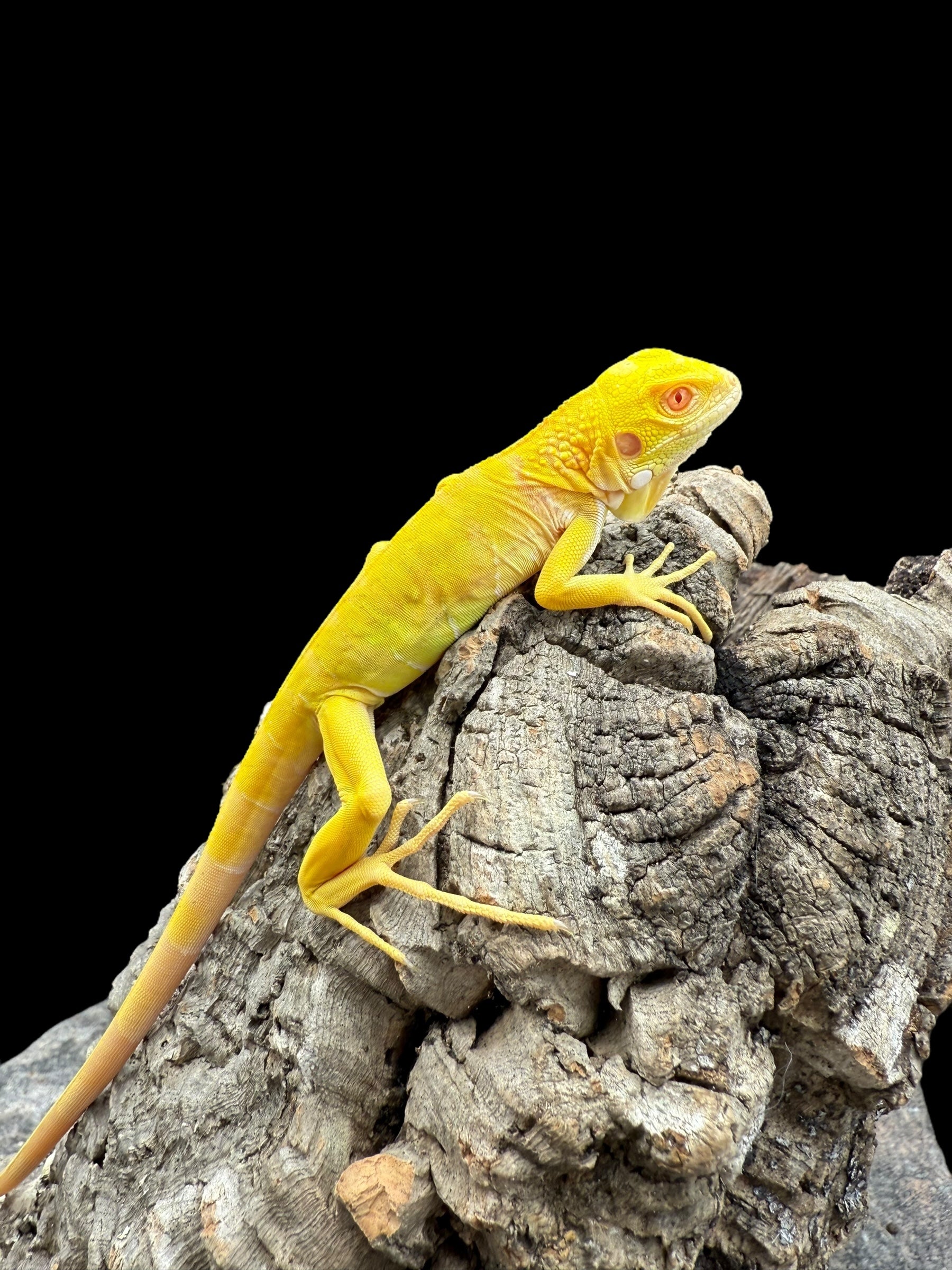
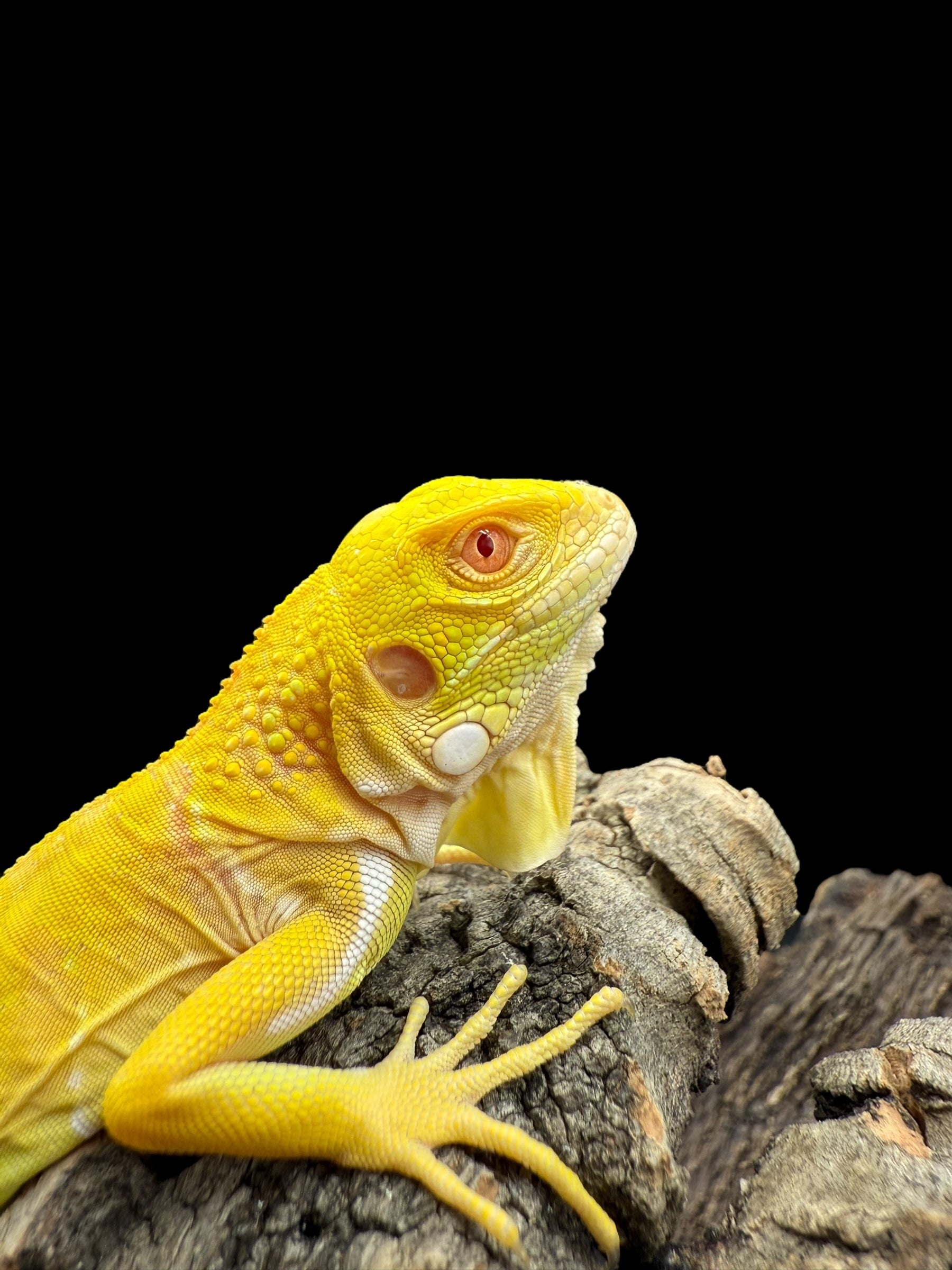
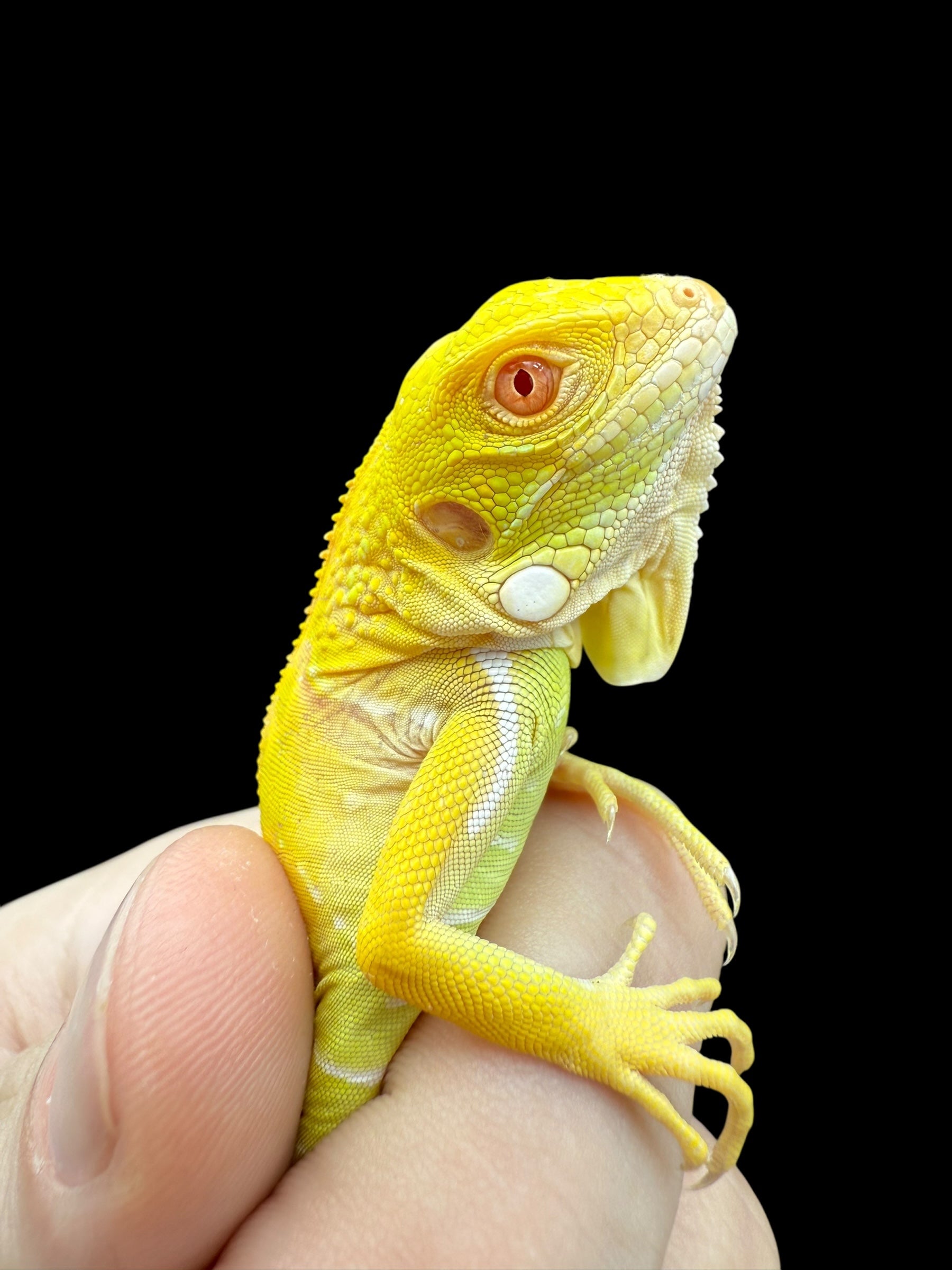
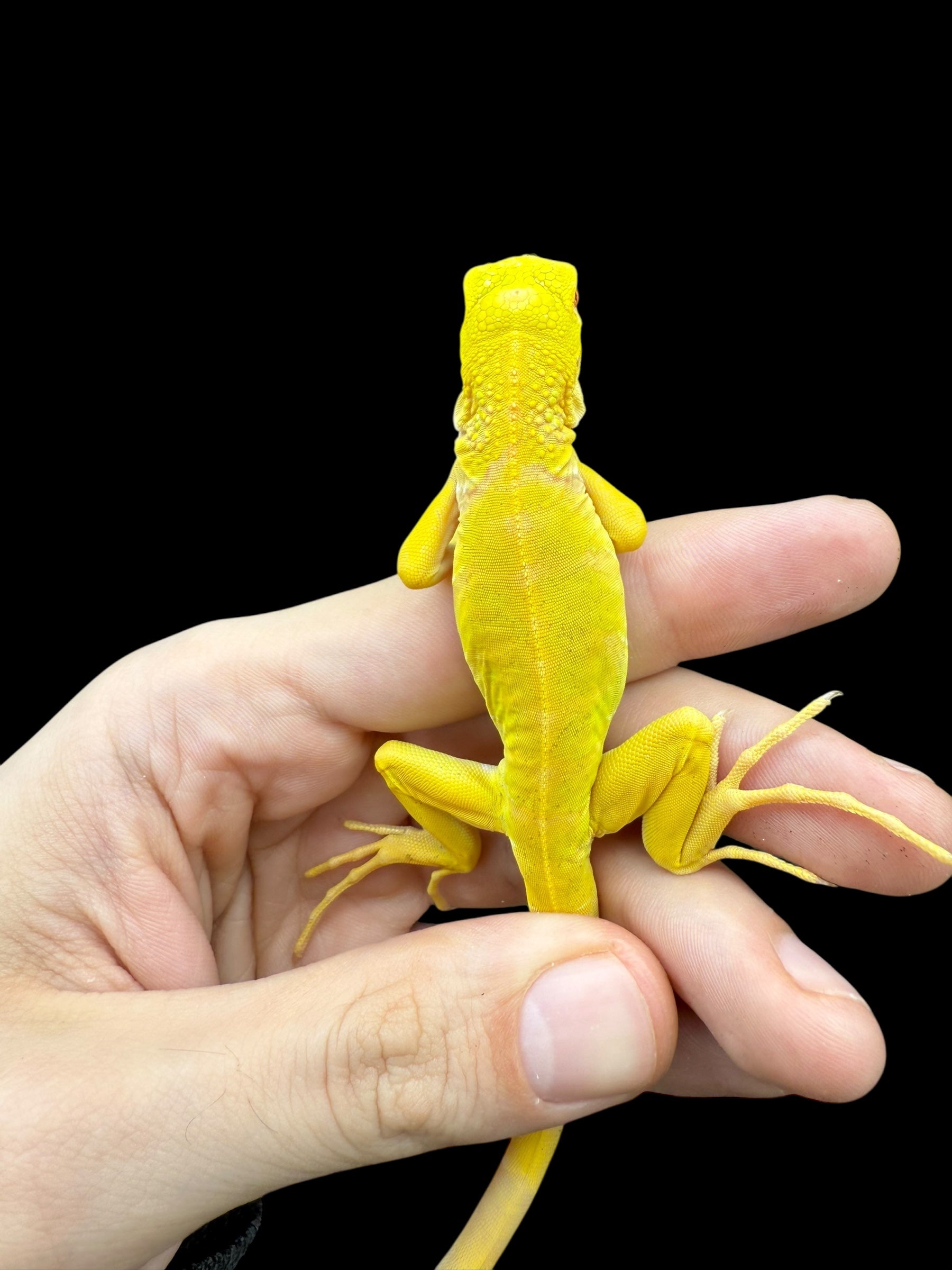
Green Iguana (Albino)
Scientific Name: Iguana iguana
Common Name: Albino Green Iguana
Species Overview
Size: Adults typically reach 4 to 6 feet (1.2 to 1.8 m) in total length, with large males sometimes exceeding this range. Their long tail accounts for more than half their overall length.
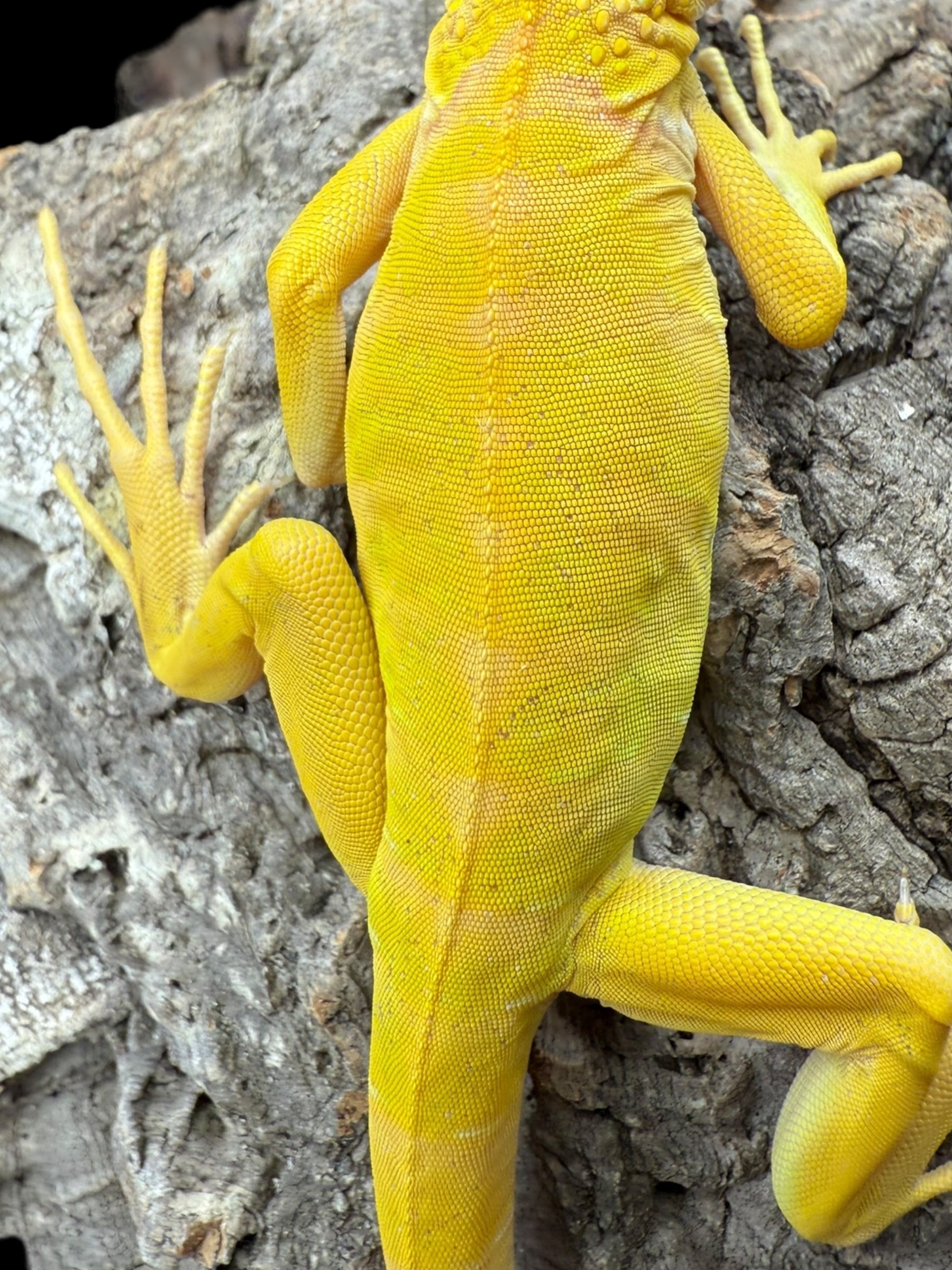
Appearance: Albino Green Iguanas lack melanin, resulting in bright yellow, cream, or peach colouration with pink to red eyes. Some individuals display faint orange or golden tones along the dewlap, limbs, or dorsal spines. Their body structure remains identical to wild-type Green Iguanas, with a pronounced dewlap, tall dorsal spines, muscular limbs, and a robust tail. Albino individuals show increased light sensitivity due to pigment loss.
Distribution: Native to Central and South America, including Mexico, Belize, Guatemala, Honduras, Nicaragua, Costa Rica, Panama, Colombia, Venezuela, Ecuador, and Brazil.
Habitat: Wild Green Iguanas inhabit tropical forests, mangroves, riverbanks, and lush canopy systems. In captivity, Albino Green Iguanas require spacious enclosures with dense climbing structures and shaded retreats to help manage light sensitivity.
Behaviour: Green Iguanas are diurnal, arboreal, and primarily herbivorous. They spend much of the day basking and grazing on foliage. Defensive behaviours include tail-whipping, dewlap extension, and posturing. Albino individuals behave similarly but may avoid bright lighting more readily.
Captive Care
Enclosure: Provide a large, vertically oriented enclosure at least 8 feet × 4 feet × 4 feet (2.4 × 1.2 × 1.2 m) for a growing iguana, with larger spaces required for adults. Include heavy branches, platforms, vines, and dense foliage. Multiple basking spots and shaded areas are essential for pigment-sensitive individuals.
Temperature and Humidity:
Basking area: 100 to 105°F (38 to 40°C)
Warm side: 90 to 95°F (32 to 35°C)
Cool side: 78 to 82°F (26 to 28°C)
Night temperatures: 72 to 75°F (22 to 24°C)
Humidity should remain 60 to 80 percent with daily misting.
Lighting: Provide strong full-spectrum lighting and high-output UVB (10–12 percent). Albino individuals need shaded zones to prevent overexposure while still receiving adequate UVB.
Diet: Offer a varied herbivorous diet of leafy greens, edible flowers, bell peppers, squash, prickly pear cactus pads, green beans, and occasional fruits. Avoid high-oxalate vegetables. Supplement with calcium consistently, especially in juveniles.
Behaviour in Captivity: Green Iguanas are active, observant, and intelligent. They thrive with consistent feeding routines and a stable environment. Handling tolerance varies between individuals and improves with gentle, regular interaction. Some may react more strongly to sudden bright lights.
Special Considerations:
• Light sensitivity requires well-planned shaded retreats.
• Strong UVB is still essential despite reduced pigment.
• Enclosure size is critical for long-term mobility and health.
• Strict herbivorous diets prevent nutritional deficiencies.
Taxonomy Note
The Green Iguana belongs to the family Iguanidae, a diverse group of primarily herbivorous New World lizards. Iguana iguana is one of the most widely recognized members of this family.
Genetics Note
Albino (recessive): The Albino gene removes melanin entirely, producing bright cream, yellow, or peach tones accompanied by red or pink eyes. Visual Albino individuals express complete pigment reduction.
Natural variation: Albino Green Iguanas may display subtle differences in tone and pattern clarity. These represent normal variation within Albino expression.